
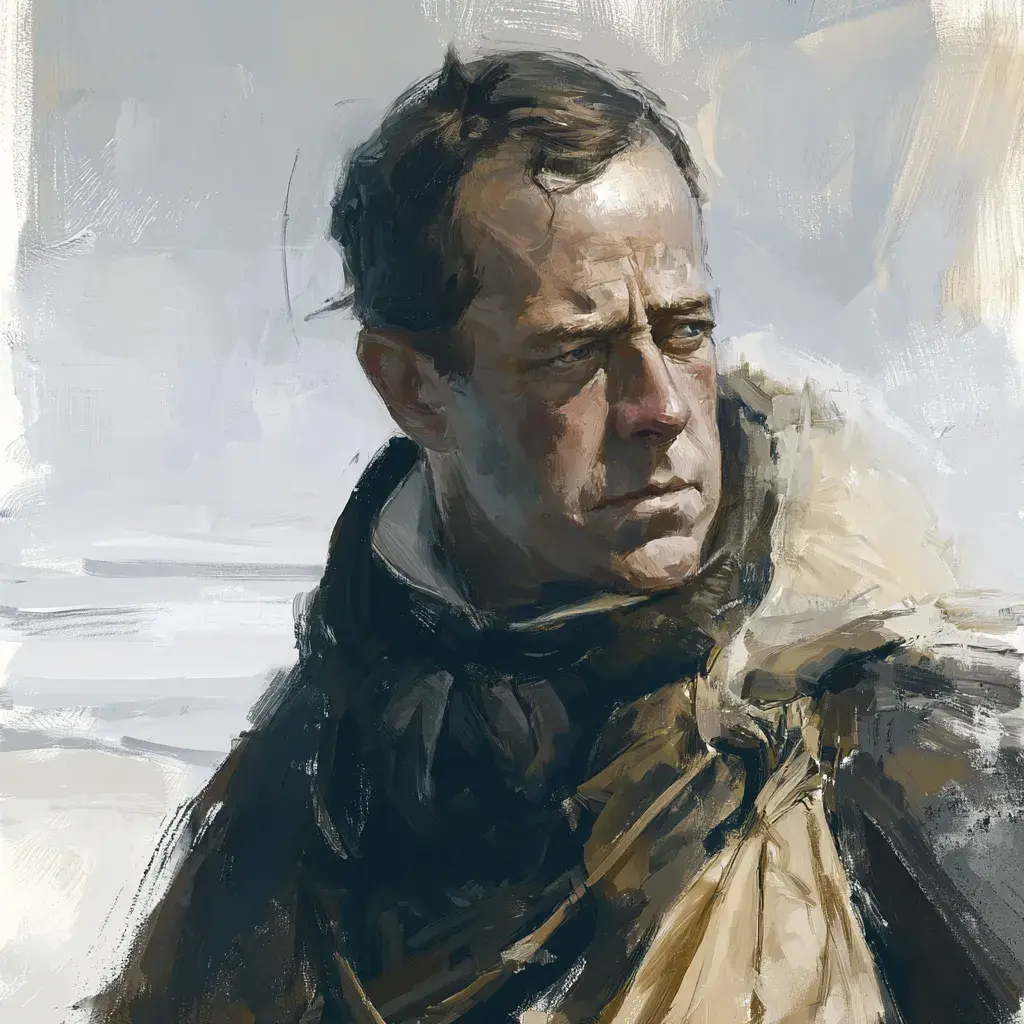
In 1910, Norwegian explorer Roald Amundsen was preparing for a trip to the North Pole. Or so the world thought. In a secret, audacious pivot, he set his sights on the last great prize of exploration: the South Pole. This put him in direct competition with British Royal Navy Captain Robert Falcon Scott, whose expedition was already underway to claim the Pole for the British Empire. From the island of Madeira, Amundsen sent a curt telegram to his rival: 'Beg leave to inform you Fram proceeding Antarctic.' Scott received the message when he arrived in Melbourne, Australia, in October 1910. The scientific journey had just become a head-to-head race to the bottom of the world.
The Race to the South Pole
Two rival teams led by Roald Amundsen and Robert Scott battle deadly cold to reach the South Pole between 1911 and 1912.
Chapter 1
The Race is On
0:46
People in this story

Part of
Frequently Asked Questions
Why did Amundsen beat Scott to the South Pole?
Roald Amundsen had several key advantages. His base camp was 60 miles closer to the Pole, and his deep experience with Arctic conditions led him to use sled dogs and skis, which were far more effective than Scott's ponies and motorized sledges that broke down.
What did Amundsen leave at the South Pole?
Amundsen's party planted the Norwegian flag and left a small tent named Polheim. Inside, he left a letter for the King of Norway and a friendly note for Scott, asking him to deliver the letter in case the Norwegian team didn't make it back.
What happened to Captain Scott's body?
Scott died in his tent with two companions, just 11 miles from a supply depot. A search party found their bodies eight months later. They collapsed the tent over them and built a large snow mound, or cairn, topped with a cross made of skis, as a final resting place.
Learn more
To continue the story, download the Chunks Microlearning app
Or get it straight away:
 Download on iOS
 Download on Android