Chunks Blog
Discover fascinating stories about history, philosophy, science, and more.
The Generation Effect Explained: Why Producing Information Beats Reading It
In 1978, the cognitive psychologists Norman Slamecka and Peter Graf published a paper in the Journal of Experimental Psychology with a deceptively simple finding: people remember information that…
Boudicca's Rebellion: Iceni Queen vs. Roman Britain
Boudicca was an Iceni queen who led a major revolt against Roman rule in Britain in 60-61 AD after her people suffered brutal Roman oppression.
Best History Apps for Kids and Parents in 2026: 10 Picks That Actually Work
History is one of the harder subjects to make engaging for children. Dates without context are forgettable; events without people are abstract; battles without consequences are just noise. The apps…
The Cuban Missile Crisis Explained: The 13 Days That Almost Ended the World
For thirteen days in October 1962, the world came closer to nuclear war than at any other point in human history. American U-2 reconnaissance photographs taken on 14 October 1962 confirmed that the…
The Battle of Waterloo: Napoleon's Last Stand
The Battle of Waterloo marked the definitive end of Napoleon Bonaparte's reign and reshaped the political landscape of Europe.
CuriosityStream Review 2026: Is It Worth $39.99 a Year?
CuriosityStream is the cheapest serious documentary service available — $39.99/year, about $3.33/month, or $4.99 monthly after a price rise in March 2026. The catalog covers science, history…
Best Gift Apps for Curious Adults in 2026: 10 Picks for the Holidays
Buying gifts for adults who already have most things they need is harder than it sounds. Physical objects pile up; books often go unread; courses get abandoned. The category that has consistently…
When Was the Battle of Waterloo? Napoleon's Final Defeat
Unpack the decisive Battle of Waterloo, fought on June 18, 1815, which saw Napoleon's final defeat and reshaped the political landscape of Europe.
Where Did Tea Originate? A Journey from Ancient China
Discover where tea originated, tracing its ancient roots in China as a medicinal tonic to its global journey and cultural impact.
The History of Halloween: From Samhain to Modern October 31
Halloween is one of the most-celebrated and least-understood holidays in the Western calendar. The popular image — costumes, candy, jack-o'-lanterns, light-touch horror — is mostly a 20th-century…
Shortform Review 2026: Is It Worth Double the Price of Blinkist?
Shortform is the deep end of the book summary category. Instead of a 15-minute Blink, you get a 20-to-30-page guide that works through a book chapter by chapter, adds context and counterpoints, and…
Blinkist Review 2026: Is It Free, and Is the Library Worth $99?
Blinkist is the original book summary app and still the biggest — over 6,500 nonfiction titles condensed into 15-minute "Blinks" you can read or listen to. It is not free: a trial, then $99.99/year…
The Witch Trials Explained: Salem and the Wider European Panic
In late January 1692, two young girls in the household of the Reverend Samuel Parris in Salem Village, Massachusetts began to behave strangely — convulsing, screaming, hiding under furniture…
Why Was Lady Jane Grey Executed? A Tragic End
Lady Jane Grey was executed because she was a dangerous symbol for Protestant rebels against Queen Mary I. Her brief nine-day reign made her a threat, especially after Wyatt's Rebellion.
Who Was Mansa Musa? The Richest Man in History
Mansa Musa was the ninth Mansa of the Mali Empire, ruling from 1312 to 1337, and is considered the wealthiest individual in history. His legendary pilgrimage to Mecca in 1324 showcased the Mali…
Who Was Genghis Khan? The Real Story Behind the Mongol Conqueror
Genghis Khan is one of the most-recognised names in world history and one of the most consistently misunderstood. The popular image — a barbaric tribal warlord who slaughtered millions and ruled by…
Best Science Apps for Adults in 2026: 10 Picks for Curious Learners
Science used to be one of the worst-served categories in adult learning. Television documentaries were excellent but slow; popular science books required hours; YouTube channels were good but…
Milo of Croton: Legendary Strength & Philosophy
Explore the legendary life and incredible strength of Milo of Croton, connecting his athletic discipline to ancient Greek philosophical ideals of self-mastery. Discover his Olympic victories and the…
Irish History for Beginners: Key Moments and Figures
Discover the essential periods and figures that shaped the rich and complex history of Ireland, from ancient myths to modern nationhood, including the Norman invasion, the Great Famine, and the path…
The IKEA Effect Explained: Why We Overvalue Things We Build Ourselves
If you have ever spent two hours assembling a flat-pack bookshelf and then admired it slightly more than the identical pre-built one in your friend's flat, you have experienced what behavioural…
Desirable Difficulties Explained: Why Struggle Produces Better Learning
In 1994, the cognitive psychologist Robert Bjork published a paper called Memory and Metamemory Considerations in the Training of Human Beings in which he proposed one of the most counterintuitive…
Best Microlearning Apps for Students in 2026: 10 Picks for School and University
Students have unusual learning needs. The volume is high, the time is fragmented, the topics are wide-ranging, and the deadlines are relentless. Microlearning — short, distributed, retention-focused…
Viking History for Beginners: Debunking Myths & Key Facts
The term 'Viking' often conjures images of horned helmets and brutal raids, but the true history of these Norse people is far richer and more complex than popular culture suggests.
Best WWII Apps: Learn World War 2 History with Microlearning
Learning about World War II, a pivotal and complex period in human history, can be a daunting task, but microlearning apps offer an engaging and digestible solution.
World War II: Causes, Key Players, and Major Battles
The Unfolding Catastrophe: Understanding World War II World War II, a global conflict that lasted from 1939 to 1945, remains the deadliest war in human history, involving over 100 million people…
57 Space Trivia Questions and Answers, From the Solar System to the Edge of the Universe
Space trivia has an unfair advantage over every other category. In a history round you can often guess the plausible answer; in a space round the plausible answer is usually wrong, because the…
Best Literature Apps for Adults in 2026: 10 Picks for Serious Readers
Reading literature on a phone used to feel like cultural defeat — a compromise between the actual book and the small screen you happened to be carrying. By 2026 the gap has closed dramatically…
65 Movie Trivia Questions and Answers, From the Silent Era to Now
Most movie trivia tests whether you have seen a film. The better kind tests whether you know how it got made. There is not much to learn in a character's middle name, but there is a great deal in the…
60 History Trivia Questions and Answers, From Ancient Rome to the Space Race
The best history trivia questions are not the ones with the hardest answers. They are the ones where the true answer quietly rearranges what you thought you knew. You learn that Cleopatra lived…
The Curiosity Gap Explained: Why Your Brain Demands Answers to Questions You Almost Have
In 1994, the economist and behavioural scientist George Loewenstein published a paper titled The Psychology of Curiosity: A Review and Reinterpretation that proposed a specific, testable theory of…
56 Hard Trivia Questions (With Answers) That Stump Almost Everyone
Most lists of hard trivia questions are just lists of obscure ones. Asking for the middle name of a minor Victorian botanist is not difficult, it is unanswerable, and nobody learns anything from…
Dual Coding Theory Explained: Why Combining Words and Images Boosts Learning
When you learn the word elephant, your brain does not just store the word — it stores a mental image of an elephant alongside it. The word and the picture are encoded through different cognitive…
What Is the Longest War in History? The Real Answers, Ranked by Definition
The trivia answer is the 335 Years' War between the Netherlands and the Isles of Scilly, which supposedly ran from 1651 to 1986 without a single shot fired. The serious answers are shorter and…
Headway App Review 2026: Is It Free, and Is It Worth $90 a Year?
Headway is not free. It runs a trial, then charges roughly $13/month or about $90/year at list price, with introductory offers near $60/year appearing regularly. What you get is a well-made library…

Who Was Marcus Aurelius? The Philosopher Emperor of Rome
Marcus Aurelius is one of the few figures in history about whom the popular reputation and the historical record agree closely. He was Roman Emperor from 161 to 180 AD, the last of the "Five Good…
Ares, the Greek God of War: The Olympian His Own People Distrusted
Ares was the Greek god of war — specifically of battle itself, the noise and butchery of the killing field rather than the campaign that led to it. He was one of the twelve Olympians, the son of Zeus…
Greek Mythology Creatures: 14 Monsters and Beasts, Explained
Greek mythology has gods, and the gods get the temples. The creatures get the stories. A hero is only as interesting as the thing standing between him and the end of the road, and the Greeks built a…

Best Art History Apps in 2026: 10 Picks for Curious Adults
Art history has become one of the most-served categories in the 2026 app market — partly because museum closures during the early 2020s pushed institutions to invest seriously in digital tools…
Where Do Last Names Come From? The Origins of Surnames
Most European surnames come from one of four things: an ancestor's job, an ancestor's father, the place he lived, or something about how he looked. Smith worked metal, Johnson was the son of John…

The Testing Effect Explained: Why Self-Quizzing Beats Re-Reading
For most of the 20th century, students were taught to study by reading and re-reading. The strategy felt productive — you could measure progress by the number of times you had been through the…
What Is the Oldest Civilization in the World?
The standard answer is Sumer, in southern Mesopotamia — present-day Iraq — where cities, writing and state administration appear together earlier than anywhere else on record. Settlements there run…

How Did the Berlin Wall Fall? The Real Story Behind 9 November 1989
At 22:45 on the night of 9 November 1989, the first East Germans began crossing the Berlin Wall unchallenged at the Bornholmer Straße checkpoint. By the early hours of 10 November, tens of thousands…
Who Invented Math? Nobody Did — and That's the Interesting Part
No single person invented mathematics. The oldest objects that look like counting tools are tens of thousands of years old, older than writing, older than farming, and nobody knows who made the marks…
Who Invented School? The Real Answer
Nobody invented school. Schools appeared independently in several ancient civilisations thousands of years ago, and no single person can be credited with the idea. The name you will usually see…

Best Greek Mythology Podcasts in 2026: 10 Shows to Listen to Now
Greek mythology has had an unexpected second life in podcasting. The category barely existed in 2015; by 2026 it is one of the most-served audio niches outside true-crime and pop culture. The reason…
Family Crest vs Coat of Arms: What They Actually Mean
A crest is not a coat of arms. The crest is one component of a coat of arms — the ornament fixed to the top of the helmet — and the coat of arms is the whole design, shield included, of which the…

How to Study Effectively as an Adult: A Research-Backed Guide for 2026
Adult learning has a problem most adult learners do not realise: almost every habit you developed studying for school exams is the wrong way to learn anything you actually want to retain…

How to Study Effectively: 5 Techniques Backed by Research (2026)
The most effective way to study is to test yourself on the material (retrieval practice), space your sessions out over days rather than cramming, and mix related topics together (interleaving) …
Sleep and Learning: How Sleep Consolidates Memory
Most advice about learning is advice about what to do while you are studying. The evidence on sleep says something less comfortable: a large part of what determines whether you remember tomorrow what…
Brain Training Apps: What the Evidence Actually Shows
Brain training apps reliably make you better at brain training apps. Twenty years of research has produced a consistent pattern: practise a speed or memory game and you improve at that game, and…

Epictetus's *Discourses* and *Enchiridion*: A Summary and Why They Still Matter
Epictetus was born around 50 AD as a slave in Hierapolis (modern-day Pamukkale, Turkey). He was bought as a child by Epaphroditus, a freedman in the household of Emperor Nero, and through that…
The Pomodoro Technique: The 25-Minute Method, Honestly Assessed
Work on a single task for 25 minutes without stopping. When the timer rings, stop and take a five-minute break. Repeat that four times, then take a longer break of 15 to 30 minutes before starting…

Best Stoicism Apps in 2026: 10 Picks for Daily Practice
Stoicism has had one of the most unlikely revivals of any ancient philosophy. The works of Marcus Aurelius, Epictetus, and Seneca — written between roughly 50 BC and 180 AD — are now consumed daily…
12 Greek Mythology Stories Everyone Should Know
Three thousand years is a long time for a story to stay in circulation. The Greek myths have outlasted the religion that produced them, the language most of them were first told in, and every empire…
How the Nobel Prize Works: The Six Prizes, Who Decides Them, and Why
There are six Nobel Prizes — physics, chemistry, physiology or medicine, literature, peace, and economic sciences — and the winners are announced over a few days at the start of October each year…

The Zeigarnik Effect Explained: Why Unfinished Tasks Haunt You
Bluma Zeigarnik was a Soviet psychologist studying with the Berlin Gestalt school in the 1920s when she noticed something strange about how her group remembered restaurant orders. The waiter at the…

Who Invented Electricity? The Messy Truth
Nobody invented electricity. Electricity is a natural phenomenon — it existed in lightning, in static, and in every atom long before humans noticed it. What people invented were ways to understand…

How to Learn Philosophy on Your Own: A Practical Guide for Adults
Most adults who become interested in philosophy as readers face the same problem. The reading list is enormous. The texts are old, dense, and built on each other in ways that make starting points…

The Baader-Meinhof Phenomenon (Frequency Illusion), Explained
You buy a particular car model, and suddenly you see it everywhere on the road. You learn a new word, and now it appears in three different articles in the same week. You hear a song you have never…

The Socratic Method Explained: How to Think by Asking Questions
The Socratic method is one of the oldest learning techniques in continuous use anywhere in the world. Developed in 5th-century BC Athens by the philosopher Socrates, it survives as a working pedagogy…

Best Philosophy Podcasts in 2026: 10 Shows for Curious Listeners
Philosophy has a reputation as the worst-served academic subject in audio. The texts are dense, the names are unpronounceable, and most academic podcasts treat the listener as if they were already…

What Is Existentialism? A Beginner's Guide to the Philosophy of Freedom and Meaning
Existentialism is one of the most-quoted and least-understood philosophical movements of the 20th century. Most people have heard of Jean-Paul Sartre's Being and Nothingness, Simone de Beauvoir's The…
Deepstash Review 2026: Is It Free? Plus 7 Genuinely Free Apps
Disclosure: Chunks is our own app, and it is the app we recommend here. Every app on this page is measured against one test — how much you can actually learn without paying — and Chunks' own limits…
Best Free SmartyMe Alternatives 2026: 7 Genuinely Free Apps
Disclosure: Chunks is our own app, and it is the app we recommend here. Every app is measured the same way — what you can still learn a month from now having paid nothing — and Chunks' limits are…

The Dunning-Kruger Effect Explained: Why Beginners Overestimate Themselves
In 1999, two Cornell psychologists named David Dunning and Justin Kruger published a paper with the unlikely title Unskilled and Unaware of It: How Difficulties in Recognizing One's Own Incompetence…
Nibble App Review 2026: Is It Free? Plus 7 Genuinely Free Apps
Disclosure: Chunks is our own app, and it is the app we recommend here. To keep that useful rather than self-serving, every app is judged on the same question — what can you still use in a month…
Best Free Imprint Alternatives 2026: 7 Genuinely Free Apps
Disclosure: Chunks is our own app, and it is the app we recommend here. Every app on this page is held to the same test — what remains usable after you stop paying — and Chunks' limits are stated…

Best Microlearning Apps for Professional Development in 2026
Professional development used to mean conferences, MBA programmes, and three-day off-site training sessions. In 2026 most of that has been compressed into microlearning apps that fit between meetings…

Marcus Aurelius's Meditations: A Summary, Themes, and Why It Still Matters
Marcus Aurelius wrote his Meditations in the last decade of his life, between approximately 170 and 180 AD, during the military campaigns that would eventually exhaust him. He was the Roman Emperor …

Interleaving vs Blocked Practice: Which Study Method Actually Works?
Most people study by blocking — picking one subject, drilling it for an hour, then switching. Maths today, French tomorrow, history the day after. It feels orderly. It feels productive. And…

Best History Books for Beginners: 12 Picks That Make the Past Click
The hardest thing about reading history as an adult is that most history books are written for people who already have the basic framework. Try to start with a 700-page academic monograph on the…

What Happened at Chernobyl? The Real Story of the 1986 Nuclear Disaster
At 01:23:40 local time on 26 April 1986, Reactor 4 of the Chernobyl Nuclear Power Plant in the Ukrainian Soviet Socialist Republic exploded during a safety test. The explosion blew the 2,000-ton…

Best History Podcasts in 2026: 12 Shows for Curious Listeners
If you commute, walk, cook, or do laundry, you have an obvious learning slot you are probably not using. A 30-minute commute four days a week is 100 hours a year of pure audio time — enough to listen…
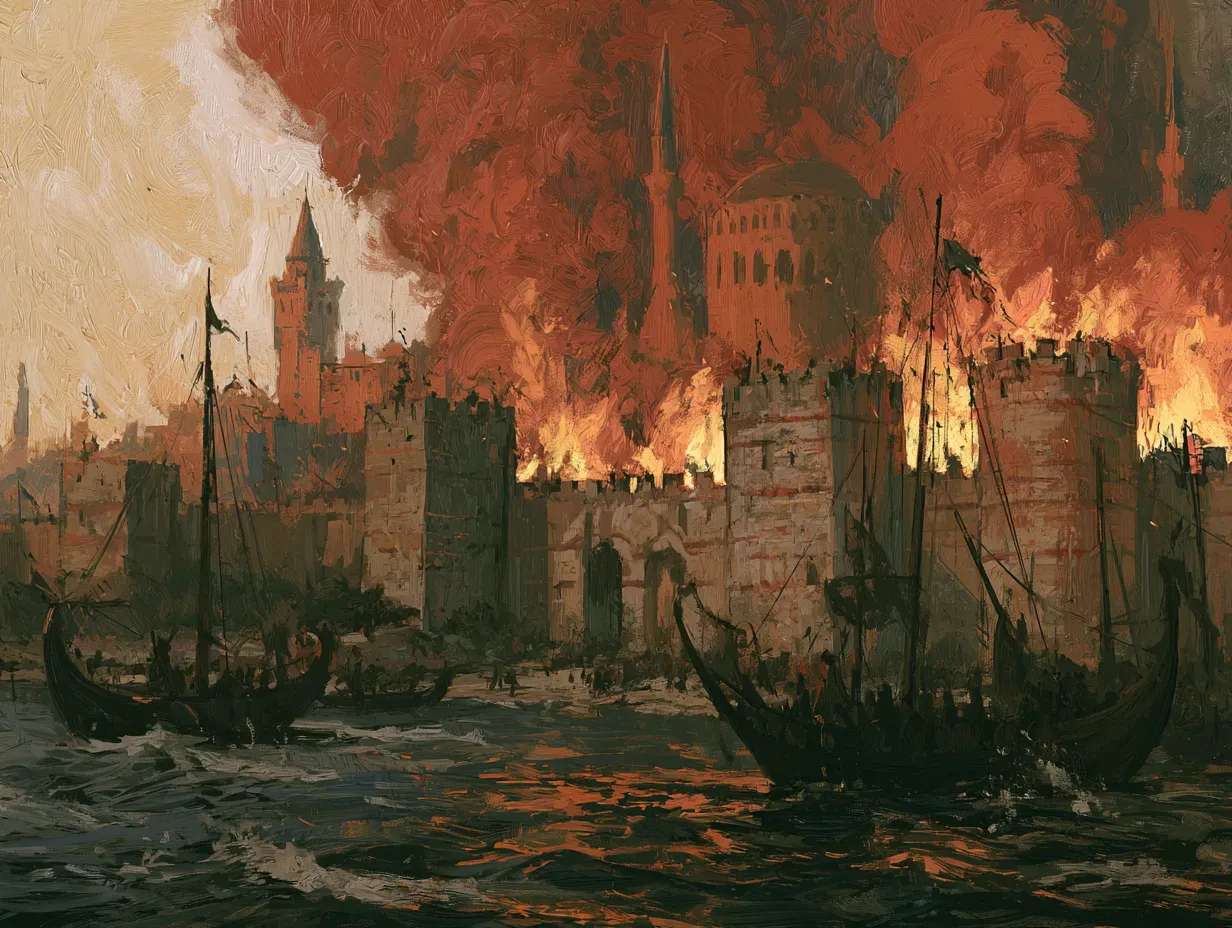
The 626 Siege of Constantinople: The Year the Byzantine Empire Almost Ended
In the summer of 626 — exactly 1,400 years ago — the city of Constantinople faced one of the gravest threats in its thousand-year history. Two great powers, the nomadic Avars from the north and the…

Why Did the Titanic Sink? The Real Story Behind 14 April 1912
The Titanic sank in the early hours of 15 April 1912 after striking an iceberg in the North Atlantic. Roughly 1,500 of the 2,224 people on board died — making it one of the deadliest peacetime…

Why Did the Roman Empire Fall? The Real Story Behind 476 AD
The fall of the Roman Empire is one of the most-asked historical questions in the world. Schools teach it as a single dramatic event in 476 AD, when the Germanic chieftain Odoacer deposed the last…
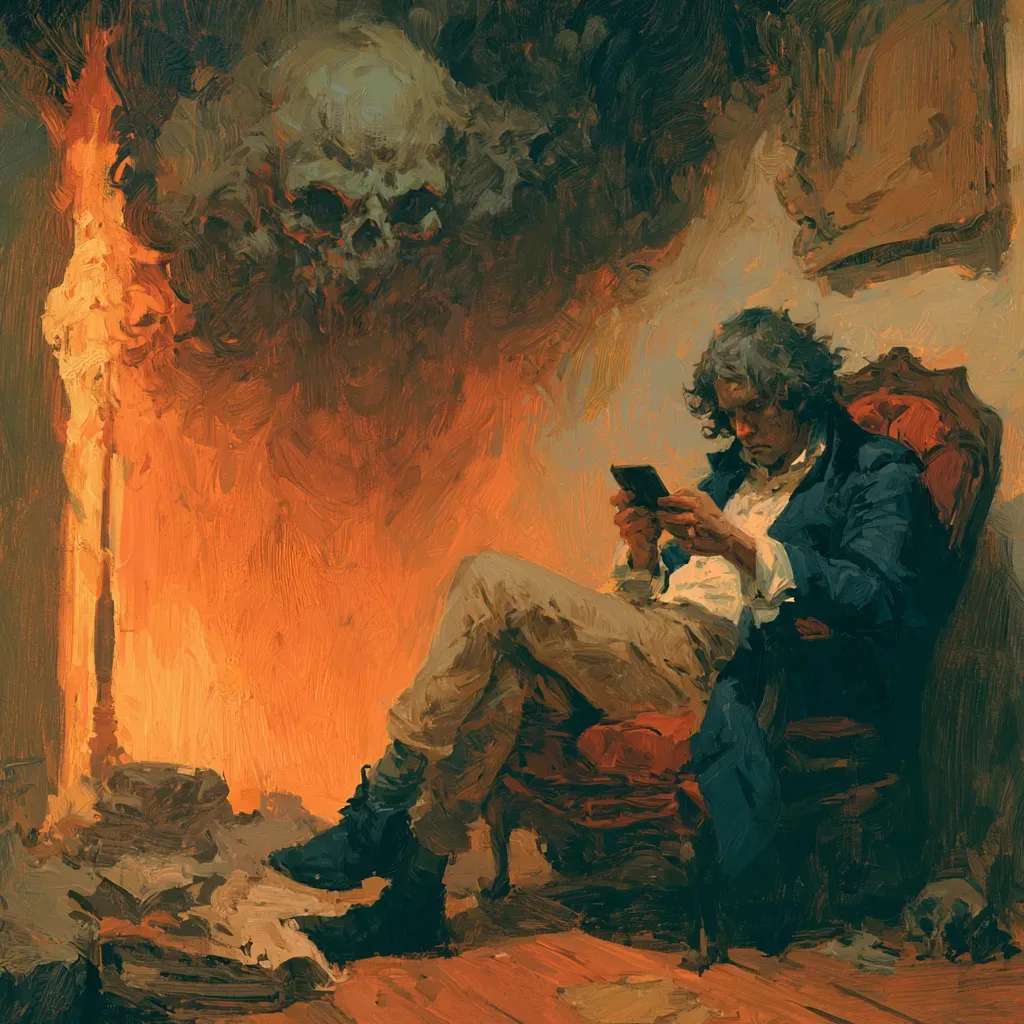
The Anti-Doomscroll Report
How Chunks Microlearning users are turning the edges of the day into five-minute learning Updated 14 August 2026 with data through 13 August 2026 and a refined time-of-day methodology based on each…

The Feynman Technique Explained: How to Actually Understand What You Learn
Richard Feynman won a Nobel Prize in Physics in 1965 and became one of the most celebrated science communicators of the 20th century. He was famous for two things: doing original work in quantum…

What Were the Janissaries? Meaning, History & Ottoman Elite Corps
On 15 June 1826, in an event the Ottomans called the Vaka-i Hayriye — the "Auspicious Incident" — Sultan Mahmud II destroyed the Janissary corps, the most feared infantry force in Europe for nearly…

Plato's Allegory of the Cave, Explained: Summary, Meaning, and Why It Still Matters
Plato's Allegory of the Cave, found at the beginning of Book VII of his Republic, is one of the most famous and enduring thought experiments in Western philosophy. Written around 375 BC, it uses a…

Retrieval Practice Explained: The Most Effective Study Technique You're Not Using
If you ask a random adult how they study, the answer is almost always the same: highlight, re-read, take notes, re-read the notes. These strategies feel productive. They give a sense of progress…

The Forgetting Curve Explained: Ebbinghaus, Memory, and How to Beat It
In 1885, a German psychologist named Hermann Ebbinghaus published a small book that would quietly become one of the most influential texts in cognitive science. Über das Gedächtnis (On Memory)…

Who Was Plato? A Beginner's Guide to the Founder of Western Philosophy
Plato is the figure modern Western philosophy treats as its starting point. The 20th-century English philosopher Alfred North Whitehead famously claimed that "the safest general characterization of…

Best Spaced Repetition Apps in 2026
Spaced repetition is the most reliably effective study technique cognitive science has identified, and the 2026 app market reflects that — every serious learning platform now includes some form of…

Best Microlearning Platforms in 2026
The word "platform" gets used loosely in the learning industry, but in 2026 it usually means one of two things: a consumer microlearning app you install on your phone (Chunks, Duolingo, Brilliant)…

Best History Apps in 2026 (Free & Paid)
The best history apps in 2026 are Chunks (best for narrative, bite-sized history), Khan Academy (best free structured course), and CuriosityStream (best documentary video at the lowest price). Each…

Cognitive Load Theory Explained: Why Less is More in Learning
Updated June 2026 — a plain-English guide to John Sweller's cognitive load theory, working memory's limited capacity, and the three levels of cognitive load, with practical examples for…

How AI is Changing Education in 2026
AI is already reshaping how people learn, teach, and create educational content -- and the changes are accelerating. From personalized tutoring systems that adapt in real time to AI-assisted content…

The History of Education: From Ancient Greece to AI
For most of human history, education was a privilege reserved for the few -- priests, aristocrats, and the sons of the wealthy. The story of how learning went from a conversation under an olive tree…

A Complete Guide to Learning Styles: Myths vs Science
Updated June 2026. Learning styles are a myth. There is no good scientific evidence that matching teaching to someone's preferred "style" (visual, auditory, reading/writing, or kinesthetic) improves…

What is Brain Rot? The Science Behind Digital Overload
Brain rot refers to the perceived decline in mental sharpness, attention span, and critical thinking caused by excessive consumption of low-quality digital content -- particularly through passive…

The 5-Minute Learning Habit: How Small Sessions Add Up
Five minutes of learning per day adds up to over 30 hours per year. That is not a rounding trick or a motivational slogan -- it is simple arithmetic, and it represents more focused study time than…

Screen Time vs Learning Time: How to Make Your Phone Work for You
The average person spends nearly seven hours a day staring at a screen, and most of that time produces nothing lasting. The good news is that you do not need to dramatically cut your screen time to…

What is Stoicism? A Practical Guide for Modern Life
Stoicism is an ancient Greek philosophy that teaches people how to live well by focusing on what they can control and letting go of what they cannot. Founded around 300 BC in Athens, it offers a…

Greek Mythology for Beginners: Gods, Heroes, and Monsters
Long before Netflix, Marvel, or even the written word, the ancient Greeks were telling stories so vivid and strange that we still cannot stop retelling them thousands of years later. Greek mythology…

10 Fascinating History Stories You Can Learn in 5 Minutes
History is full of moments so strange, so dramatic, and so unlikely that they sound like fiction. The problem is that most of us stopped learning about them after school ended. But what if you could…

Best Learning Apps for Adults 2026: Free & Paid, Compared
Updated August 2026 — covers the best educational and learning apps for adults, with free and paid options on iOS, Android, and web. The best apps for learning in 2026 are Chunks (best for general…

How to Stop Doomscrolling: 7 Practical Strategies That Work
The simplest way to stop doomscrolling is to replace the habit with something better, set hard boundaries on your screen time, and redesign your phone environment so mindless scrolling becomes harder…

Philosophy for Beginners: Where to Start
Philosophy is one of the most rewarding subjects you can study, and the best place to begin is with Stoicism -- a practical, action-oriented tradition that connects directly to the challenges of…

How to Learn History Effectively: A Beginner's Guide
The best way to learn history is to stop memorizing dates and start understanding stories. When you treat history as a collection of interconnected narratives rather than a timeline of facts…

Microlearning vs Traditional Learning: What the Research Says
Microlearning delivers comparable or better knowledge retention than traditional learning for factual and conceptual content, while requiring significantly less time per session. Research…

The Science of Spaced Repetition: Why Short Sessions Beat Cramming
Updated June 2026. Spaced repetition is a study technique where you review material at increasing intervals — minutes, then days, then weeks — rather than cramming it all at once. Decades of…

Best Microlearning Apps 2026: Complete Comparison
Updated August 2026 — covers the best microlearning apps and micro-learning platforms for 2025 and 2026, with bite-sized learning options on Android and iOS. Tested April–May 2026, prices re-checked…

What is Microlearning?
Microlearning is an instructional approach that delivers content in short, focused segments — typically between two and ten minutes — each targeting a single learning objective. Rather than covering…
Doomscrolling Is Replacing Learning — But Microlearning Might Be the Fix
Why five-minute learning sessions may be a realistic alternative to endless scrolling Smartphones have made knowledge more accessible than at any point in human history. With a few taps, anyone can…
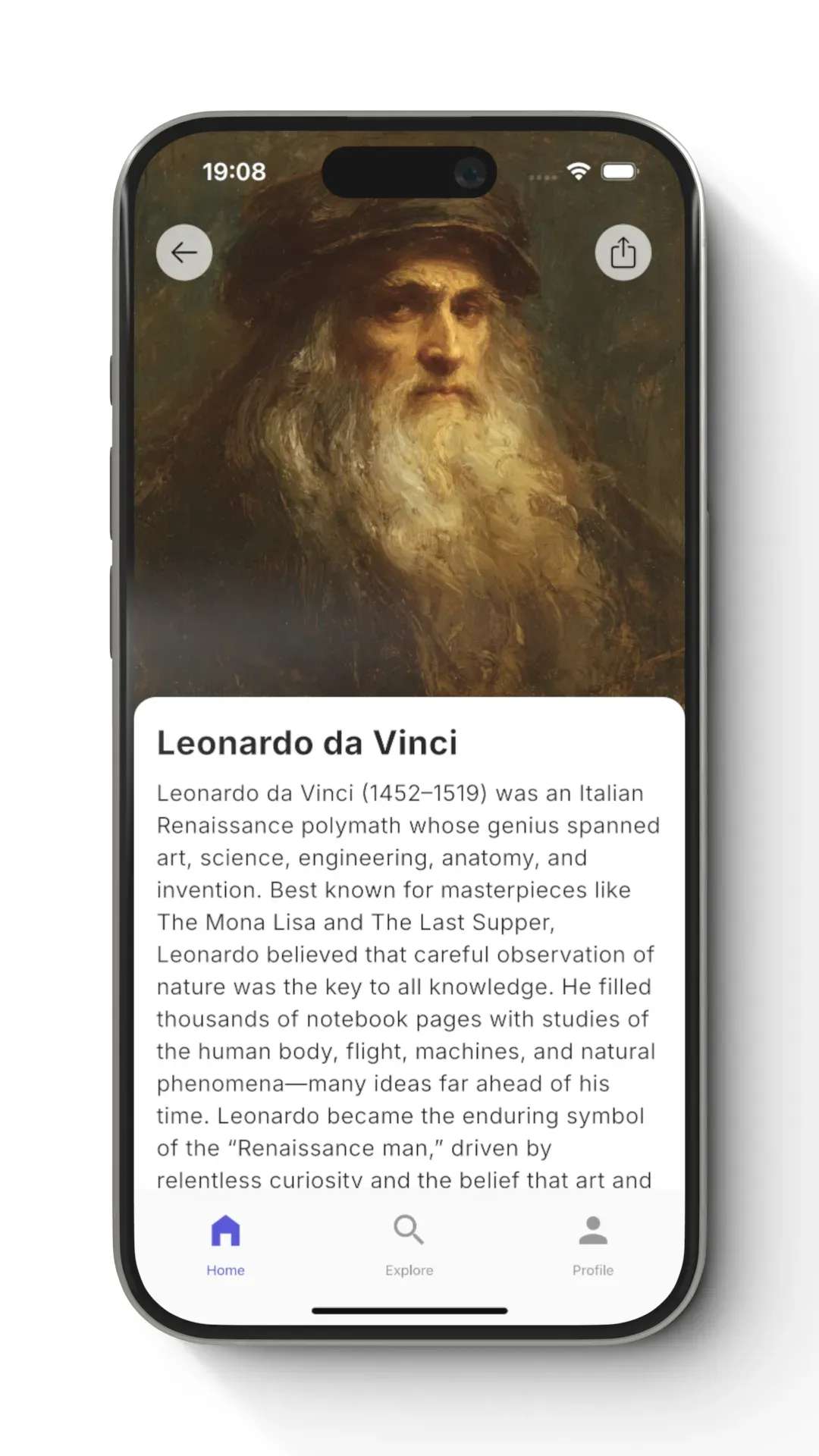
Introducing Character Cards!
Alongside the growing collection of stories and story packs, I've added a feature I'm really excited about: Character Cards. What are Character Cards? Character Cards are designed for those…
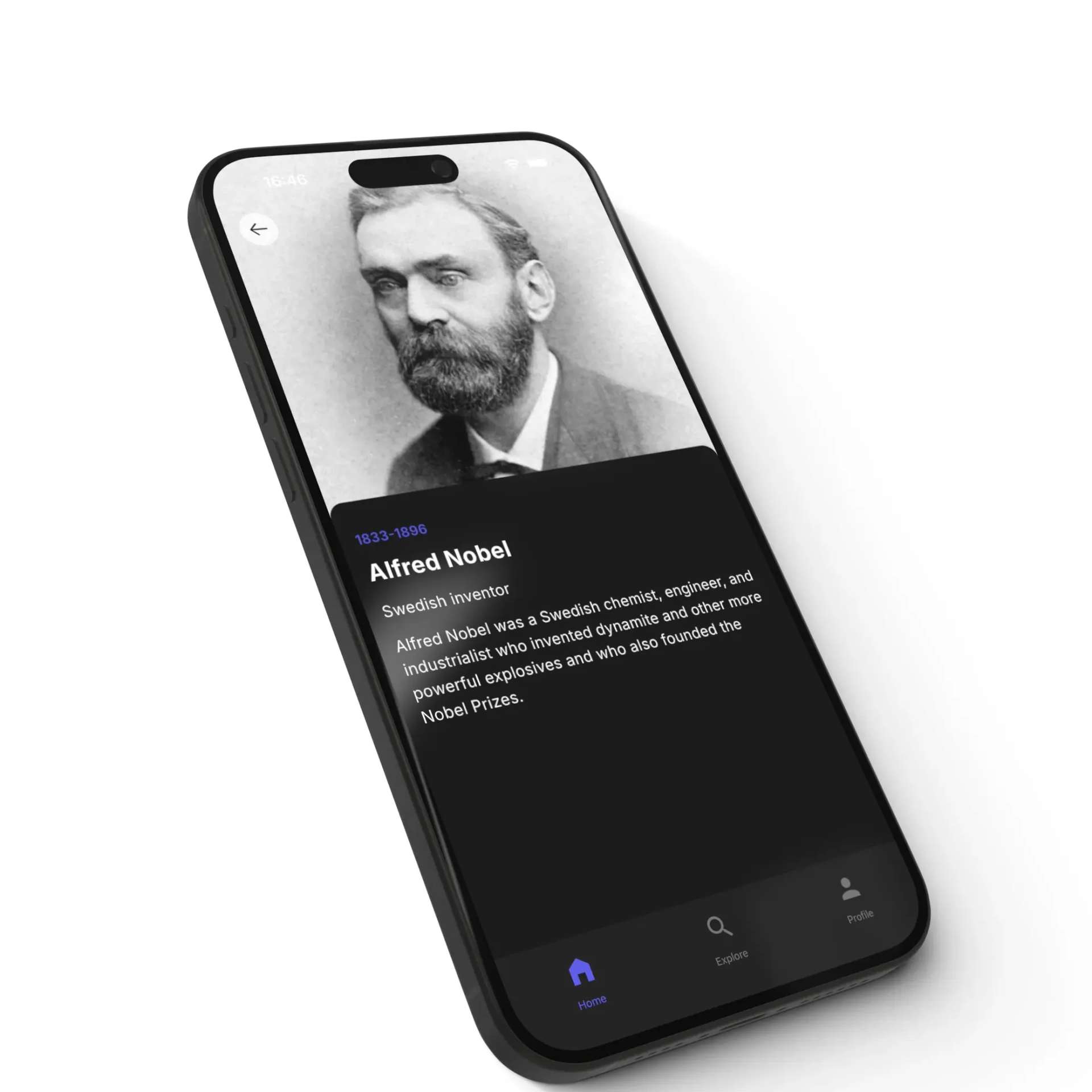
Today in History & Dark Mode!
With the release of Chunks v2025.12.8, I'm introducing two features that have been at the top of my list: Today in History and dark mode. Today in History The Today in History feature highlights…
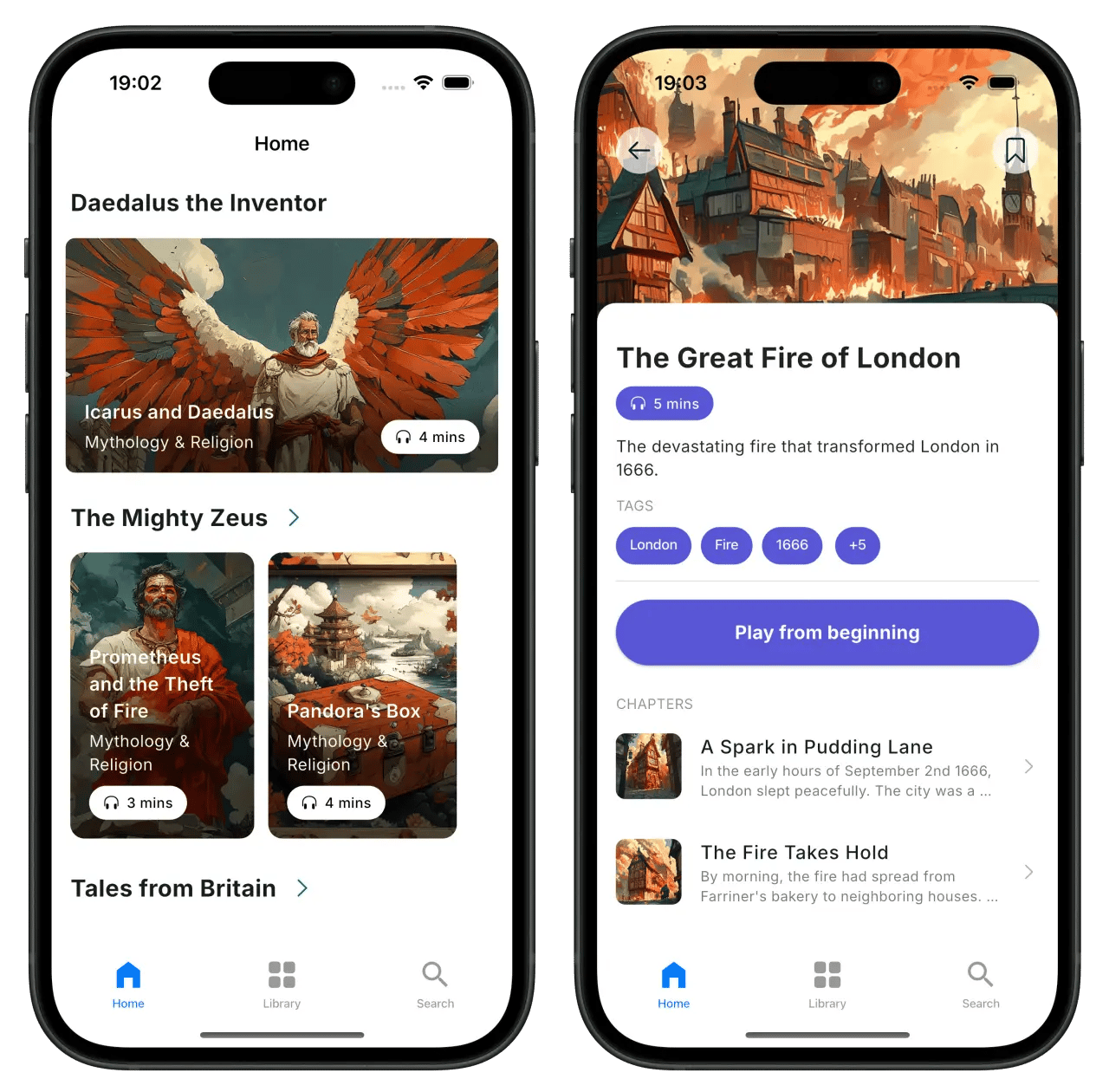
Why Microlearning Works (and Why I Built Chunks Around It)
As I mentioned in the previous blog post, when I started working on Chunks, the whole idea was simple: I wanted a way to learn something meaningful in the tiny spaces of my day. The same spaces I…
Start learning today
In just minutes, you can uncover something new and fascinating — with content tailored to spark your curiosity and match your interests.
 Download on iOS
 Download on Android