
Learn Philosophy in Minutes
From Socrates to Nietzsche, explore the greatest ideas in human history through bite-sized stories on Chunks — free to download on iOS and Android.
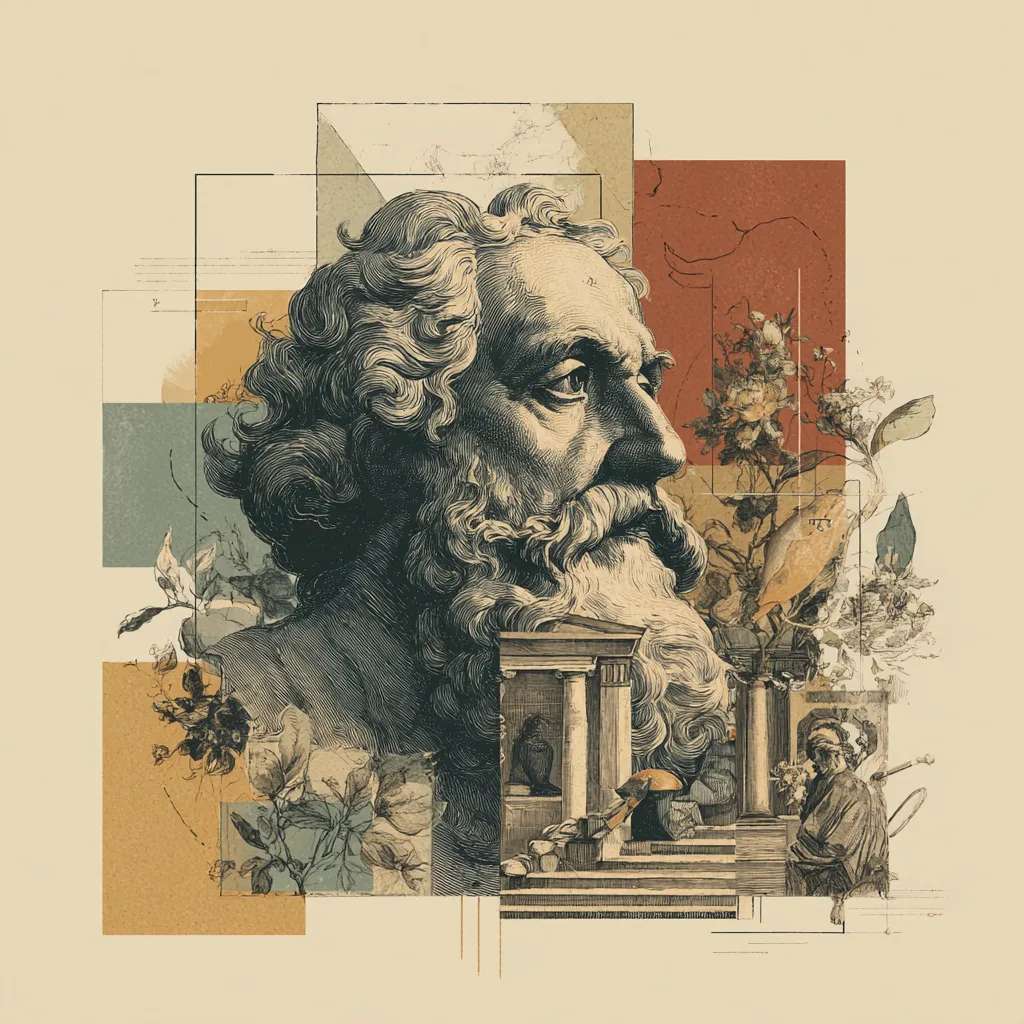
What Is Philosophy?
Philosophy is the study of fundamental questions about existence, knowledge, ethics, and reason. It asks the questions that science alone cannot answer: What is the meaning of life? What makes an action right or wrong? How do we know what we know? The word comes from the Greek philosophia — literally, “love of wisdom.”
Philosophy began in ancient Greece around 600 BC, when thinkers like Thales and Anaximander started seeking natural explanations for the world rather than relying on mythology. From those early beginnings, philosophy grew into one of the most influential intellectual traditions in human history, shaping everything from science and politics to law, psychology, and the way we think about our own lives.
Ancient Philosophy: Socrates, Plato, and Aristotle
The foundations of Western philosophy were laid by three towering figures in Athens. Socrates developed the Socratic method — a way of pursuing truth through relentless questioning — and was ultimately sentenced to death for “corrupting the youth” of Athens. His student Plato wrote the Republic, explored the theory of Forms (the idea that abstract ideals are more real than physical objects), and founded the Academy, one of the first institutions of higher learning. Plato’s student Aristotle broke new ground in logic, empiricism, and virtually every field from biology to politics, earning him the title “the philosopher” in the medieval world.
Beyond the foundational trio, ancient Greece also gave rise to Stoicism — a practical philosophy focused on virtue, resilience, and distinguishing what you can control from what you cannot. Practised by Epictetus (a former slave), Seneca (an advisor to Emperor Nero), and Marcus Aurelius (the Roman emperor who wrote Meditations on campaign), Stoicism has experienced a remarkable surge in modern popularity, influencing self-help, leadership thinking, and cognitive behavioural therapy.
Modern Philosophy: From Descartes to Existentialism
The Enlightenment era brought a revolution in philosophical thinking. René Descartes declared “I think, therefore I am,” establishing doubt as the starting point of knowledge and laying the groundwork for modern rationalism. David Hume championed empiricism and scepticism, arguing that human understanding is rooted in experience rather than pure reason. Immanuel Kant then attempted to bridge the two, proposing that the mind actively structures our experience of the world — an idea that reshaped epistemology, ethics, and aesthetics.
In the 19th and 20th centuries, existentialism emerged as a powerful philosophical movement. Søren Kierkegaard emphasised individual choice and the leap of faith. Friedrich Nietzsche declared that “God is dead” and challenged every inherited assumption about morality. Jean-Paul Sartre argued that existence precedes essence — that we are radically free to define ourselves — while Albert Camus confronted the absurdity of life and asked whether it was still worth living. These ideas profoundly shaped modern politics, literature, individual freedom, and how we understand what it means to be human.
Why Learn Philosophy?
Philosophy teaches critical thinking, ethical reasoning, and how to question assumptions — skills that are more relevant today than ever. In an age of AI ethics debates, polarised political discourse, and the search for personal meaning, philosophical thinking provides the frameworks to navigate complexity. The modern resurgence of Stoicism alone shows how hungry people are for ancient wisdom applied to contemporary life.
Chunks makes philosophy accessible by breaking each topic into short chapters you can read or listen to in 5–10 minutes. Every story is editorially reviewed for accuracy and written in a narrative style that brings thinkers and their ideas to life — whether it is Socrates on trial in Athens or Nietzsche wandering the Swiss Alps. Professional audio narration with synchronised text means you can learn during a commute, a break, or before bed.
Why Chunks Covers Philosophy
- Stories
- 3+Stories
- Thinkers Covered
- 5+Thinkers Covered
- Min per Chapter
- 5–10Min per Chapter
Chunks covers philosophy from 600 BC Athens to 20th-century existentialism — over 2,500 years of ideas in stories you can finish during a lunch break. Featured thinkers include Socrates, Plato, Nietzsche, Marcus Aurelius, Epictetus, and Seneca.
Every philosophy story on Chunks averages 2–4 hours of human research and editorial review before publication. Unlike encyclopedia entries, each story is structured as a narrative with context, characters, and stakes — so you understand not just what a philosopher thought, but why it mattered then and why it still matters now.
Featured Philosophy Stories
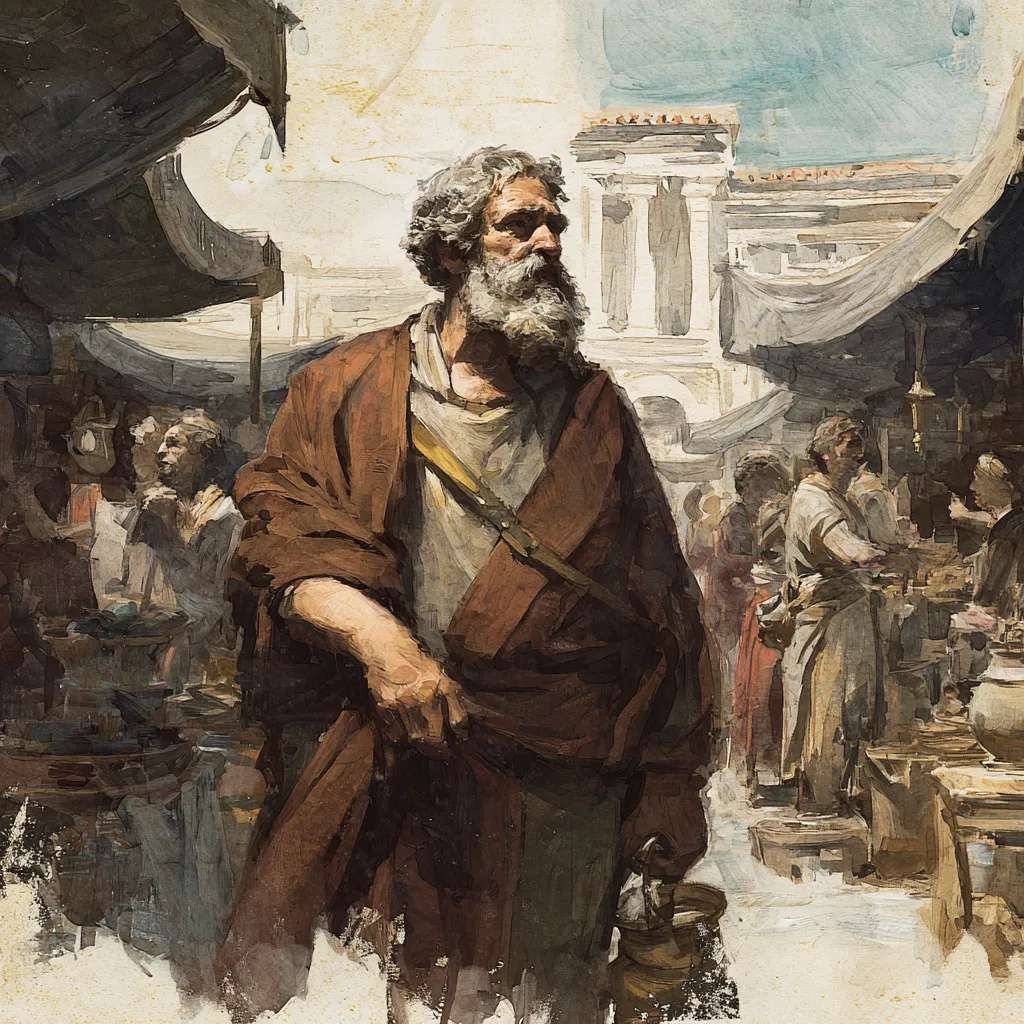 SocratesThe father of Western philosophy who was sentenced to death for asking too many questions
 Friedrich NietzscheThe radical thinker who declared God is dead and challenged every assumption about morality
 PlatoThe myth of the cave — a timeless allegory about reality, perception, and the journey from ignorance to enlightenment
Explore more topics
From the blog
- Philosophy for Beginners: Where to StartA practical guide to the major branches, key thinkers, and how to begin your philosophy journey.
- What Is Stoicism? A Practical Guide for Modern LifeThe origins, core principles, and modern applications of Stoic philosophy.
Frequently asked questions
What is philosophy?
Philosophy is the study of fundamental questions about existence, knowledge, values, reason, mind, and language. Originating in ancient Greece around 600 BC, it seeks to understand the nature of reality, what it means to live a good life, and how we can know what is true. The word itself comes from the Greek philosophia, meaning "love of wisdom."
Who are the most important philosophers?
Some of the most influential philosophers in history include Socrates, Plato, and Aristotle from ancient Greece; René Descartes and Immanuel Kant from the Enlightenment; Friedrich Nietzsche and Søren Kierkegaard from the existentialist tradition; Jean-Paul Sartre and Simone de Beauvoir from 20th-century French philosophy; and Marcus Aurelius, the Roman emperor who practised Stoicism. Each shaped how we think about ethics, knowledge, politics, and the nature of reality.
What is Stoicism?
Stoicism is an ancient Greek philosophy founded by Zeno of Citium around 300 BC. It teaches that virtue is the highest good, that we should focus on what we can control and accept what we cannot, and that resilience comes from disciplining our reactions to external events. Its most famous practitioners include Marcus Aurelius, Epictetus, and Seneca. Stoicism has seen a huge resurgence in modern popularity, influencing self-help, leadership, and cognitive behavioural therapy.
What are the main branches of philosophy?
The main branches of philosophy are epistemology (the study of knowledge), ethics (the study of morality and right action), metaphysics (the study of the nature of reality), logic (the study of valid reasoning), aesthetics (the study of beauty and art), and political philosophy (the study of government, justice, and rights). Each branch asks different fundamental questions about human experience and the world around us.
What is the best way to learn philosophy?
The most effective way to start learning philosophy is with the ideas and thinkers themselves rather than dense academic texts. Apps like Chunks break philosophy into short, narrative-driven chapters you can read or listen to in 5–10 minutes, covering Stoicism, existentialism, ethics, and more. For deeper reading, Sophie's World by Jostein Gaarder is an excellent introduction, and from there you can explore individual primary texts by the philosophers who interest you most.
Is Chunks free to download?
Yes. Chunks is free to download on both iOS and Android, with access to a selection of stories at no cost. To unlock the full library of over 200 stories across philosophy, history, science, literature, and more, you can purchase a monthly subscription ($9.99) or an annual subscription ($49.99).
Download Chunks to explore philosophy and hundreds more stories
 Download on iOS
 Download on Android