
Learn American History in Minutes
Explore the events, people, and turning points that shaped the United States through bite-sized stories on Chunks — free to download on iOS and Android.
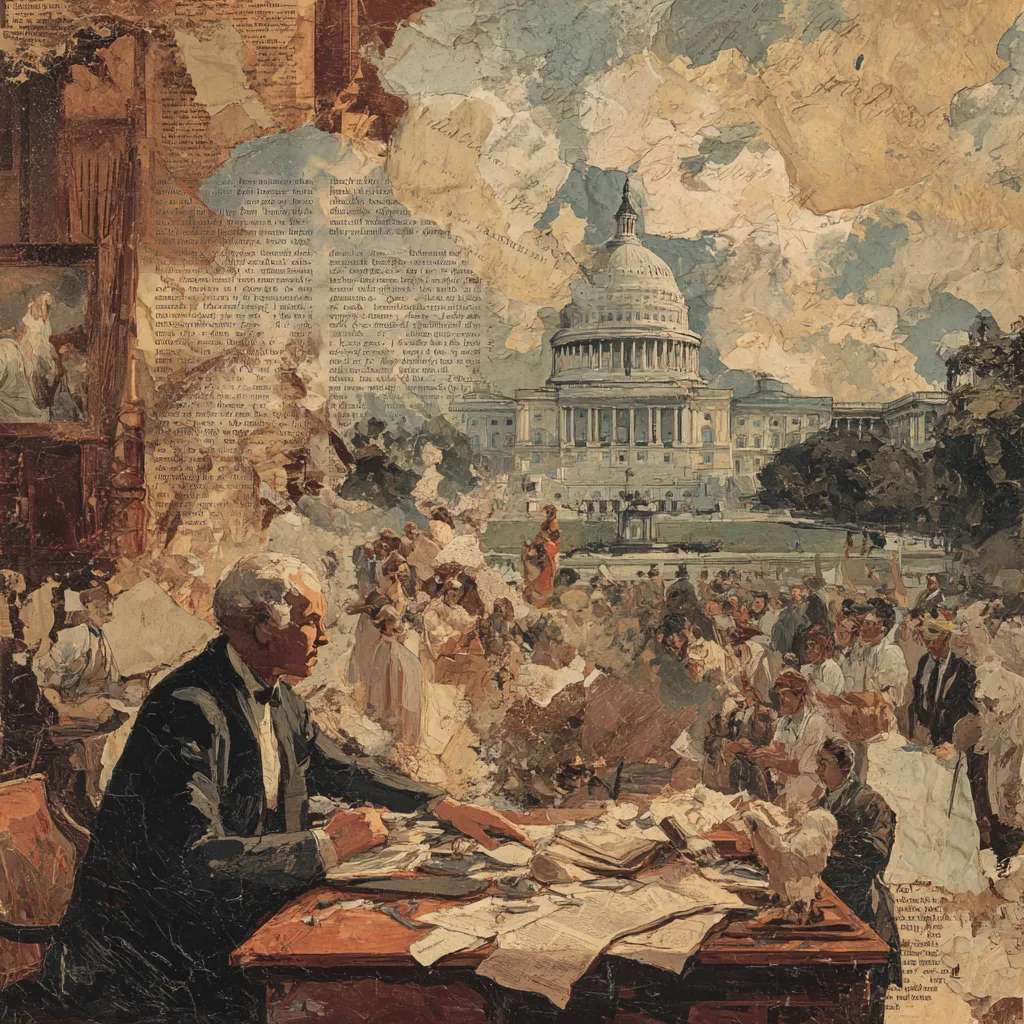
The Founding of America
The story of the United States begins with revolution. By the 1770s, thirteen British colonies along the eastern seaboard had grown restless under imperial rule — taxed without representation and denied the political freedoms they believed were their natural right. In 1776, the Continental Congress adopted the Declaration of Independence, authored principally by Thomas Jefferson, declaring that all men are created equal and endowed with unalienable rights to life, liberty, and the pursuit of happiness. What followed was a gruelling war for independence led by General George Washington, who held together an outmatched army through brutal winters and crushing defeats until the British finally surrendered at Yorktown in 1781.
Victory on the battlefield was only the beginning. The founders then faced the enormous challenge of building a functioning government from scratch. Benjamin Franklin, James Madison, Alexander Hamilton, and their contemporaries debated fiercely over the balance of power between states and the federal government. The result was the United States Constitution, ratified in 1788 — a document that established the separation of powers, a system of checks and balances, and the Bill of Rights that would become a model for democracies around the world.
Civil War, Expansion, and Transformation
Throughout the 19th century, the United States expanded relentlessly westward. The Louisiana Purchase of 1803 doubled the nation’s size overnight. The California Gold Rush of 1848 drew hundreds of thousands of fortune seekers to the West Coast, transforming San Francisco from a sleepy settlement into a booming city and accelerating California’s path to statehood. But this expansion came at a devastating cost — the forced removal and displacement of Indigenous peoples, and the deepening entrenchment of slavery in the Southern economy.
The question of slavery tore the nation apart. By 1861, eleven Southern states had seceded to form the Confederacy, and the Civil War began — the deadliest conflict in American history, killing over 600,000 soldiers. President Abraham Lincoln issued the Emancipation Proclamation in 1863, and the Union’s victory in 1865 formally abolished slavery through the Thirteenth Amendment. The war preserved the Union, but the era of Reconstruction that followed was marked by fierce resistance to racial equality — a struggle that would continue for more than a century.
The 20th Century and Modern America
The 20th century saw the United States emerge as a global superpower. In World War I, units like the Harlem Hellfighters — the 369th Infantry Regiment, composed of African American soldiers — served with extraordinary distinction on the Western Front, earning the Croix de Guerre from France while facing segregation from their own military. World War II further cemented America’s global role, and the post-war period brought both unprecedented prosperity and the existential tension of the Cold War. In 1969, the Apollo 11 mission landed Neil Armstrong and Buzz Aldrin on the Moon, a triumph of ambition and engineering that captivated the world.
At home, the Civil Rights Movement reshaped American society. Rosa Parks refused to give up her bus seat in Montgomery, Alabama, in 1955, igniting a boycott that became a catalyst for change. Martin Luther King Jr. led the movement with a philosophy of nonviolent resistance, delivering his iconic “I Have a Dream” speech in 1963 and helping secure the Civil Rights Act of 1964 and the Voting Rights Act of 1965. These hard-won victories did not end the struggle for equality, but they transformed the legal and moral landscape of the nation.
Why Learn American History?
American history is not just a collection of dates and battles — it is the story of how ideas about freedom, equality, and democracy were tested, expanded, and fought over across centuries. Understanding the Constitution, the abolition of slavery, the Civil Rights Movement, and the role of the United States in global affairs gives essential context for the political, social, and cultural debates that shape the world today. The patterns of American history — revolution, expansion, conflict, reform — repeat and echo in ways that make the past directly relevant to the present.
Chunks makes American history accessible by breaking each story into short chapters you can read or listen to in 5–10 minutes. Every story is editorially reviewed for accuracy and written in a narrative style that brings historical figures and events to life — whether it is the gold seekers of 1848 or the Harlem Hellfighters of World War I. Professional audio narration with synchronised text means you can learn during a commute, a break, or before bed.
Why Chunks Covers American History
- Stories
- 3+Stories
- Years Spanned
- 1776–1969Years Spanned
- Min per Chapter
- 5–10Min per Chapter
Chunks covers nearly 200 years of American history — from the Declaration of Independence to the Civil Rights Movement — through the people who lived it. Featured stories span the American Revolution, the California Gold Rush, and the Harlem Hellfighters of World War I.
Each American history story on Chunks averages 2–4 hours of human research and editorial review, drawing on primary sources and scholarly accounts. Unlike timeline-style overviews, every story is told as a narrative — so you understand not just what happened, but who was there and why it changed the course of a nation.
Featured American History Stories
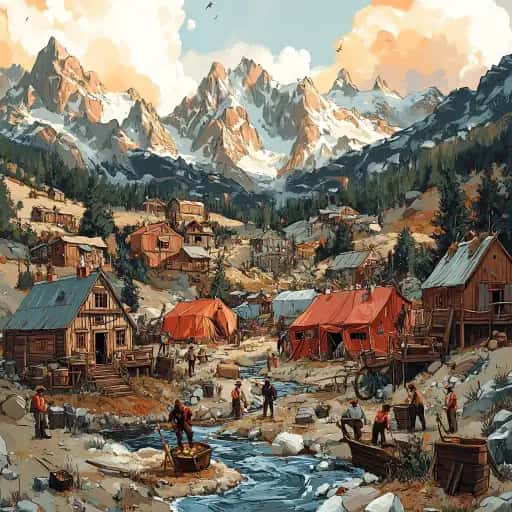 The California Gold RushHow the 1848 discovery at Sutter's Mill triggered the largest mass migration in American history
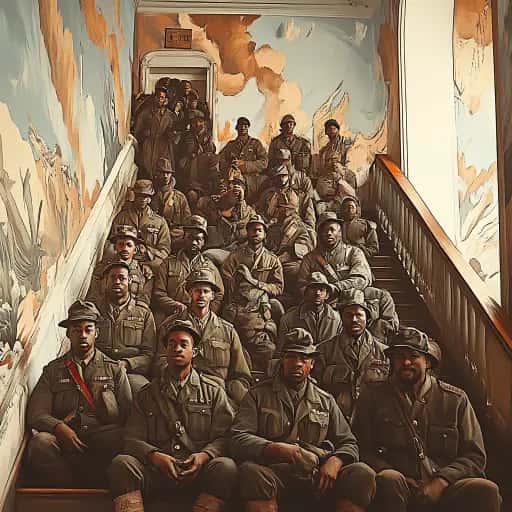 The Harlem HellfightersThe story of the 369th Infantry Regiment, one of the most decorated American units in World War I
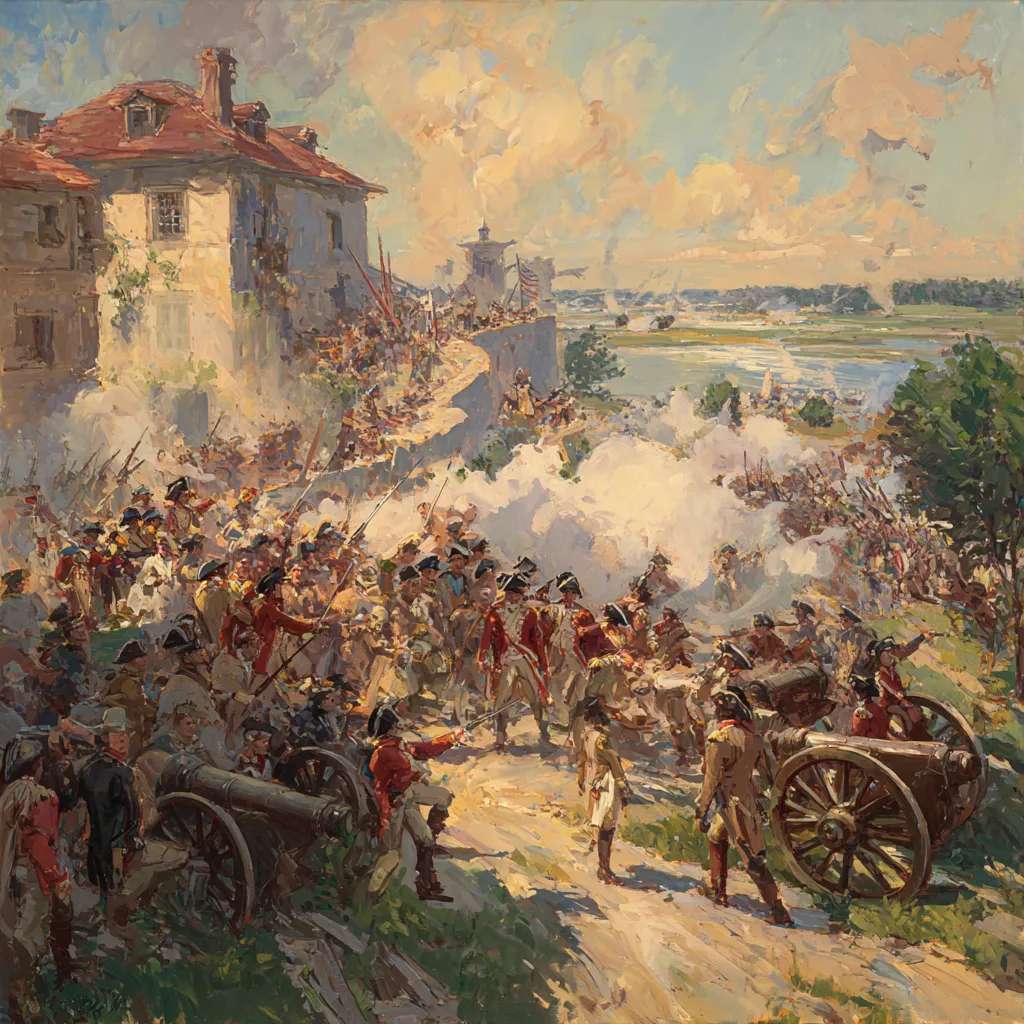 The American RevolutionHow thirteen colonies defied the British Empire and forged a new nation founded on liberty and self-governance
Explore more topics
From the blog
- How to Learn History Effectively: A Beginner’s GuideProven methods and practical tools for building a genuine understanding of the past.
- Best Apps to Learn History in 2026A side-by-side comparison of the top history learning apps available right now.
- 10 Fascinating History Stories You Can Learn in 5 MinutesQuick stories spanning ancient civilisations, world wars, and scientific breakthroughs.
Frequently asked questions
What are the most important events in American history?
The most significant events in American history include the American Revolution and Declaration of Independence in 1776, the Civil War and abolition of slavery, westward expansion and the California Gold Rush, both World Wars, the Civil Rights Movement of the 1950s and 1960s, and the Moon landing in 1969. Each of these moments fundamentally reshaped the nation and its role in the world.
Who are the key figures in American history?
American history is shaped by figures such as George Washington, who led the Continental Army and became the first president; Thomas Jefferson, the principal author of the Declaration of Independence; Abraham Lincoln, who preserved the Union and ended slavery; Frederick Douglass and Harriet Tubman, who fought tirelessly against slavery; Franklin D. Roosevelt, who guided the country through the Great Depression and World War II; and Martin Luther King Jr. and Rosa Parks, who were central to the Civil Rights Movement.
What period does American history cover?
American history spans from the pre-colonial indigenous civilisations that existed for thousands of years before European contact through to the present day. However, most educational content focuses on the period from 1776 onward — beginning with the Declaration of Independence and the founding of the United States as a nation, through the Civil War, industrialisation, world wars, civil rights, and into the modern era.
Why is American history important to learn?
Understanding American history is essential for making sense of the modern world. The United States Constitution and Bill of Rights established principles of democracy, individual liberty, and the rule of law that influenced governments worldwide. Learning about the Civil Rights Movement, the struggle for abolition, and the ongoing fight for equality provides critical context for understanding contemporary debates about justice, representation, and global influence.
What is the best way to learn American history?
The most effective approach is narrative-driven learning — engaging with history as stories rather than lists of dates and facts. Apps like Chunks break American history into short, focused chapters you can read or listen to in 5–10 minutes, with professional audio narration and editorially reviewed content. For deeper study, Howard Zinn's A People's History of the United States offers a comprehensive alternative perspective, and Ken Burns's documentary series provide richly detailed visual explorations of key periods.
Is Chunks free to download?
Yes. Chunks is free to download on both iOS and Android, with access to a selection of stories at no cost. To unlock the full library of over 200 stories across American history, world history, philosophy, science, and more, you can purchase a monthly subscription ($9.99) or an annual subscription ($49.99).
Download Chunks to explore American history and hundreds more stories
 Download on iOS
 Download on Android