Milo of Croton: Legendary Strength & Philosophy


The Legend of Milo of Croton
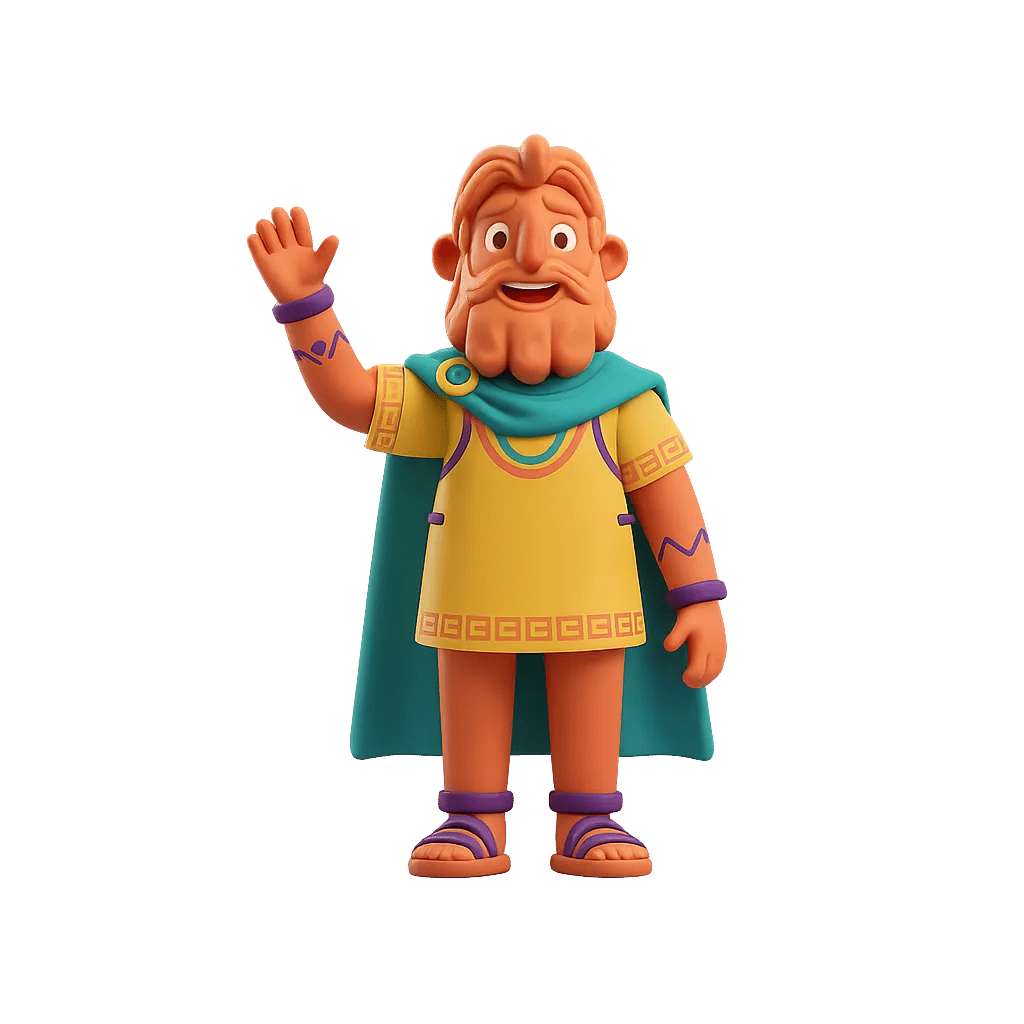
Milo of Croton is one of the most celebrated figures from ancient Greek history, renowned for his extraordinary strength and athletic prowess. Born in the 6th century BCE in the Greek city-state of Croton (modern-day Crotone, Italy), Milo became a legendary wrestler, winning numerous titles at the most prestigious athletic festivals of his time. His story is not just one of physical might, but also one that touches upon the philosophical ideals of discipline, perseverance, and self-mastery that were highly valued in ancient Greece. Croton itself was a city known for its athletic tradition and its connection to the Pythagorean school of philosophy, which emphasized harmony and order, both in the cosmos and in human life.
Milo's Most Famous Feats of Strength
Milo's legend is replete with incredible tales of strength that have been passed down through centuries. Perhaps his most famous feat involved a training method where he would carry a newborn calf on his shoulders every day. As the calf grew into a full-grown bull, Milo's strength increased proportionally, allowing him to continue carrying the massive animal. This story, first recorded by the historian Diodorus Siculus, perfectly illustrates the principle of progressive overload, a fundamental concept in modern strength training and muscle development. This method of gradual resistance increase is still a cornerstone of athletic conditioning today.
Other accounts describe Milo performing astonishing acts, such as eating enormous quantities of meat in a single day – reportedly 20 pounds of meat and 20 pounds of bread, and drinking 15 pints of wine – or holding a pomegranate in his hand so tightly that no one could pry it from him, yet without crushing the fruit. This latter feat demonstrated not just raw power, but also incredible control and finesse. He was also said to have stood on a greased discus, challenging others to push him off, a feat of balance and strength that few could match. These stories, whether entirely factual or embellished over time by writers like Pausanias and Athenaeus, cemented his status as a demigod-like figure in the ancient world, often compared to Heracles.
Milo and Ancient Greek Philosophy
While Milo is primarily known for his physical achievements, his life and training methods resonate deeply with ancient Greek philosophical concepts, particularly those emphasizing discipline, virtue, and the pursuit of excellence. The Greeks believed in the ideal of 'kalokagathia,' the harmonious development of both body and mind. Milo's dedication to his physical craft can be seen as an embodiment of this ideal, where physical perfection was intertwined with moral and intellectual virtue. He was not merely a strongman, but a symbol of what a human could achieve through rigorous self-cultivation.
His unwavering commitment to his training, day in and day out, reflects a profound sense of self-discipline that aligns with the principles of Stoicism, a school of philosophy that would emerge later but whose roots lay in earlier Greek thought. Stoics emphasized control over one's desires and emotions, and a focus on what one could control – in Milo's case, his physical training and dedication. His pursuit of excellence in wrestling was not merely for glory, but also a demonstration of human potential and the rewards of persistent effort. This dedication to a craft, whether physical or intellectual, was seen as a path to eudaimonia, or human flourishing.
The story of Milo, therefore, serves as a powerful metaphor for self-mastery. His physical strength was a direct result of his mental fortitude and his ability to consistently push his own boundaries. This dedication to personal improvement and the cultivation of one's abilities was a central theme in the teachings of philosophers like Aristotle and the pursuit of virtue, who believed that virtue was a habit developed through consistent practice. For Aristotle, virtue was not an innate quality but something acquired through repeated action, much like Milo's daily training.
Milo's Olympic Victories and Legacy
Milo's athletic career was unparalleled. He achieved an astonishing six Olympic victories in wrestling, a feat rarely matched in antiquity. His first Olympic win came in 540 BCE, when he competed in the boys' wrestling category. He then went on to win five more titles in the men's wrestling division, spanning several Olympic cycles. Beyond the Olympics, Milo also secured numerous victories at the other Panhellenic Games: ten wins at the Pythian Games, nine at the Nemean Games, and eleven at the Isthmian Games. These victories were not just personal triumphs; they brought immense prestige to his home city of Croton, which was already renowned for its athletes and its medical school, founded by Alcmaeon. Milo became a living legend, celebrated in odes by poets like Simonides and Pindar, and his image was even struck on coins.
The Pythagorean Connection: Mind, Body, and Croton
Milo's life in Croton was deeply intertwined with the philosophical currents of his time, particularly the influence of Pythagoras. Pythagoras, the famous mathematician and philosopher, established his school in Croton around 530 BCE. The Pythagoreans emphasized a holistic approach to life, advocating for a disciplined lifestyle that included specific dietary practices, physical exercise, and intellectual pursuits. While there's no definitive proof that Milo was a direct disciple of Pythagoras, the philosophical atmosphere of Croton, with its focus on order, harmony, and the cultivation of both mind and body, undoubtedly influenced his approach to training and life. The Pythagorean diet, often vegetarian, might seem at odds with Milo's reported meat consumption, but the underlying principle of disciplined eating for health and performance would have resonated. This connection highlights how deeply integrated athletic and philosophical ideals were in ancient Greek culture.
The End of a Legend
Milo's life, like many ancient legends, ends with a cautionary tale. It is said that in his old age, still confident in his immense strength, he attempted to tear apart a tree trunk that had been partially split by woodcutters. His hands became trapped in the cleaving wood, and he was subsequently attacked and killed by wolves. This tragic end, recounted by Strabo and Pausanias, serves as a reminder of the limits of even the greatest human strength and perhaps a philosophical lesson on hubris – the excessive pride that often precedes a downfall. It suggests that even the most disciplined and powerful individuals are ultimately subject to the forces of nature and the passage of time.
Milo of Croton remains an enduring symbol of physical power and disciplined training. His story continues to inspire athletes and thinkers alike, demonstrating the profound connection between physical prowess and philosophical ideals of self-improvement. To explore more fascinating stories of ancient figures and philosophical concepts, download Chunks.app today at https://chunks.app.

Founder of Chunks Microlearning. Software engineer with 15 years of experience.
 Download on iOS
 Download on Android