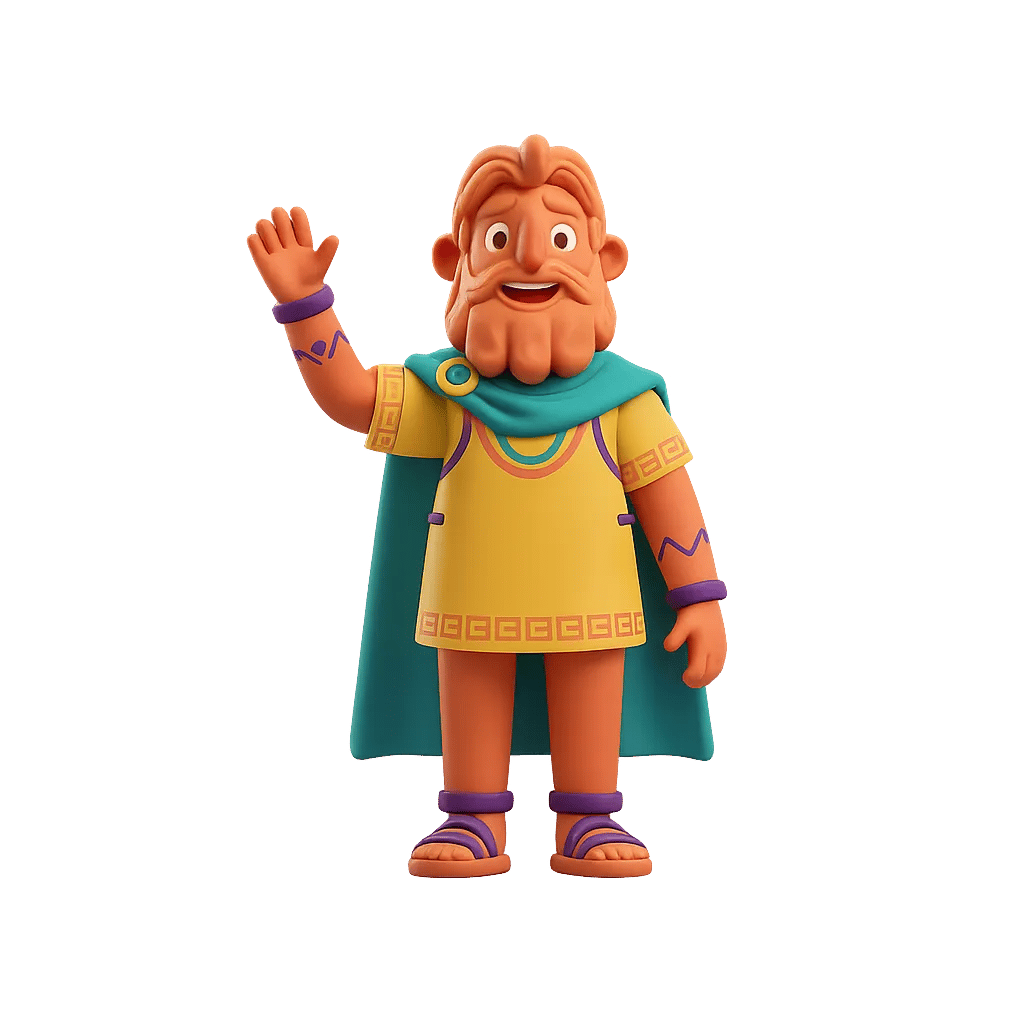
The Ben Franklin Effect Explained: Why Asking for a Favour Can Win Friends


TL;DR: The Ben Franklin effect is the idea that a person who has done you a favour tends to like you more afterwards, not less. It is named after an episode in Benjamin Franklin's Autobiography in which he won over a hostile rival by borrowing a book from him. Psychologists usually explain it through cognitive dissonance. The research behind it is real but thin, and recent work suggests the story is more complicated than "any favour works". Below: Franklin's account, the experiments, and the caveats.
What is the Ben Franklin effect?
Most of us assume that we do favours for people we like. The Ben Franklin effect turns that around: doing someone a favour can make you like them more. If it holds, the practical advice is counter-intuitive. To warm up a cool colleague or neighbour, ask them for a small kindness rather than offering one yourself.
The name comes from Franklin's own telling of a small political story, and it has been attached to a modest body of experiments. Both parts need looking at closely.
Franklin's story
Franklin describes the episode in his Autobiography. In 1736 he was chosen clerk of the Pennsylvania General Assembly, with no opposition. The following year, when he stood again, a new member made "a long speech against me, in order to favour some other candidate". Franklin won the vote anyway, but he did not like the opposition. The new member was, he writes, "a gentleman of fortune and education, with talents that were likely to give him, in time, great influence in the House".
Franklin did not try to win him over by "any servile respect". He took "this other method" instead. Having heard that the man had in his library "a certain very scarce and curious book", he wrote a note asking to borrow it for a few days. The man "sent it immediately", and Franklin returned it about a week later "with another note, expressing strongly my sense of the favour".
Then comes the payoff. When they next met in the House, the man spoke to him, which he had never done before, "and with great civility". He "ever after manifested a readiness to serve me on all occasions, so that we became great friends, and our friendship continued to his death".
Franklin draws his own moral from an "old maxim" he had learned: "He that has once done you a kindness will be more ready to do you another, than he whom you yourself have obliged." He adds that it shows how much more profitable it is "prudently to remove, than to resent, return, and continue inimical proceedings".
Two points about that passage matter for what follows. First, it is a single anecdote told by Franklin about himself, and we have only his word for how it went. Second, Franklin offers it as an instance of an old proverb about favours and kindness. He did not claim to have discovered a psychological law, and the label "Ben Franklin effect" is a modern one.
The experiments
The standard citation is Jecker and Landy's 1969 paper in Human Relations, "Liking a Person as a Function of Doing Him a Favour" (volume 22, issue 4, pages 371-378). According to the account on Wikipedia, students took part in a question-and-answer contest for money prizes. Afterwards, a third of the winners were asked directly by the researcher to give the money back, because his own funds were running low. Another third were asked by a secretary on behalf of the psychology department. The rest were not asked. All then rated how much they liked the researcher. Those he had asked directly liked him most, and those asked through the intermediary liked him least.
We have not been able to confirm the paper's sample size from its own text, so we do not quote one here.
The same account describes a second study, by Schopler and Compere (1971), in which participants taught a pattern to a learner and either encouraged or insulted them. Teachers who insulted the learner rated the learner as less attractive and less likable. That is the Franklin effect's darker twin: we can come to dislike someone we have treated badly.
Why would it work? The dissonance explanation
The usual theoretical account uses cognitive dissonance. If you have helped someone you did not much like, there is a clash between "I do not like this person" and "I just did something kind for them". A cheap way to resolve the clash is to revise the attitude: "I must like them more than I thought." The same logic is applied to the insulting teachers: "I was cruel to them, so they must deserve it."
If you want the wider story of dissonance, we have Cognitive Dissonance as a short narrated story.
What do replication and criticism say?
Honestly, the evidence is thinner than the popular write-ups suggest.
Few direct tests. The widely cited results are Jecker and Landy (1969), Schopler and Compere (1971) and a much later study by Yu Niiya. We did not find a large, preregistered replication of the 1969 design. The effect has become better known than it has been tested.
Niiya's findings complicate the picture. In a 2016 paper in The Journal of Social Psychology (volume 156, issue 2, pages 211-221), "Does a Favor Request Increase Liking Toward the Requester?", Niiya tested Japanese and American participants. According to the abstract, people who were asked for help by a confederate liked that person more than at baseline and rated them as more sociable and closer. But helping without a direct request produced no such increase. Niiya pointed to the Japanese concept of amae, roughly a willingness to rely on another's indulgence, as a reason asking for help could promote a closer relationship. According to Wikipedia's summary, Niiya reads the effect as the helper reciprocating the requester's perceived effort to build a friendly relationship, which would also explain why liking fell when an intermediary made the request. That sits awkwardly with a pure dissonance account, which should apply to any favour you did, requested or not.
It is a small effect on a small scale. Nobody has shown that asking for a favour will turn an enemy into a friend. Franklin's rival had made a speech against him in a clerk election, which is mild hostility, and the studies involve mild requests and short interactions too.
Context and sincerity matter. The studies we have do not test what happens when the request is excessive, repeated, manipulative or made to someone with a real reason to resent you. Anyone using this as a tactic should expect that people may see through it.
How the Ben Franklin effect shows up in everyday life
- Starting relationships. Asking a new colleague for a small bit of advice can open a conversation more easily than waiting for a reason to help them.
- Mentoring and teaching. People who give time to a learner may come to care more about that learner, which is the same pattern as the teachers in Schopler and Compere's study, in a kinder direction.
- Volunteering. Having invested effort in a cause may strengthen commitment to it, though that is a related idea rather than a tested prediction of this effect.
- Conflict. A small, genuine request that lets the other person be helpful may be a gentler route back to civility than an argument.
The ethical test is simple: ask for something you actually need, and say thank you in a way that shows the help mattered, as Franklin did with his second note.
Related concepts
- The IKEA Effect Explained: effort invested in something raises how we value it.
- The Law of Effect Explained: the older idea that consequences shape what we repeat.
- The Just-World Phenomenon Explained: another way attitudes shift to fit what has happened.
- The Lucifer Effect Explained: how actions and roles can reshape how we see others.
- The rest of the set is on our psychology hub.
Frequently Asked Questions
What is the Ben Franklin effect in psychology?
It is the tendency to like someone more after doing them a favour. The name comes from Franklin's account of winning over a rival by borrowing a book from him.
What did Ben Franklin actually do?
By his own account, he wrote to a legislator who had opposed him, asked to borrow a very scarce and curious book, and returned it a week later with a note of thanks. The man then spoke to him civilly and became a lifelong friend.
What is the research behind the Ben Franklin effect?
The most-cited study is Jecker and Landy (1969) in Human Relations. Students who were asked directly by the researcher to return their winnings liked him most, and those asked through a secretary liked him least. Later work includes Niiya's study, published in 2016.
Is the Ben Franklin effect real?
There is some evidence for it in small studies, but it is not a heavily replicated finding. Niiya's results suggest that being asked directly matters.
Does the Ben Franklin effect work on everyone?
There is no reason to think so. The studies involve mild requests in short interactions, and none of them show that it works on someone with a real grievance.
How is it related to cognitive dissonance?
Dissonance theory is the usual explanation: if you helped someone, you resolve the tension between that act and any dislike by liking them more. Niiya's results suggest other mechanisms may be at work.
Learning more
Chunks has narrated stories on Franklin's life in Benjamin Franklin: Lightning, Liberty and Contradiction, with a free tier and no ads.

Founder of Chunks Microlearning. Software engineer with 15 years of experience.
 Download on iOS
 Download on Android