
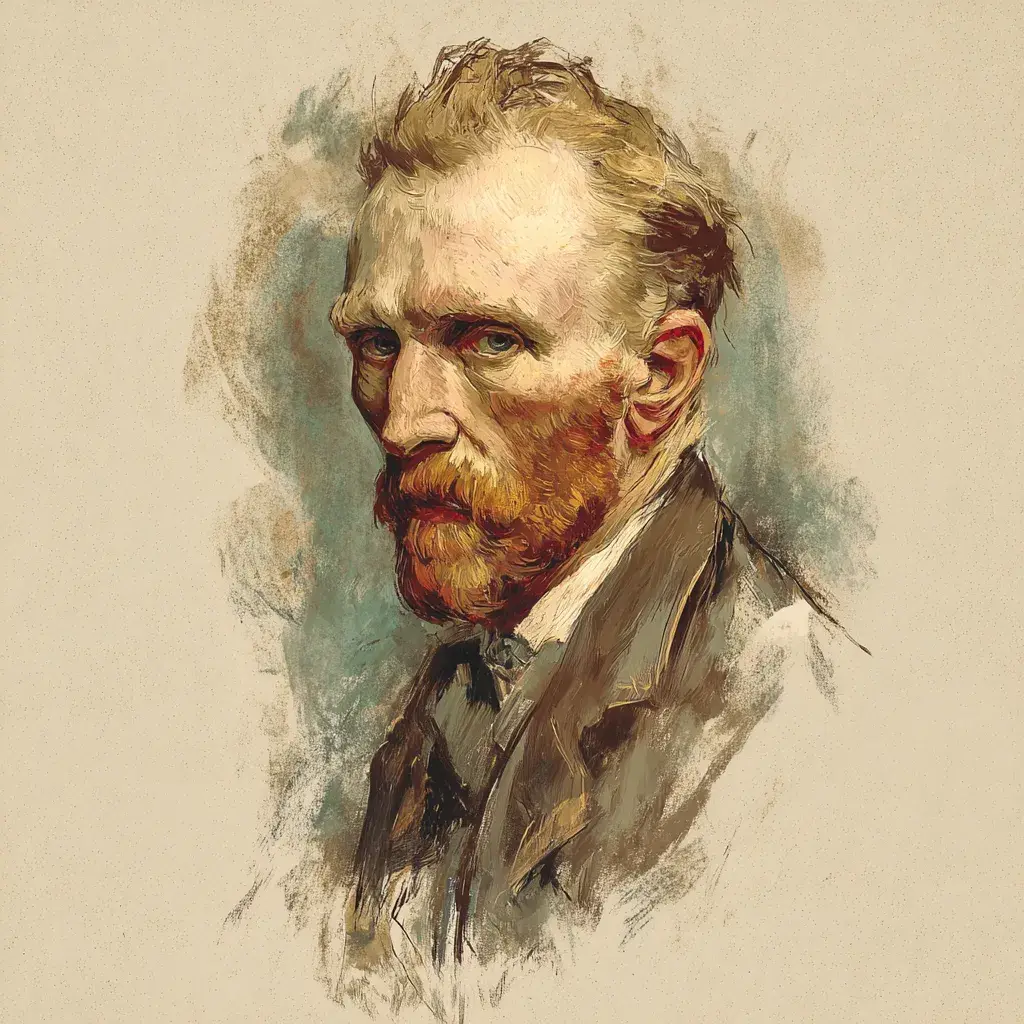
In August 1880, a 27-year-old Vincent van Gogh was adrift. He had already failed as an art dealer's clerk, a teacher, and a bookseller. His most recent attempt at a career, as a missionary in a poor Belgian coal-mining district, ended in dismissal. He had been too radical, giving away his food and clothes to the miners he served. His father was so concerned by his behavior he considered having him committed. It was Vincent's brother, Theo, who offered a lifeline. He saw the power in Vincent’s sketches and advised him to dedicate himself to art. Theo promised to send him a regular allowance, a financial support that would continue for the rest of Vincent’s life. With this backing, Vincent finally found his purpose.
Vincent van Gogh
The troubled life of Vincent van Gogh, from his decision to become an artist in 1880 to his lasting legacy.
Chapter 1
A New Calling
0:50
People in this story
Part of
Frequently Asked Questions
Why are Van Gogh's early paintings so dark?
During his 'Dutch period,' Van Gogh aimed to be a painter of peasant life. He used dark, earthy tones like brown and grey to depict the harsh reality of manual labor. He said his painting 'The Potato Eaters' should 'smell of bacon, smoke, and potato steam,' choosing colors that resembled a dusty, unpeeled potato.
Did Van Gogh really cut off his whole ear?
While legend often says he only cut off the lobe, recent research suggests he severed almost the entire ear with a razor after an argument with Paul Gauguin. He then gave it to a young woman who was a cleaner at a local brothel, not a prostitute as is often claimed.
Was Van Gogh famous during his lifetime?
No, Vincent van Gogh was virtually unknown and sold very few paintings while he was alive. His posthumous fame was almost single-handedly built by his sister-in-law, Johanna van Gogh-Bonger. After Vincent's and her husband Theo's deaths, she organized exhibitions and published Vincent's letters.
To continue the story, download the Chunks Microlearning app
Or get it straight away:
 Download on iOS
 Download on Android