
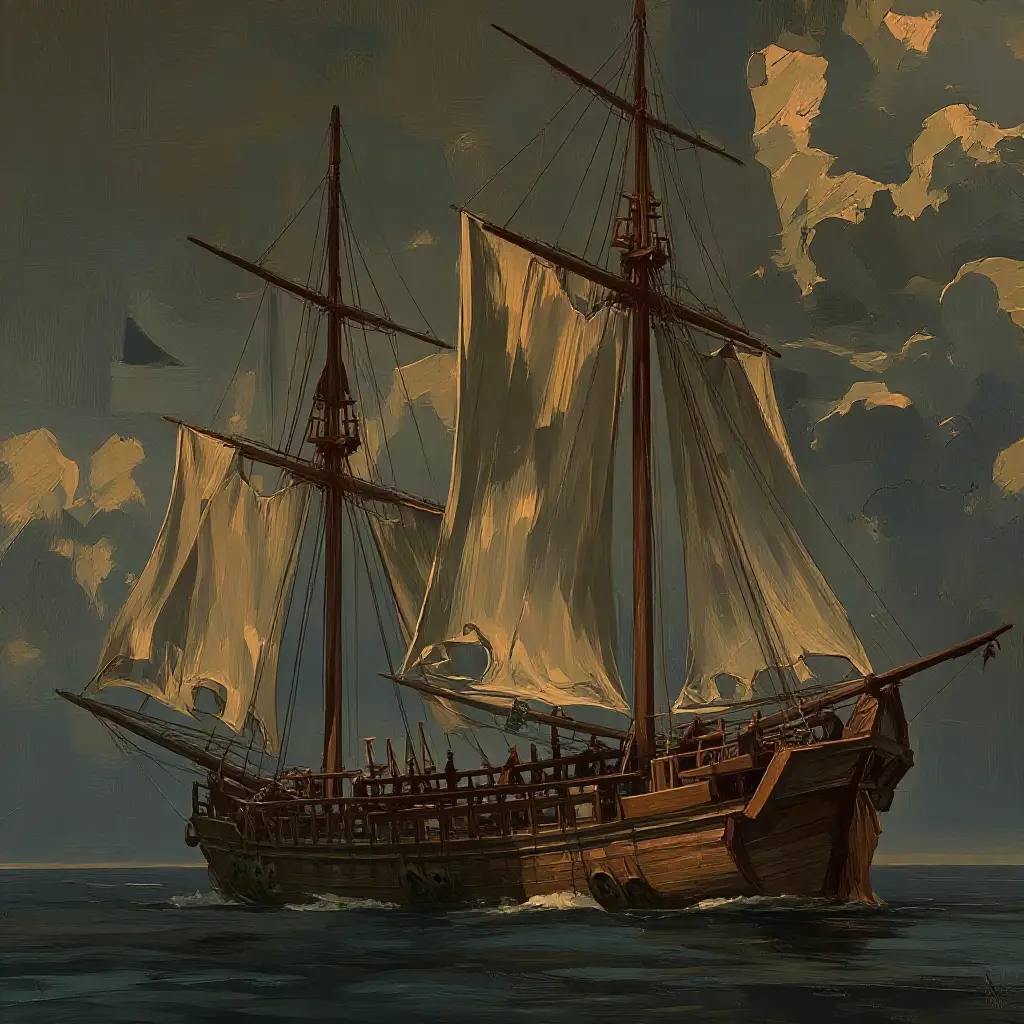
In ancient Athens, a legendary ship was kept as a memorial. It was the 30-oared galley said to have carried the hero Theseus home from Crete. As the Greek historian Plutarch recorded in the early second century CE, the Athenians preserved it for centuries by replacing every decaying plank with new, sound timber. This careful maintenance created what Plutarch called a 'standing example' for philosophers. They wrestled with a simple but profound question: if every single part of the ship was replaced over the years, is it still the same Ship of Theseus?
The Ship of Theseus Paradox
The ancient paradox of the Ship of Theseus, first recorded by Plutarch, questions if an object remains the same after all its parts are replaced.
Chapter 1
The Athenian Question
0:38
Frequently Asked Questions
What is the Ship of Theseus paradox?
It's a thought experiment about whether an object that has had all its components replaced remains fundamentally the same object. The puzzle was first recorded by the historian Plutarch, describing a ship in Athens that was maintained by replacing every old plank over time.
How did Thomas Hobbes change the paradox?
In the 17th century, philosopher Thomas Hobbes added a new layer. He imagined a scavenger collecting the old, discarded planks and using them to build a second ship. This created a two-ship problem: which is the real Ship of Theseus, the repaired one or the one rebuilt from original parts?
How does the paradox relate to people?
The paradox is often applied to personal identity. The human body is constantly replacing its cells; research shows an adult replaces around 330 billion cells daily. This raises the question of whether you are the same person over time if most of the matter that makes you up is new.
Learn more
To continue the story, download the Chunks Microlearning app
Or get it straight away:
 Download on iOS
 Download on Android