
The Mycenaeans were the first advanced, Greek-speaking civilization, emerging on the mainland around 1750 BC and eventually dominating the Aegean for centuries. Their main palace at Mycenae was a fortress, protected by walls up to eight metres thick. The stones were so enormous that later Greeks, seeing the ruins, believed only the mythical one-eyed Cyclopes could have built them. This was not just a single city. The Mycenaeans established palace centers across Greece, including at Pylos and Thebes. From these hubs, they ran a highly centralized economy, trading goods like olive oil and wool across the Mediterranean. Their pottery has been found as far away as Egypt and Sicily. Europe's oldest monumental sculpture, the Lion Gate at Mycenae, still stands as a testament to their power.
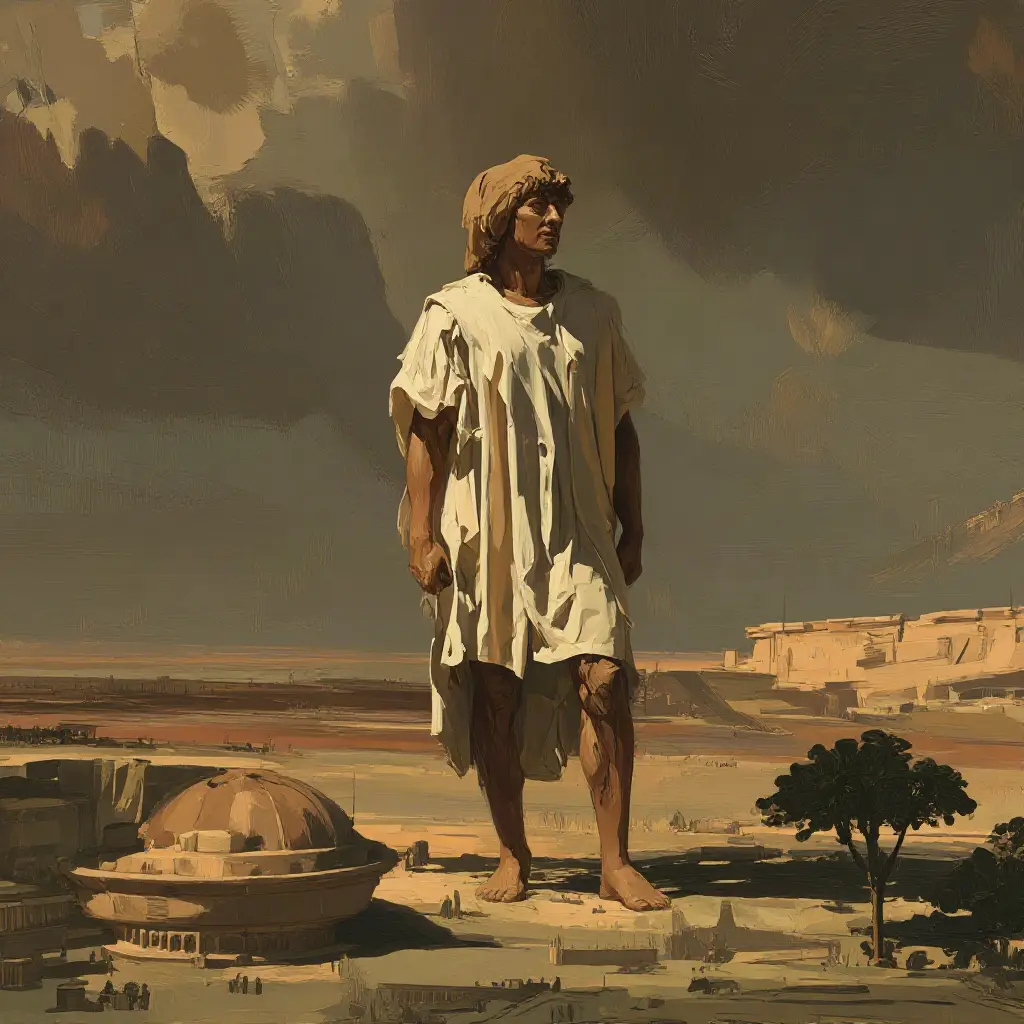
The Mycenaeans
The Bronze Age civilisation of mainland Greece, from its fortified palaces and Schliemann's 1876 excavation at Mycenae to the Linear B tablets, its collapse around 1200 BC and its echoes in Homer.
The Cyclopean Builders
Frequently Asked Questions
Who were the Mycenaeans?
The Mycenaeans were the first advanced, Greek-speaking civilization of the late Bronze Age, flourishing from about 1750 to 1050 BC. They built massive palaces at sites like Mycenae and Pylos and dominated trade in the Aegean Sea. They are considered the historical basis for the heroic age described in Homer's epics.
Is the 'Mask of Agamemnon' real?
The golden funeral mask is a real artifact discovered by Heinrich Schliemann at Mycenae in 1876. However, Schliemann's name for it is incorrect. Modern archaeological dating shows the mask was created in the 16th century BC, about 300 years before the traditional date of the Trojan War, so it could not have belonged to the mythical King Agamemnon.
Did the Trojan War really happen?
There is no definitive proof of the Trojan War as described by Homer. However, archaeologists have found a historical city at the site of Troy that shows evidence of destruction around the right time. Furthermore, diplomatic records from the Hittite Empire mention conflicts with a kingdom called Ahhiyawa (likely the Mycenaeans) over a city called Wilusa (likely Troy), suggesting a historical basis for the legend.
Learn more
To continue the story, download the Chunks Microlearning app
Or get it straight away:
 Download on iOS
 Download on Android