
On Christmas Day, 800, the Frankish king Charlemagne knelt to pray in St. Peter’s Basilica in Rome. As he rose, Pope Leo III placed a golden crown on his head, and the crowd hailed him Emperor of the Romans. The act symbolically revived the Roman Empire in the West. Charlemagne’s biographer, Einhard, later claimed the new emperor was so surprised that he would not have entered the church if he’d known the Pope’s plan. Leo, who had once fled to Charlemagne for protection from his enemies, had now tied the future of the papacy to a new line of emperors. This single moment challenged the authority of the existing Roman Empire in the East and created a new center of power in Europe.
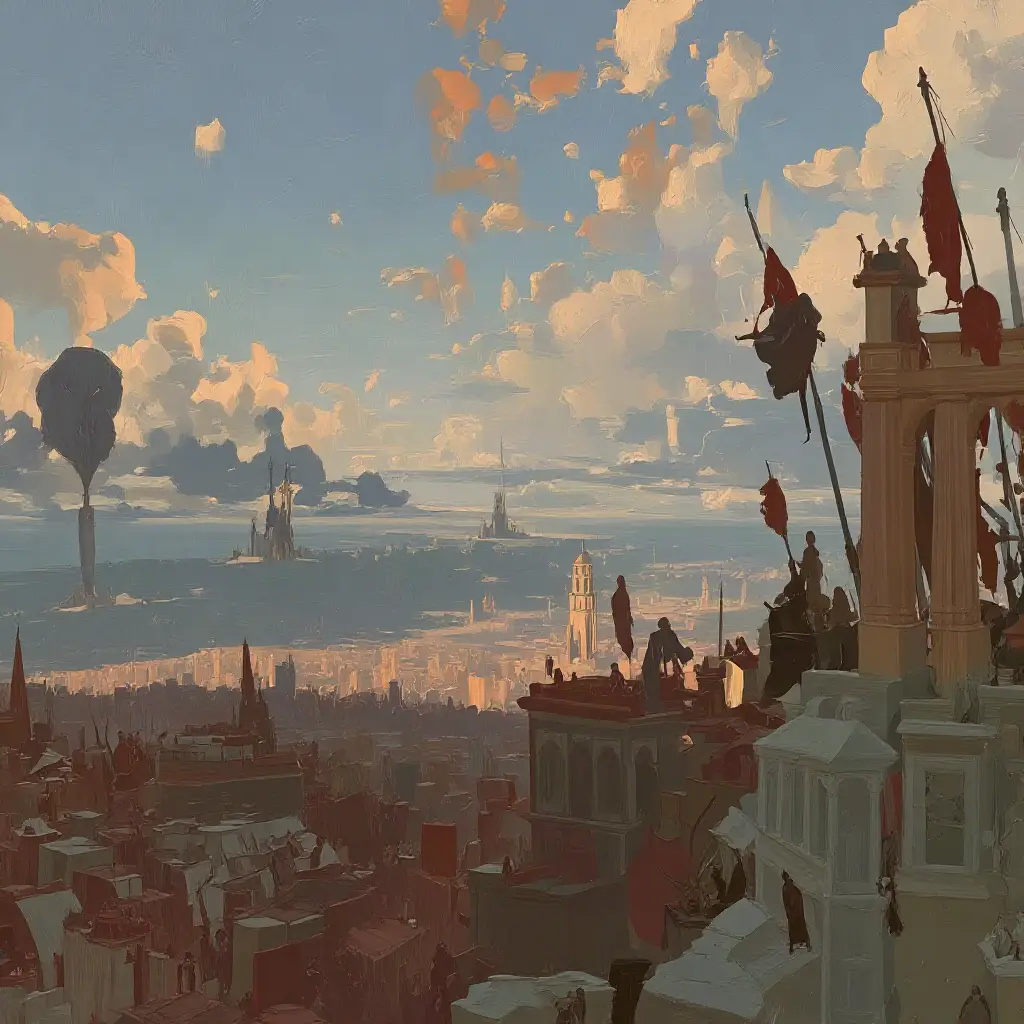
The Holy Roman Empire
The story of the thousand-year Holy Roman Empire, from Charlemagne’s coronation in 800 to its dissolution in 1806.
Chapter 1
The First Emperor
0:50
Frequently Asked Questions
Was the Holy Roman Empire actually Roman?
No, not in a direct sense. While founded with the idea of reviving the Western Roman Empire, its political power was primarily centered in German-speaking lands rather than Italy. The name reflected a claim to legitimacy and a historical ideal rather than a geographic or cultural reality.
Why was it called 'Holy'?
The title 'Holy' was added centuries after its founding to reflect the emperor's role as the supposed secular protector of Christianity and the Pope. This led to major power struggles, like the Investiture Controversy, over whether the emperor or the Pope had ultimate authority on Earth.
How did the Holy Roman Empire end?
It was formally dissolved on August 6, 1806. After being defeated by Napoleon, the last emperor, Francis II, abdicated the throne. He did this to prevent Napoleon from claiming the ancient and prestigious imperial title for himself and his own French empire.
To continue the story, download the Chunks Microlearning app
Or get it straight away:
 Download on iOS
 Download on Android