
In 1854, retired magnate Cyrus Field was approached by engineer Frederick Gisborne with a plan to link New York and Newfoundland by telegraph. As Field studied a globe in his library, a much grander idea took hold: why not cross the entire Atlantic? A wire stretching over 3,000 kilometers could turn a weeks-long sea voyage into communication in minutes. Field, only 34 and already wealthy, was captivated. He consulted Samuel Morse, the telegraph's inventor, who confirmed an underwater cable was theoretically possible. With that confirmation, Field founded the Atlantic Telegraph Company and began raising capital for the audacious project.
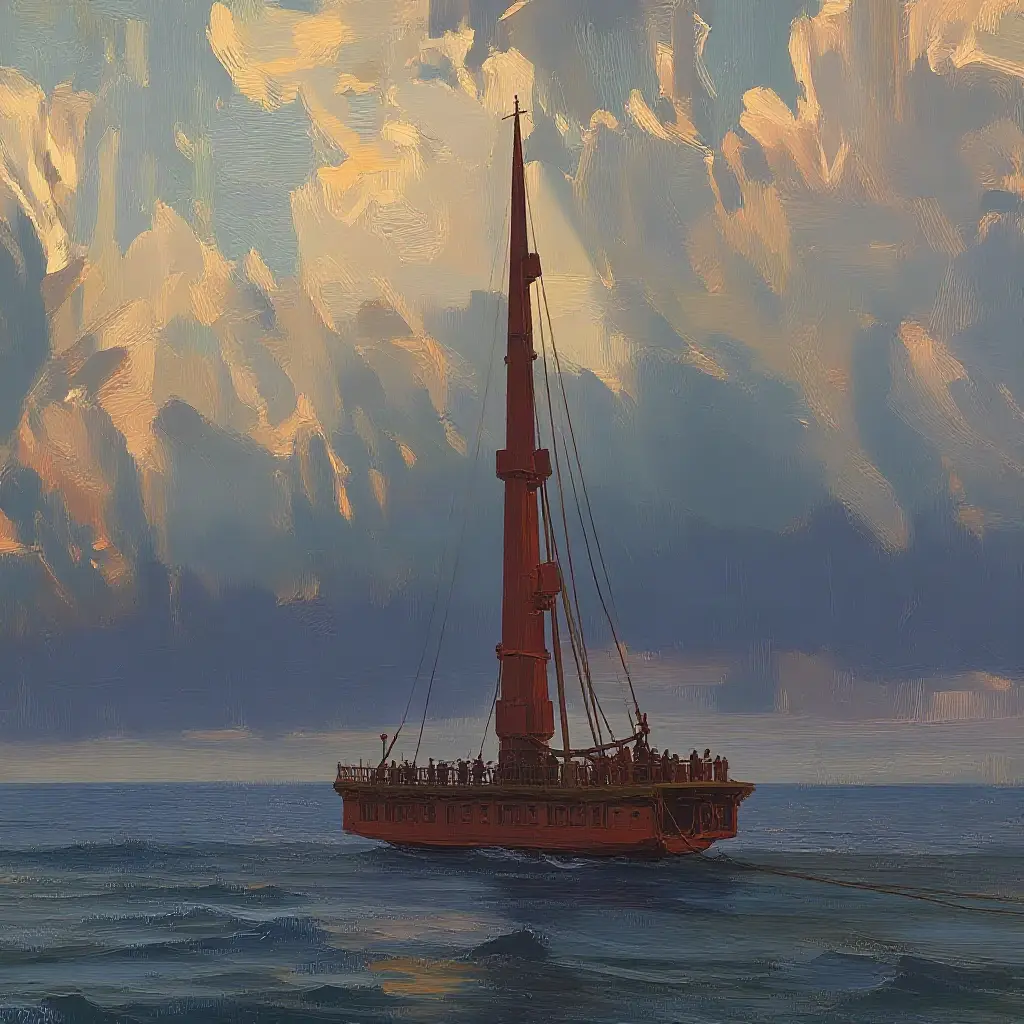
The First Transatlantic Telegraph Cable, 1858
The 12-year saga to lay the first transatlantic cable, from its 1854 inception to the lasting success of the Great Eastern in 1866.
Chapter 1
The Spark in the Library
0:40
Frequently Asked Questions
Why did the first successful transatlantic cable in 1858 fail so quickly?
The 1858 cable failed after just three weeks because the project's chief electrician, Wildman Whitehouse, used excessive voltage. He ignored scientific advice and sent up to 2,000 volts through the line, which destroyed its delicate insulation and caused it to short-circuit in the ocean.
What was the SS Great Eastern and why was it so important?
The SS Great Eastern was the largest ship in the world in the 1860s. It was the only vessel capable of carrying the entire 2,300-nautical-mile transatlantic cable in a single voyage, which was critical for the successful 1866 expedition after previous attempts with smaller ships had failed.
Did they ever recover the cables that broke and fell to the ocean floor?
Yes. In an incredible feat of engineering, the crew of the Great Eastern returned to sea in September 1866 and recovered the cable that had snapped and been lost in 1865. They located it two miles below the surface, brought it aboard, and found it still worked, creating a second telegraph line.
Learn more
To continue the story, download the Chunks Microlearning app
Or get it straight away:
 Download on iOS
 Download on Android