
On the last day of the 16th century, December 31, 1600, Queen Elizabeth I granted a royal charter to a group of London merchants. This charter gave them a 15-year monopoly on all English trade east of the Cape of Good Hope. Their goal was to break the powerful Dutch and Portuguese hold on the immensely profitable spice trade. The venture began with a small capital investment and huge risk. In 1601, the Company's first voyage, led by James Lancaster, set sail with four ships bound for the East Indies. This single voyage launched a commercial enterprise that would command a private army and rule a subcontinent.
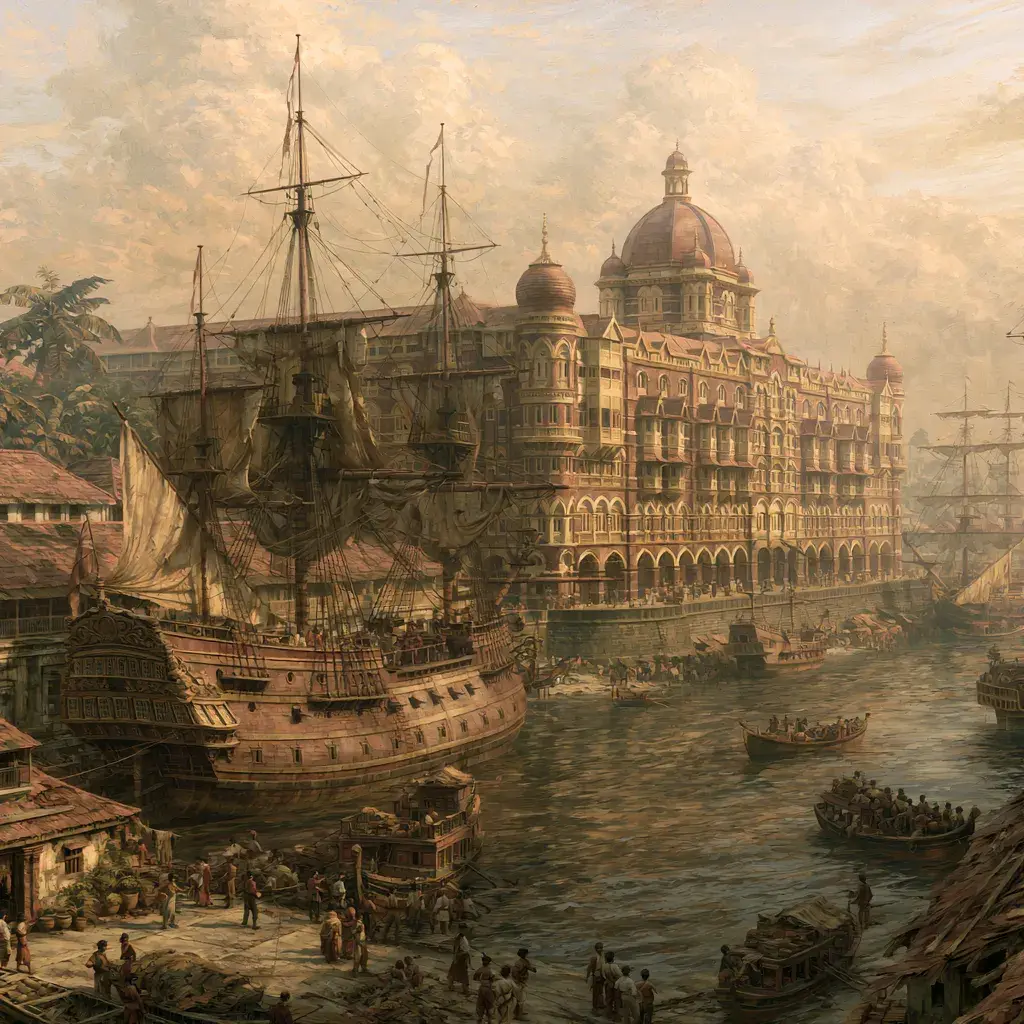
The East India Company
Founded in 1600, the East India Company was a private firm that came to rule large parts of India with its own army.
Chapter 1
The Charter
0:43
Frequently Asked Questions
How did the East India Company start?
On December 31, 1600, Queen Elizabeth I granted a royal charter to a group of London merchants. It gave them a 15-year monopoly on English trade east of the Cape of Good Hope. Their goal was to break into the spice trade controlled by the Dutch and Portuguese.
Did a private company really rule India?
Yes. After the Battle of Plassey in 1757, the Company's power grew until the Treaty of Allahabad in 1765. This treaty granted it the right to collect taxes in Bengal, Bihar, and Odisha, effectively making it the region's sovereign ruler.
What caused the end of the East India Company?
The Indian Rebellion of 1857 was the final blow. The British government decided the Company could no longer be trusted to govern, and the Government of India Act of 1858 transferred its governing powers to the British Crown. The Company was formally dissolved in 1874.
Learn more
To continue the story, download the Chunks Microlearning app
Or get it straight away:
 Download on iOS
 Download on Android