
On December 22, 1938, a strange fish turned up in a commercial fishing catch at the East London harbor in South Africa. The curator of the local museum, Marjorie Courtenay-Latimer, was inspecting the haul from Captain Hendrik Goosen's trawler when she spotted it. She described the five-foot specimen as 'the most beautiful fish I had ever seen,' noting its iridescent silver-blue scales and strange, limb-like fins. Realizing its importance, she scrambled to preserve it. The local morgue refused to store a fish, so she had it sent to a taxidermist. Unsure what it was, she sent a handwritten letter and a crude sketch to ichthyologist J.L.B. Smith, hoping the expert could identify her incredible find.
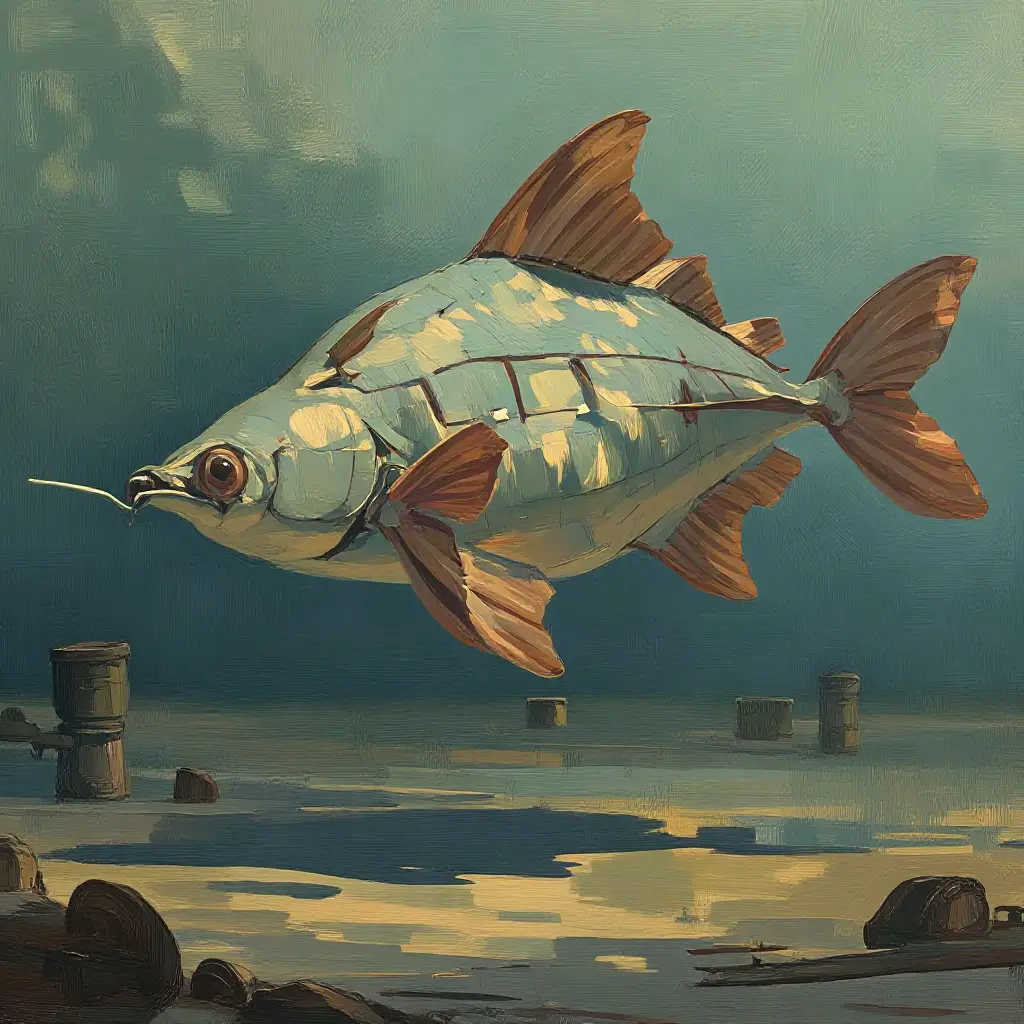
The Coelacanth: A Living Fossil
The story of the shocking 1938 discovery of a fish thought to have gone extinct with the dinosaurs 66 million years ago.
Chapter 1
The Most Beautiful Fish
0:46
Frequently Asked Questions
Why was the discovery of the coelacanth so important?
The coelacanth was thought to have been extinct for 66 million years, disappearing from the fossil record at the same time as the dinosaurs. Its discovery in 1938 proved a lineage believed to be long dead was still alive, earning it the name 'living fossil.'
What is unique about the coelacanth's body?
The coelacanth has several unique features. It possesses an intracranial joint, a hinge in its skull that lets it open its mouth extra wide to swallow prey. It also has fleshy, lobed fins supported by bones, and a fluid-filled notochord instead of a bony spine.
Are there different types of coelacanths?
Yes, two living species have been discovered. The first, Latimeria chalumnae, is blue and lives off the coast of Africa. The second, Latimeria menadoensis, is brown and was found in a fish market in Indonesia in 1997.
To continue the story, download the Chunks Microlearning app
Or get it straight away:
 Download on iOS
 Download on Android