
In 1901, American writer O. Henry coined the term 'banana republic'. Though it first appeared in a magazine story, the phrase gained fame through his 1904 book, Cabbages and Kings. Drawing on his time in Honduras, he described a fictional country whose politics and economy were entirely controlled by a foreign fruit company. In the book, this business was the Vesuvius Fruit Company, but the scenario was a clear reflection of a growing trend. Nations across Central America were becoming 'monocultures,' their fortunes tied to a single crop grown for export. His phrase was more than clever; it was a diagnosis of a new kind of corporate power that became a blueprint for political intervention.
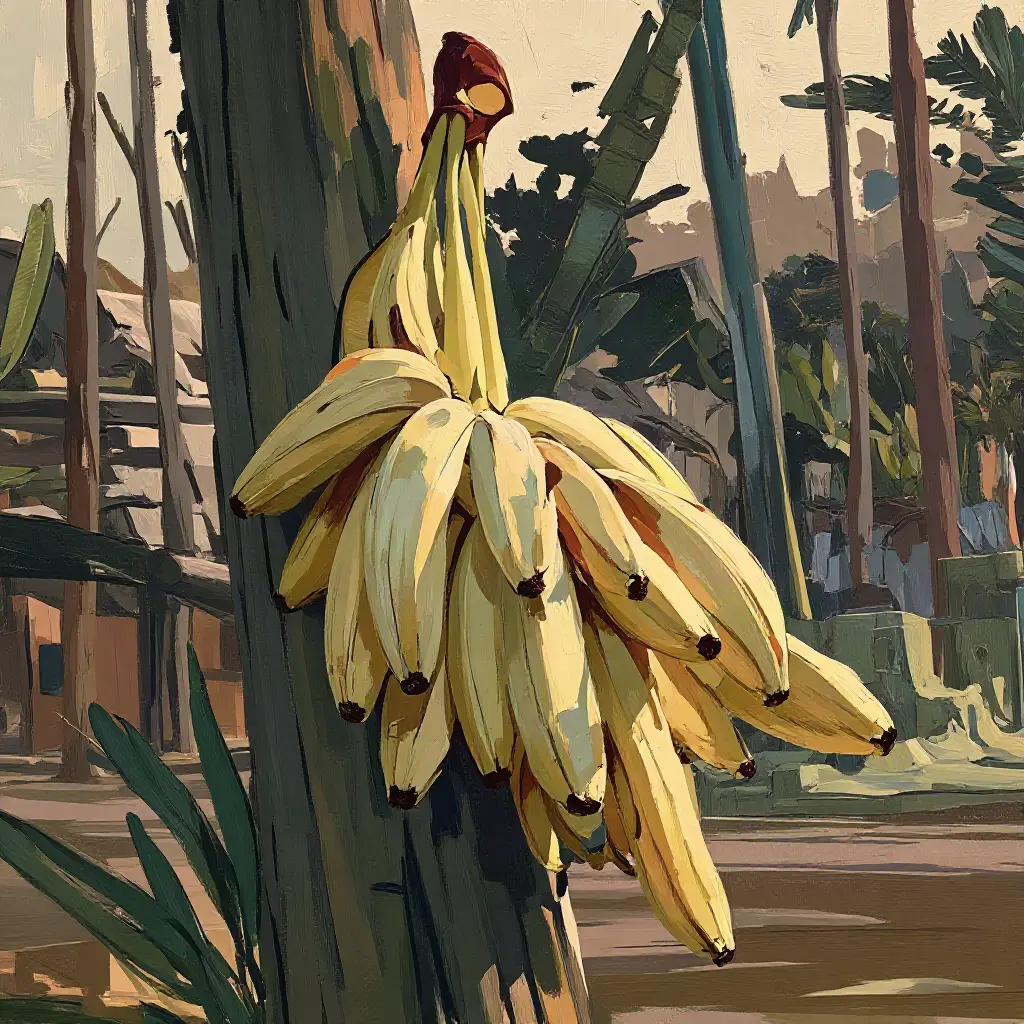
The Banana Empire
How the United Fruit Company came to dominate Central America, and the part it played in the CIA-backed 1954 coup in Guatemala.
Chapter 1
Cabbages and Kings
0:46
Frequently Asked Questions
What is a 'banana republic'?
The term was coined by writer O. Henry in 1904. It describes a politically unstable country whose economy is dependent on a single export, like bananas, and heavily influenced by a foreign corporation.
Why did the U.S. overthrow the government of Guatemala in 1954?
The U.S. government, influenced by a public relations campaign by the United Fruit Company, believed the democratically elected government of Jacobo Arbenz was becoming a Soviet communist stronghold. The CIA orchestrated a coup to remove him after he enacted a land reform law that threatened United Fruit's holdings.
What happened after the 1954 Guatemalan coup?
The CIA-installed leader reversed the land reforms, and the country descended into a 36-year civil war that killed an estimated 200,000 people. The coup became a blueprint for U.S. intervention in Latin America during the Cold War.
Learn more
To continue the story, download the Chunks Microlearning app
Or get it straight away:
 Download on iOS
 Download on Android