
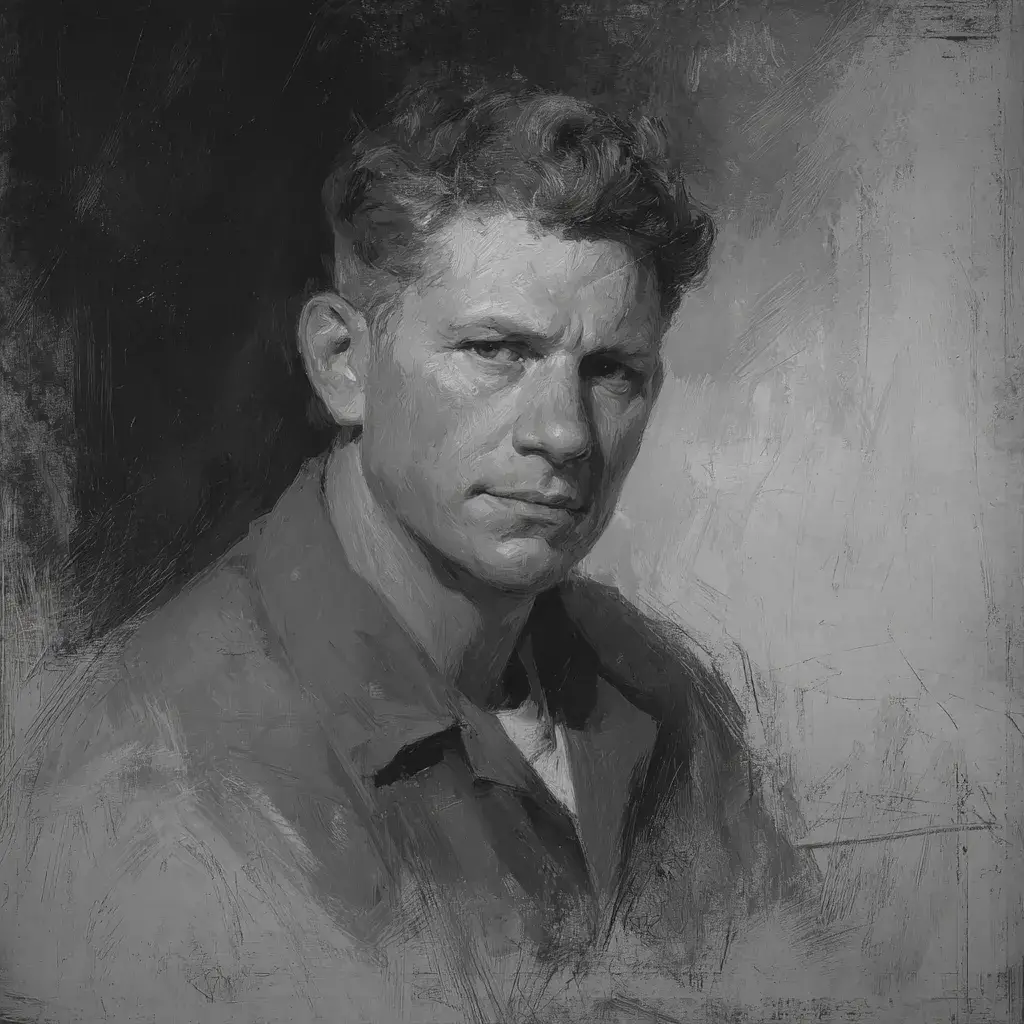
In January 1960, a new inmate arrived at Alcatraz, the maximum-security prison on an island in San Francisco Bay. His name was Frank Morris, a career criminal with a reported IQ of 133 and a history of escaping other prisons. Alcatraz, known as 'The Rock,' was considered inescapable, surrounded by 1.25 miles of freezing, treacherous water. But Morris saw a challenge, not a dead end. He soon teamed up with two brothers, John and Clarence Anglin, who had also been sent to Alcatraz after their own escape attempts elsewhere. Together, they began to formulate a plan that was audacious, brilliant, and incredibly dangerous. Their goal was simple: to do what no one had ever successfully done before and escape from Alcatraz.
The Alcatraz Escape
The June 1962 escape from Alcatraz by Frank Morris and John and Clarence Anglin, who left dummy heads in their beds, paddled off on a raincoat raft, and were never found.
Chapter 1
The Mastermind of 'The Rock'
0:49
People in this story
Part of
Frequently Asked Questions
How did the prisoners hide their digging from the guards?
They worked during the prison's daily music hour, with Frank Morris playing his accordion to mask the noise of their tools. They also crafted false wall segments from cardboard to conceal the holes in their cells from patrolling guards.
What were the fake heads made of?
The lifelike decoys were crafted from a mixture of soap, toothpaste, concrete dust, and toilet paper. To make them look real, the men used flesh-tone paint from the maintenance shop and real human hair collected from the prison barbershop.
Did the Alcatraz escapees survive?
The FBI officially concluded in 1979 that the men likely drowned in the cold waters of San Francisco Bay. However, no bodies were ever found, and the U.S. Marshals Service still lists them as wanted fugitives. A letter sent to police in 2013, allegedly from John Anglin, claimed they all survived.
Learn more
To continue the story, download the Chunks Microlearning app
Or get it straight away:
 Download on iOS
 Download on Android