Malcolm McLaren watched as the ink dried. On October 8, 1976, his band, the Sex Pistols, had just signed a two-year recording contract with EMI, one of the titans of the British music industry. The deal came with a substantial financial advance of £40,000, a figure that would give them the means to record and rapidly release their debut single. The song, “Anarchy in the U.K.”, was ready, and this contract was the fuse. McLaren had systematically orchestrated the band's provocative, anti-establishment public image, and this was the moment it would crash into the mainstream. He knew the partnership was a volatile one. EMI saw a product; he saw a weapon. The two-year term on the paper felt optimistic, even laughable. The contract was designed to launch the band, but McLaren understood that the very chaos he cultivated was likely to shatter the partnership. The EMI executives saw a financial investment, but they had just paid to unleash a cultural firestorm that would soon burn them. The single was slated for release in November 1976, and the countdown had begun.
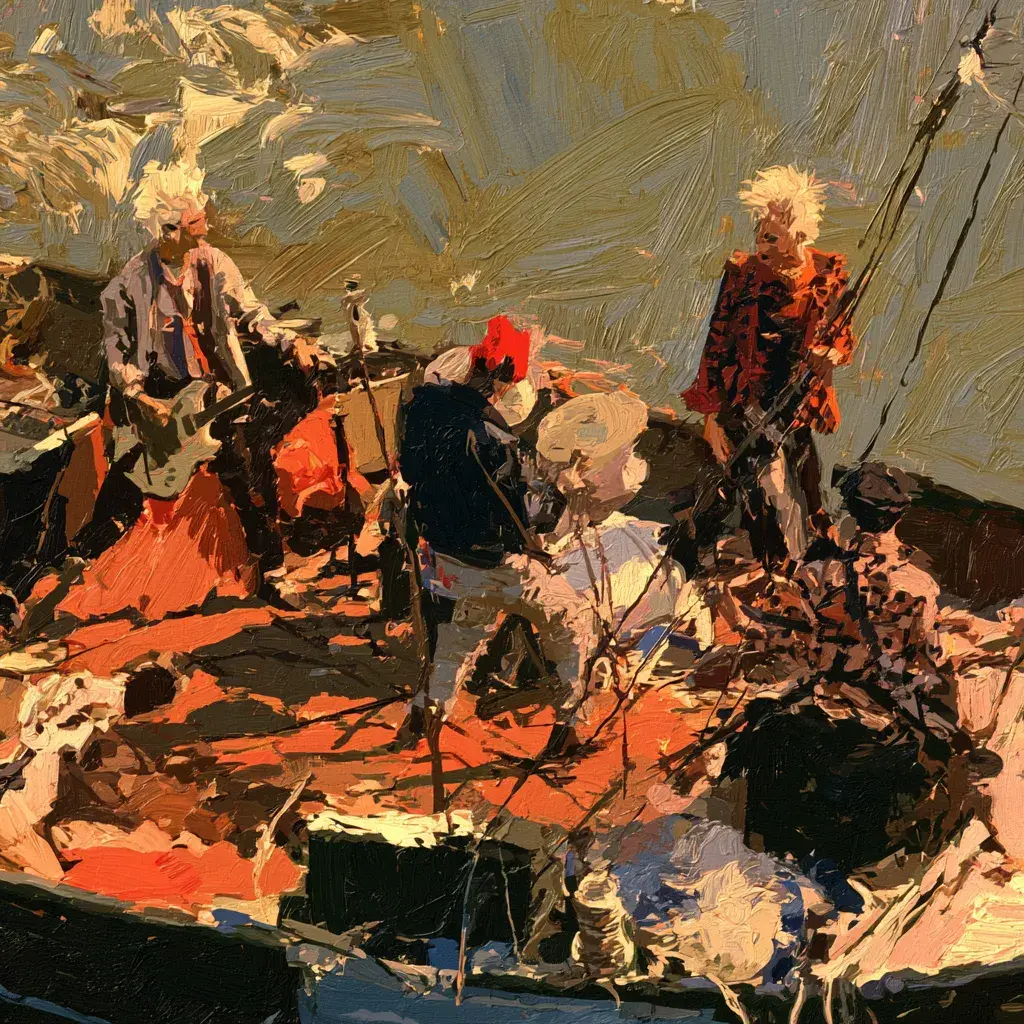
Punk's Jubilee Boat: The Sex Pistols on the Thames
On June 7, 1977, the Sex Pistols performed on a boat on the Thames, a protest that led to a police raid and 11 arrests.
The £40,000 Deal
Frequently Asked Questions
Why were the Sex Pistols so controversial in 1977?
The band's confrontational, anti-establishment image, profanity-laced television appearances, and provocative songs like "God Save the Queen" directly challenged social and political norms in Britain, leading to widespread media outrage and bans.
Did the Sex Pistols ever have a number one hit single?
Their single "God Save the Queen" reached number two on the official UK charts. However, it was number one on the alternative New Musical Express chart, and persistent rumors claim the official chart was manipulated to prevent it from reaching the top spot during the Queen's Jubilee.
What happened as a result of the boat trip on the Thames?
The chaotic event ended with a police raid and 11 arrests, including the band's manager, Malcolm McLaren, and designer Vivienne Westwood. While the band members escaped arrest, the stunt generated massive front-page news coverage, cementing their reputation as cultural rebels.
To continue the story, download the Chunks Microlearning app
Or get it straight away:
 Download on iOS
 Download on Android