
Marcus Aurelius was born in 121 CE into a privileged Roman family, yet from early childhood, he displayed little appetite for the trappings of power. While his peers competed for attention by demonstrating ambition and pride, Marcus was introspective, preferring to reflect rather than to dominate. His thoughtful nature drew the attention of rulers; Emperor Antoninus Pius adopted him, placing Marcus in the succession line. The young Marcus did not take his new role lightly. He immersed himself in learning, guided by Rome’s greatest minds in rhetoric, law, and, above all, philosophy. It was Stoicism, especially the teachings of Epictetus, that struck a chord with him. Whereas many future emperors might relish their rise, Marcus saw his looming responsibility as an obligation rather than a reward. This sense of duty would shape the emperor and the man he would become.
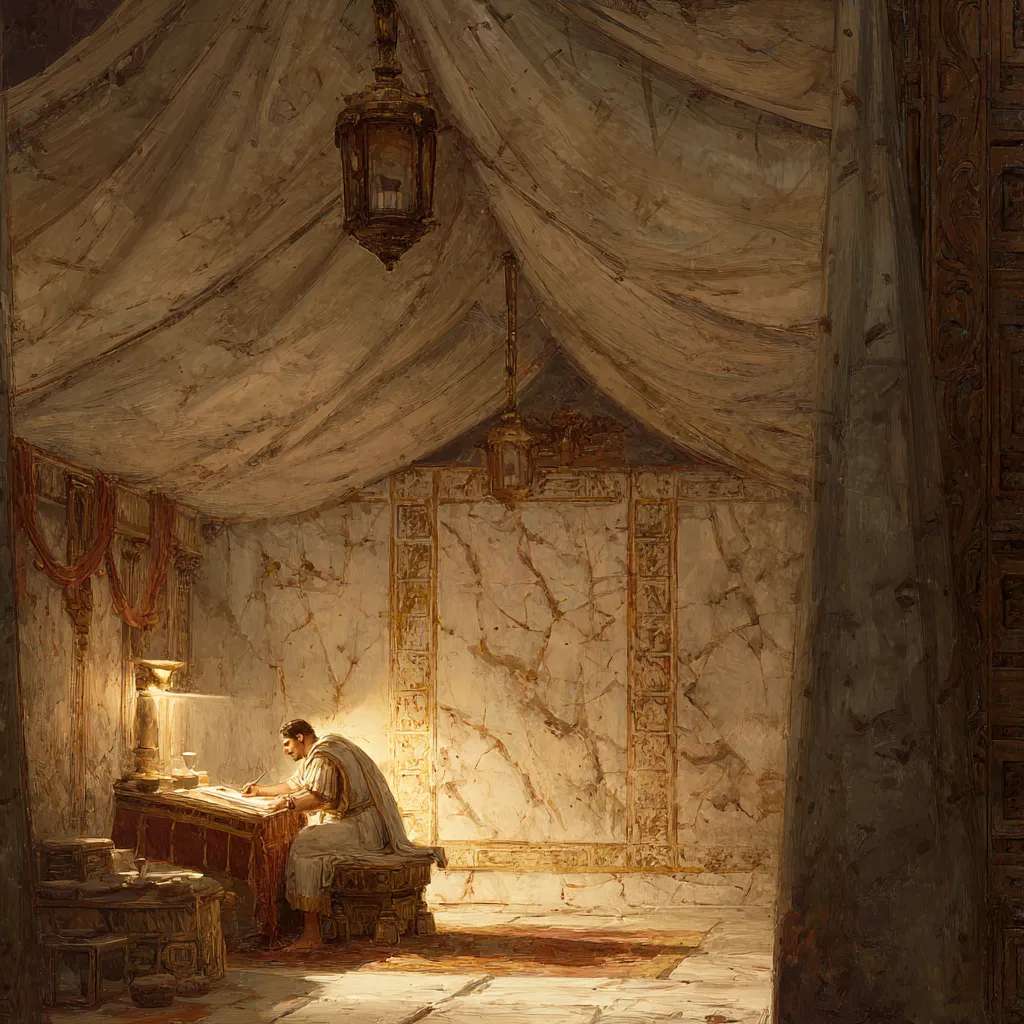
Marcus Aurelius & the Philosophy of Stoicism
The journey of Marcus Aurelius, from reluctant emperor to Stoic icon.
A Reluctant Emperor
Frequently Asked Questions
What made Marcus Aurelius a reluctant emperor and how did he become ruler of Rome?
Marcus Aurelius was chosen by Emperor Antoninus Pius to be his successor, though he preferred philosophical study to political power. He became emperor in 161 CE after Antoninus Pius died, inheriting the vast Roman Empire at its height. His reluctance stemmed from his deep love of Stoic philosophy and preference for contemplation over the burdens of imperial rule.
What are the core principles of Stoicism that Marcus Aurelius practiced?
Stoicism teaches that virtue is the highest good and that individuals should focus on what they can control while accepting what they cannot. The philosophy emphasizes living according to nature, practicing self-discipline, and maintaining emotional equilibrium in the face of adversity. Stoics believe that external circumstances cannot harm one's inner character or peace of mind.
What is the Meditations and why is it considered one of the most important Stoic texts?
The Meditations is Marcus Aurelius's private journal of philosophical reflections, written during his military campaigns along the Danube frontier. Originally titled 'To Himself,' it contains his personal thoughts on Stoic principles, leadership, and self-improvement. The work offers unique insight into how a powerful ruler applied Stoic philosophy to the practical challenges of governing an empire and leading armies.
Learn more
To continue the story, download the Chunks Microlearning app
 Download on iOS
 Download on Android