
In 1424, a twelve-year-old peasant girl named Joan was in her father's garden in Domrémy when she saw a great light and heard a voice. The voices, which she identified as those of saints, gave her an impossible command: she must save France and drive the English from the kingdom. For several years, she kept these visions secret. Then, in 1428, she traveled to the nearby town of Vaucouleurs to ask the garrison commander for an escort to the French court. He initially laughed her off. But Joan's persistence, and her uncanny ability to predict a French military defeat before official news arrived, finally convinced him. He granted her an escort to see the man she believed was the rightful heir to the throne, the Dauphin Charles.
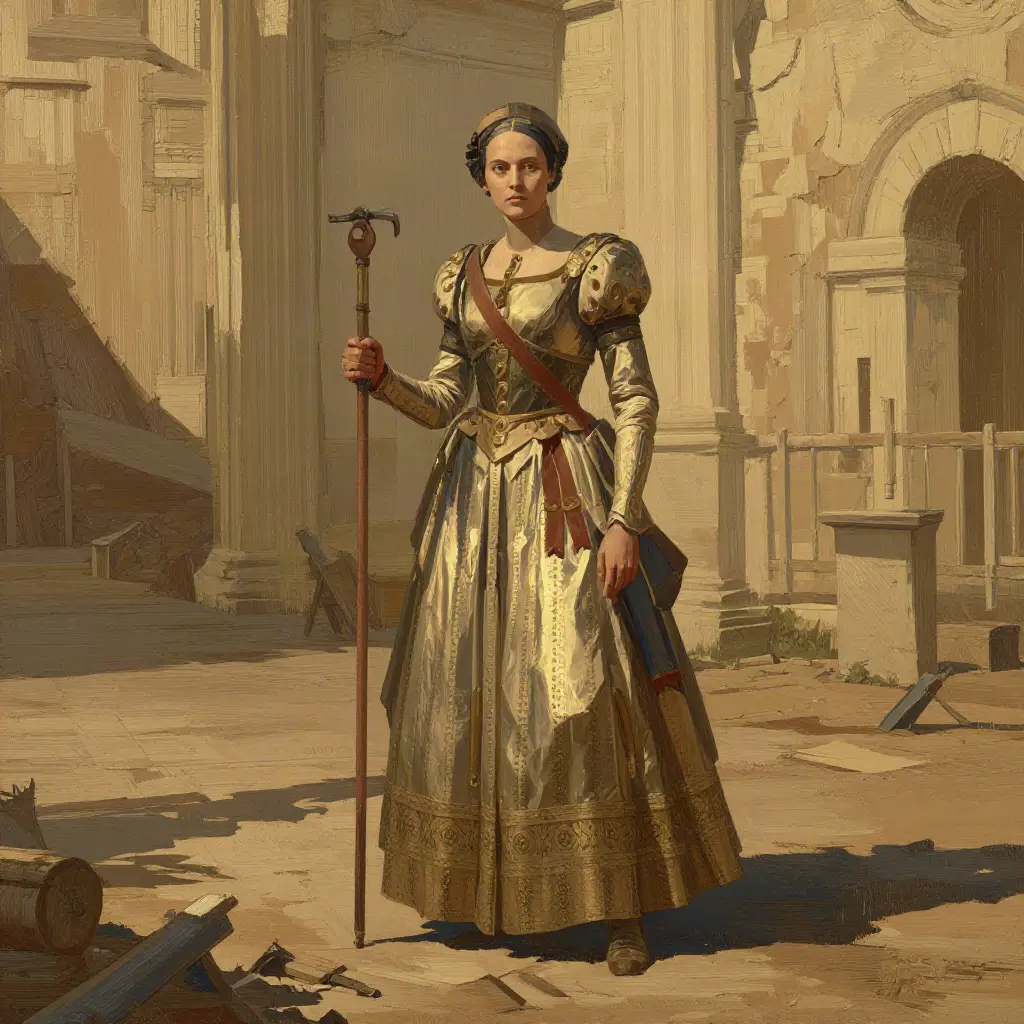
Joan of Arc
A peasant girl who heard voices, Joan of Arc was given an army and broke the siege of Orléans in 1429 before being tried and executed.
Chapter 1
A Voice in the Garden
0:51
Frequently Asked Questions
What did Joan of Arc claim to hear?
At about age 13, Joan claimed to hear the voices of Saint Michael, Saint Catherine, and Saint Margaret. These voices, often accompanied by a bright light, commanded her to drive the English out of France and see the Dauphin crowned king.
Why was Joan of Arc's victory at Orléans so important?
The relief of Orléans in May 1429 was a pivotal turning point in the Hundred Years' War. It was the first major French victory in a generation and shattered the idea of English invincibility. This success boosted French morale and validated Joan's mission.
Why was Joan of Arc executed?
Joan was executed for being a 'relapsed heretic.' After an English-controlled court convicted her of heresy, she signed a document recanting her claims. When she resumed wearing male clothing in prison for her own protection, her judges condemned her for relapsing into heresy and sentenced her to be burned at the stake.
Learn more
To continue the story, download the Chunks Microlearning app
Or get it straight away:
 Download on iOS
 Download on Android