
Centuries before anyone in Edo pressed rice into a mound by hand, sushi meant waiting. At Lake Biwa, cooks packed nigorobuna carp in salt and rice and left it to lactic-acid ferment for one to three years, a dish called funazushi that people still eat today, though it remains an acquired, pungent taste. This method, narezushi, is believed to have reached Japan from Southeast Asia or coastal China back in the Yayoi period, and for centuries the rice was only a preserving agent, packed around the fish and then thrown away once its job was done. That began to change in the Muromachi era, between 1336 and 1573, when people started eating the fermented rice along with the fish instead of discarding it, a version called namanare. By the Edo period, which started in 1603, the fermentation itself was already being cut shorter, as vinegar started standing in for the slow work lactic acid used to do. Nobody invented this shift. It moved through fishing villages and market stalls the way techniques usually do, one cook borrowing from another. But it meant that by the early 1800s, sushi was already halfway to becoming a fast food, decades before anyone in Edo would finish the job. The old method never disappeared. Somewhere on the shore of Lake Biwa, a batch of carp was still sitting in its salt and rice, with a year or two left before anyone touched it.
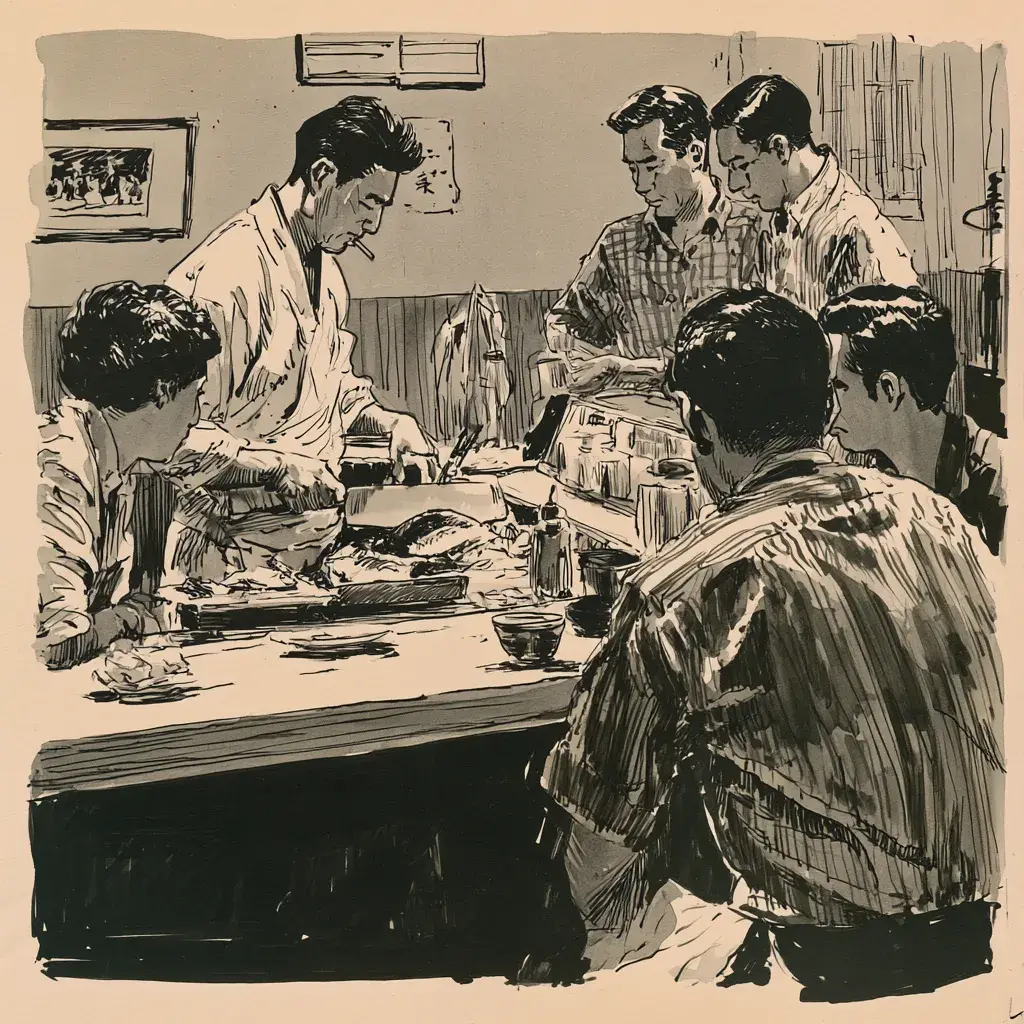
Hanaya Yohei and the Invention of Nigiri Sushi
An Edo vendor's 1820s shortcut, fresh fish pressed onto vinegared rice, became sushi eaten worldwide today.
The Fish That Waited Years
Frequently Asked Questions
What is narezushi and how is it different from the sushi Hanaya Yohei invented?
Narezushi was fish packed in salt and rice and left to lactic-acid ferment for months or years, with the rice often discarded once it had done its preserving work. Hanaya Yohei's nigiri skipped fermentation entirely, pairing fresh raw fish with vinegared rice that could be prepared in minutes.
Who was Matazaemon Nakano and why does he matter to sushi history?
Matazaemon Nakano was a sake brewer from Handa near Nagoya who, after visiting Edo in 1804 and seeing a boom in sushi shops, began turning leftover sake lees into a reddish vinegar called aka-su. That vinegar let Edo sushi makers season rice in minutes instead of fermenting fish for weeks, making nigiri commercially possible.
How did nigiri sushi reach the United States?
Japanese food importer Noritoshi Kanai helped open Kawafuku, a sushi counter inside an existing restaurant in Los Angeles's Little Tokyo, generally dated to 1966, staffed by chef Shigeo Saito brought over from Japan. It is widely cited as the first authentic sushi bar in the United States and led to further restaurants opening nearby.
Learn more
To continue the story, download the Chunks Microlearning app
Or get it straight away:
 Download on iOS
 Download on Android