

Who was Wilfrid Voynich?
Wilfrid Voynich (31 October 1865 - 19 March 1930) was a Polish revolutionary turned antiquarian book dealer, naturalised as a British subject in 1904, who later ran a rare book business in New York. He is chiefly remembered for the mysterious illustrated manuscript he acquired in Italy in 1912, which bears his name and remains undeciphered to this day.
Wilfrid Voynich was a Polish-American antiquarian book dealer who purchased the mysterious illustrated manuscript that now bears his name in 1912. The Voynich Manuscript remains undeciphered and is considered one of history's greatest cryptographic puzzles.
Don't stop at the facts — continue Wilfrid Voynich's story in free narrated chapters on Chunks.
Or get it straight away:
 Download on iOS
 Download on Android
Quick facts
- Born
- 31 October 1865
- Birthplace
- Telšiai
- Died
- 19 March 1930
- Place of death
- New York City
- Nationality
- United States, Poland
- Occupation
- Antiquarian seller, historian, chemist
Wilfrid Voynich: key facts
- Wilfrid Voynich was born Michal Habdank-Wojnicz on 31 October 1865 in Telsiai, then part of the Russian Empire and now in Lithuania.
- He graduated from Moscow University with a degree in chemistry and became a licensed pharmacist.
- In 1885 he joined Ludwik Warynski's revolutionary group Proletariat in Warsaw and was later arrested and sent to penal servitude near Irkutsk in Siberia in 1887.
- He escaped Siberia in June 1890 and eventually settled in London by October 1890, working with fellow revolutionary Sergius Stepniak.
- Voynich became an antiquarian bookseller around 1897 and opened a bookshop on Soho Square in London in 1898.
- In 1902 he married Ethel Lilian Boole, daughter of mathematician George Boole, and became a naturalised British subject in 1904 under the name Wilfrid Michael Voynich.
- He acquired the manuscript now known as the Voynich manuscript in 1912 at the Villa Mondragone in Italy and first showed it publicly in 1915.
- Voynich died of lung cancer at Roosevelt Hospital in New York City on 19 March 1930.
A Polish Childhood in the Russian Empire
Michał Habdank-Wojnicz was born on 31 October 1865 in Telšiai, a town in what is now Lithuania but was then part of the Russian Empire. His family belonged to the Polish nobility, and the Habdank portion of his name came from a Polish heraldic clan. His father held a minor government post as a titular counsellor, placing the family in a modest but respectable social position.
He was educated at a gimnazjum in Suwałki, a town in northeastern Poland, before going on to university studies in Warsaw, St. Petersburg, and Moscow. He completed his degree at Moscow University in chemistry and qualified as a licensed pharmacist, training that gave him a formal scientific background well before he became known for his work with rare books.
Revolutionary Activity and Siberian Exile
In 1885, while in Warsaw, Wojnicz joined the revolutionary organization Proletariat, led by Ludwik Waryński. This group worked against the Russian imperial authorities who controlled Poland at the time. In 1886 he took part in a failed attempt to rescue two fellow conspirators, Piotr Bardowski and Stanisław Kunicki, who had been sentenced to death and held in the Warsaw Citadel. The rescue attempt failed, and Wojnicz was arrested by the Russian police.
In 1887 he was sentenced to penal servitude and sent to Tunka, a settlement near Irkutsk in Siberia. During his years in exile there, he taught himself the basics of eighteen different languages, though he never mastered any of them fully. This period of forced isolation, unusual as it seems, laid the groundwork for the linguistic curiosity that would later shape his career among rare manuscripts.
Escape to London and a New Life
In June 1890, Wojnicz escaped from his Siberian exile. He made his way west by train, passing through Hamburg before arriving in London in October 1890. Once in England, he initially used the assumed name Ivan Kel'chevskii to protect his identity from Russian authorities still hunting escaped exiles.
In London he joined forces with Sergius Stepniak, another Russian revolutionary, working within the Society of Friends of Russian Freedom, an organization opposed to tsarist rule. This continued until Stepniak's death in a railway crossing accident in 1895, after which Wojnicz stepped back from organized revolutionary work altogether.
Around 1897, on the advice of Richard Garnett, a curator at the British Museum, he turned to a new profession as an antiquarian bookseller. He opened a bookshop at Soho Square in London in 1898. He quickly built a reputation for finding rare and valuable books, most notably a Malermi Bible he acquired in Italy in 1902.
Marriage, Naturalization, and the Book Trade
In 1902 he married Ethel Lilian Boole, herself a former revolutionary and the daughter of the British mathematician George Boole. The two had known each other since 1890, not long after his arrival in London. In 1904 he was formally naturalized as a British subject, at which point he adopted the legal name Wilfrid Michael Voynich, the name by which he became known for the rest of his life.
Voynich expanded his business by opening a second bookshop in New York in 1914. The outbreak of the First World War shifted the center of his working life increasingly toward the United States. During these years he wrote catalogues and other writings documenting the antiquarian book trade, building his standing as an expert in old and rare manuscripts.
In 1917 he relocated his London shop to a new address at 175 Piccadilly. That same year, rumors about a mysterious cipher in his possession drew the attention of the FBI, which opened an investigation into him. Agents noted that he handled manuscripts dating from the eleventh through thirteenth centuries and that his stock was valued at roughly half a million dollars at the time. The inquiry uncovered nothing beyond confirming that he owned a centuries-old coded document.
The Manuscript That Bears His Name
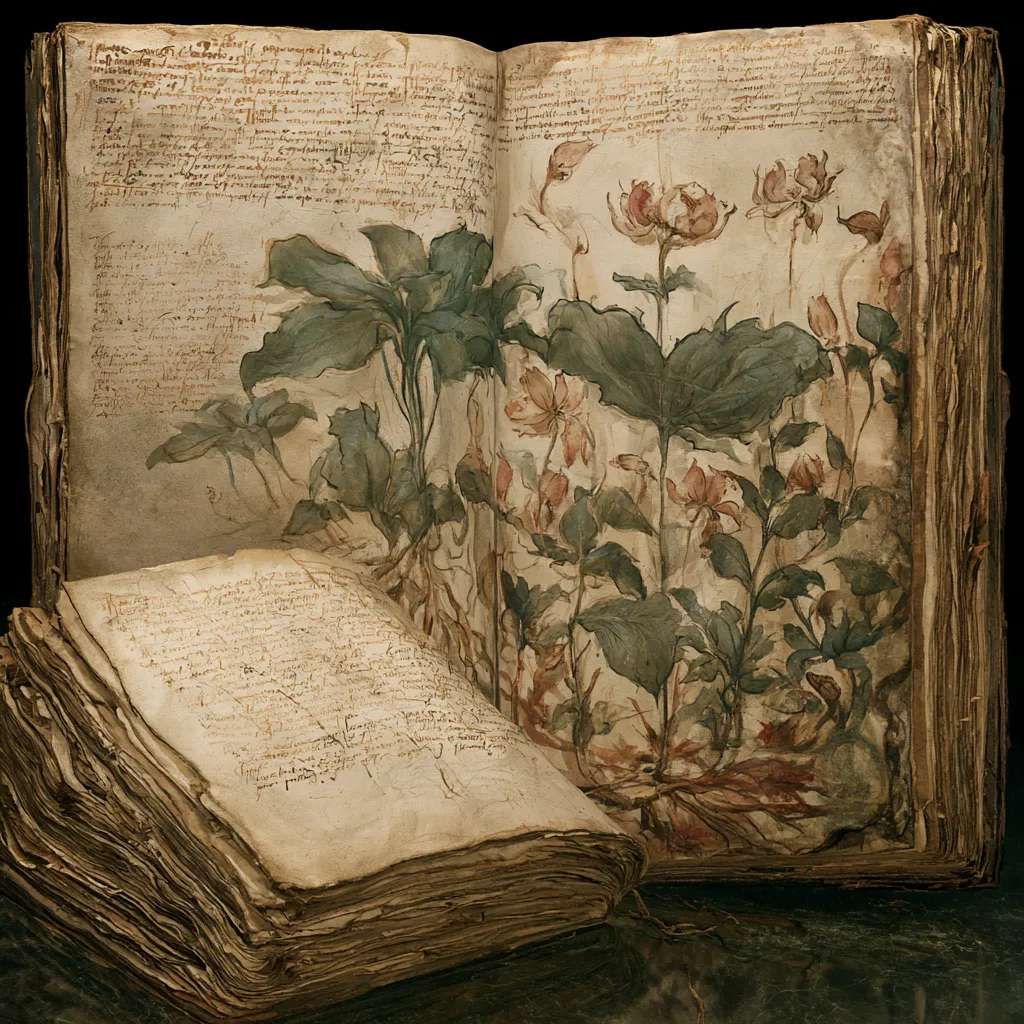
Voynich's lasting fame rests on a single acquisition: a strange illustrated manuscript he said he obtained in 1912 at the Villa Mondragone in Italy. He did not present it publicly until 1915. The manuscript, written in an unknown script accompanied by unusual illustrations, defied every attempt at decipherment during his lifetime and remains unread today. Carbon dating carried out long after his death showed the materials were produced sometime between 1404 and 1438.
Voynich kept possession of the manuscript for the rest of his life. He died in 1930 at Roosevelt Hospital in New York City from lung cancer, and the book that carries his name continues to be regarded as one of the most puzzling documents in the history of writing.
Wilfrid Voynich: timeline
- 1865Born Michał Habdank-Wojnicz in Telšiai, then part of the Russian Empire, into a Polish noble family.
- 1885Joined Ludwik Waryński's revolutionary organization Proletariat in Warsaw.
- 1886Arrested by Russian police after a failed attempt to free condemned fellow conspirators from the Warsaw Citadel.
- 1887Sent to penal servitude at Tunka near Irkutsk in Siberia, where he later picked up a working knowledge of eighteen languages.
- 1890Escaped Siberia, traveled west through Hamburg, and arrived in London in October, joining Sergius Stepniak's Society of Friends of Russian Freedom.
- 1897Began working as an antiquarian bookseller on the advice of British Museum curator Richard Garnett.
- 1898Opened a bookshop at Soho Square in London.
- 1902Married fellow former revolutionary Ethel Lilian Boole, daughter of mathematician George Boole.
- 1904Naturalised as a British subject, legally adopting the name Wilfrid Michael Voynich.
- 1912Acquired the mysterious illustrated manuscript later known as the Voynich manuscript at the Villa Mondragone in Italy.
- 1914Opened a new bookshop in New York City.
- 1917Relocated his London bookshop to 175 Piccadilly and was investigated by the FBI over rumours concerning his possession of a Bacon cipher manuscript.
- 1930Died of lung cancer at Roosevelt Hospital in New York City, still owning the Voynich manuscript.
Listen: stories featuring Wilfrid Voynich
Narrated chapters from the Chunks Microlearning app. Read a preview here, or listen to the full story in the app.
Frequently asked questions about Wilfrid Voynich
Who was Wilfrid Voynich?
Wilfrid Voynich was a Polish-American antiquarian book dealer who acquired an unusual illustrated manuscript in 1912. The mysterious document, written in an unknown script, was later named the Voynich Manuscript after him.
Why is Wilfrid Voynich remembered today?
Voynich is remembered for bringing to public attention the 240-page codex now known as the Voynich Manuscript, which has defeated every attempt at decipherment. His acquisition sparked over a century of scholarly and cryptographic fascination.
What did Wilfrid Voynich discover?
In 1912, Voynich purchased an illustrated manuscript written in an unidentified script and filled with strange botanical, astronomical, and biological drawings. It remains one of history's most baffling unsolved puzzles despite modern analysis.
Continue Wilfrid Voynich's story
You've read the summary — hear the full story as narrated 5-minute chapters on Chunks, alongside 200+ figures and events from history, philosophy and science. Free to start on iOS and Android.