
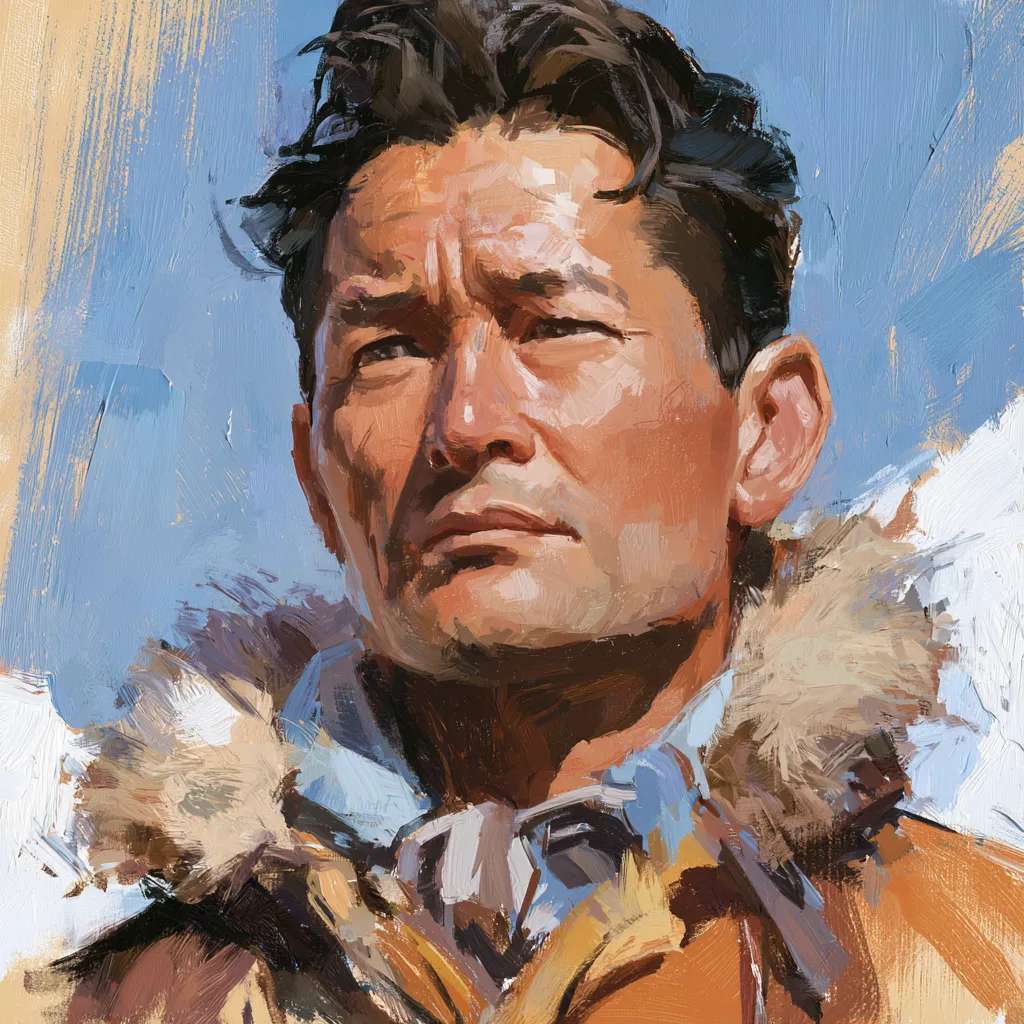
Who was Tenzing Norgay?
Tenzing Norgay (May 1914 - 9 May 1986) was a Nepalese-Indian Sherpa mountaineer who, alongside Edmund Hillary, became the first person confirmed to reach the summit of Mount Everest, on 29 May 1953. A veteran of multiple earlier Everest expeditions, he later became the first Director of Field Training at the Himalayan Mountaineering Institute in Darjeeling, where he died in 1986.
Tenzing Norgay was a Nepali-Indian Sherpa mountaineer who, together with Edmund Hillary, made history as the first person confirmed to summit Mount Everest in 1953. His expertise and courage were vital to the expedition's success.
Don't stop at the facts — continue Tenzing Norgay's story in free narrated chapters on Chunks.
Or get it straight away:
 Download on iOS
 Download on Android
Quick facts
- Born
- 29 May 1914
- Birthplace
- Tengboche
- Died
- 9 May 1986
- Place of death
- Darjeeling
- Nationality
- Nepal, India
- Occupation
- Explorer, mountain guide, autobiographer
Tenzing Norgay: key facts
- Tenzing Norgay was a Nepalese-Indian Sherpa mountaineer originally named Namgyal Wangdi before a lama renamed him.
- On 29 May 1953 he and Edmund Hillary became the first confirmed climbers to reach the summit of Mount Everest as part of the 1953 British Mount Everest expedition.
- He had taken part in earlier Everest attempts, including the 1935, 1936, and 1938 British expeditions and the 1952 Swiss expeditions, where he and Raymond Lambert set a climbing altitude record of about 8,595 metres.
- During the 1953 climb, Norgay used his ice axe to secure the rope and save Edmund Hillary after Hillary fell into a crevasse.
- Following the Everest ascent, Norgay received the George Medal from Queen Elizabeth II, since he was not a British subject and could not be knighted.
- He became the first Director of Field Training at the Himalayan Mountaineering Institute in Darjeeling when it opened in 1954.
- Tenzing Norgay died of a cerebral hemorrhage in Darjeeling, India, on 9 May 1986 at the age of 71.
A Childhood Told Several Different Ways
The details of Tenzing Norgay's birth and childhood shift depending on which account is consulted, including his own. In his autobiography he described himself as a Sherpa born and raised in Tengboche, in the Khumbu region of northeastern Nepal. In a 1985 radio interview he said his parents came from Tibet but that he himself was born in Nepal. Later accounts, including one co-written by his son Jamling, place his birth in Tibet, at Tse Chu in the Kama Valley, with his family later moving to Thame and Kharta before he went to Nepal as a child to work for a Sherpa household in Khumbu.
His exact birthdate was never recorded, but he knew it fell in late May, judging by the weather and the state of the crops. After reaching the summit of Everest on 29 May 1953, he chose to mark that date as his birthday from then on. His birth year, calculated from the Tibetan calendar as the Year of the Rabbit, was most likely 1914, a figure consistent with expedition leader John Hunt's description of him as 39 years old in 1953.
He was originally named Namgyal Wangdi. As a child, the head lama of Rongbuk Monastery advised changing his name, and he became Tenzing Norgay, meaning wealthy, fortunate follower of religion. His father was a Tibetan yak herder and his mother was also Tibetan; he was the eleventh of thirteen children, several of whom did not survive childhood. As a teenager he ran away from home twice, first to Kathmandu and later to Darjeeling, India, the usual starting point for Himalayan expeditions at the time. He was briefly sent to a monastery to train as a monk but left, and by nineteen had settled among the Sherpa community of Darjeeling, eventually becoming an Indian citizen.
Learning the Mountains: Porter Work in the 1930s and 1940s
Norgay's first chance to join an Everest expedition came at age twenty, in 1935, when Eric Shipton was recruiting for a British reconnaissance trip. After two other candidates failed medical checks, Norgay was put forward by a friend who had worked on an earlier expedition, and Shipton took him on. Over the following years he served as a high-altitude porter on three official British attempts on Everest from the Tibetan side during the 1930s, and took part in various other climbs across the Indian subcontinent. In the early 1940s he lived for a period in Chitral, then part of India, working as an assistant to a British officer; his first wife died and was buried there.
Norgay returned to Darjeeling with his two daughters during the upheaval of Indian partition in 1947, reportedly crossing the country by train without a ticket, unchallenged because he wore an old British army uniform given to him. That same year he took part in an unauthorized attempt on Everest with a Canadian mountaineer and another Sherpa, entering Tibet illegally; the attempt ended when a severe storm hit at around 22,000 feet. Also in 1947 he became sirdar, or lead guide, of a Swiss expedition for the first time, after helping rescue an injured fellow sirdar, and was part of the summit party that reached the top of Kedarnath in the Garhwal Himalaya. In 1951 he joined a British reconnaissance expedition to Everest.
Record Altitude with the Swiss, 1952
In 1952 Norgay joined two Swiss expeditions attempting Everest from the Nepalese side for the first time, an approach previously only scouted by American and British parties. On 28 May, he and climber Raymond Lambert reached roughly 8,595 metres on the southeast ridge, setting a new altitude record. This expedition marked the first time Norgay was treated as a full member of the climbing team rather than solely as support staff, an honour he later called the greatest ever paid to him, and it forged a lasting friendship with Lambert. A second Swiss attempt that autumn was turned back by bad weather after reaching about 8,100 metres.
The Summit, 29 May 1953
In 1953 Norgay joined the British expedition led by John Hunt, having already been to Everest six times before. During the climb, team member Edmund Hillary fell into a crevasse and was saved when Norgay quickly secured the rope with his ice axe, an incident that convinced Hillary he wanted Norgay as his partner for any summit attempt. The expedition was a massive undertaking, involving more than 400 people including 362 porters and 20 Sherpa guides, along with over ten thousand pounds of equipment.
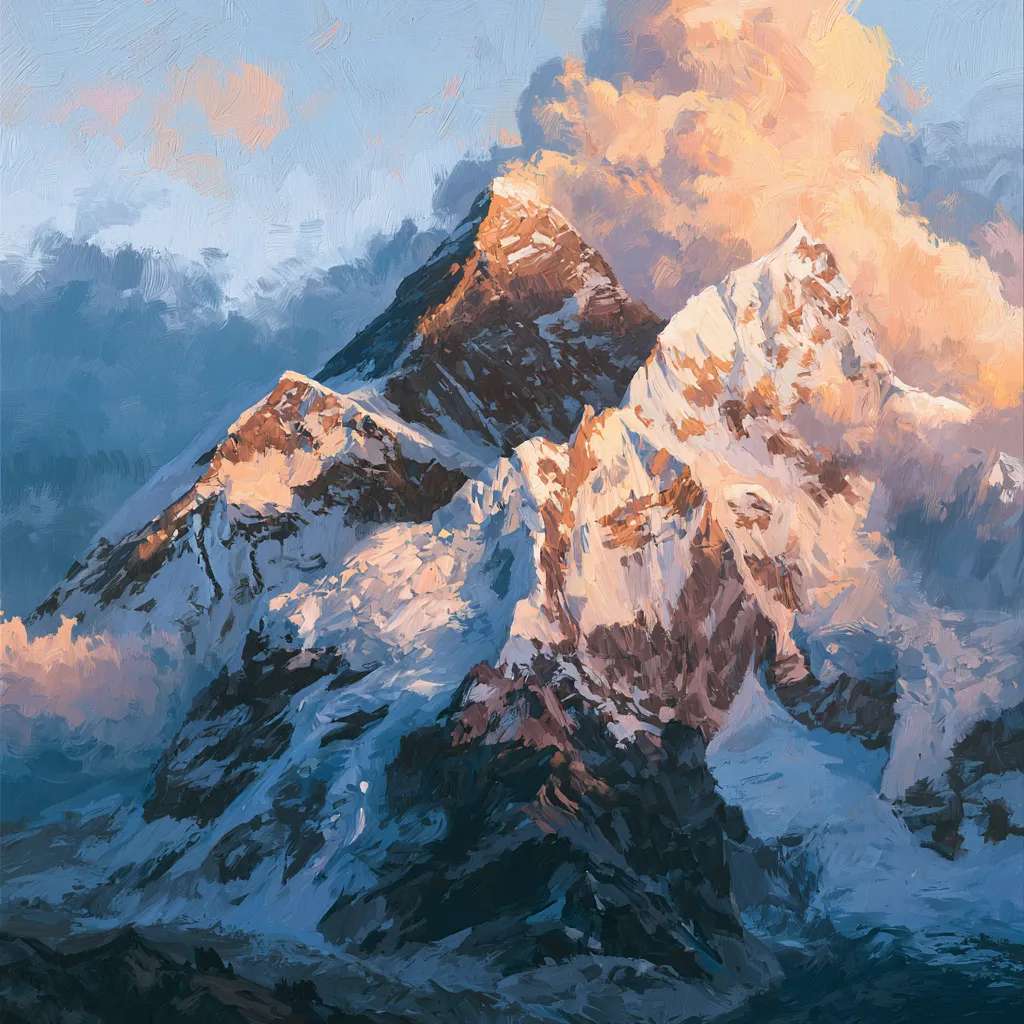
After an earlier pair turned back just short of the top when their oxygen system failed, Hunt sent Norgay and Hillary for the summit. The two pitched a high camp at about 27,900 feet, and after Hillary spent two hours thawing his frozen boots, they set out wearing thirty-pound packs. Hillary found a route up a forty-foot rock face, later named the Hillary Step, wedging himself between rock and ice, with Norgay following. They reached the 29,028-foot summit at 11:30 in the morning and spent about fifteen minutes there. Hillary photographed Norgay with his ice axe, but since Norgay had never used a camera, no picture exists of Hillary at the top.
News of the achievement brought enormous acclaim in Nepal and India. Hillary and Hunt were knighted by Queen Elizabeth II, while Norgay, not a British subject, received the George Medal instead. Persistent press questioning over which man had technically reached the top first was addressed by Hunt, who insisted they arrived together as a team. Norgay eventually settled the matter himself in his 1955 autobiography, written with an American collaborator since Norgay could not read or write, stating plainly that Hillary stepped onto the summit first and he stepped up right after.
Guiding, Teaching, and Later Years
After Everest, Norgay became the first Director of Field Training at the Himalayan Mountaineering Institute in Darjeeling when it opened in 1954. In 1975 he guided the first American tourist group permitted into Bhutan, leading a trek from Paro through the Tiger's Nest monastery and on into India via Nepal and Sikkim. In 1978 he founded Tenzing Norgay Adventures, a trekking company later run by his son Jamling, who himself climbed Everest in 1996.
Recognition continued throughout his life: the Himalayan Club had awarded him its Tiger Medal back in 1938, Nepal made him a Member of the Order of the Star of Nepal in 1953, India awarded him the Padma Bhushan in 1959, and the Soviet Union named him an honorary Merited Master of Sport in 1963. He died of a cerebral hemorrhage in Darjeeling on 9 May 1986, at the age of 71, and was cremated at the Himalayan Mountaineering Institute. His legacy includes Nepal's proposal to name a nearby peak after him, a mountain range on Pluto called Tenzing Montes, and India's renaming of its top adventure sports award in his honor in 2003.
Tenzing Norgay: timeline
- 1914Born in Tengboche, in the Khumbu region, to a Tibetan yak-herding family.
- 1935Joined the British Mount Everest reconnaissance expedition as a high-altitude porter, his first Everest expedition.
- 1938Awarded the Tiger Medal by the Himalayan Club for his high-altitude work on Everest expeditions.
- 1947Took part in an unauthorized, unsuccessful attempt on Everest with Earl Denman and Ange Dawa Sherpa, turned back by a storm.
- 1947Served as sirdar on a Swiss expedition and reached the summit of Kedarnath in the Garhwal Himalaya.
- 1952Climbed with Raymond Lambert on a Swiss expedition, reaching about 8,595 metres on Everest's southeast ridge, a new altitude record.
- 1953Reached the summit of Mount Everest with Edmund Hillary as part of the British expedition led by John Hunt, the first confirmed ascent.
- 1953Received the George Medal from Queen Elizabeth II in recognition of the Everest climb.
- 1954Became the first Director of Field Training at the newly established Himalayan Mountaineering Institute in Darjeeling.
- 1955Published his ghost-written autobiography, Man of Everest, clarifying that Hillary had stepped onto the summit first.
- 1978Founded Tenzing Norgay Adventures, a trekking company in the Himalayas.
- 1986Died of a cerebral hemorrhage in Darjeeling, West Bengal, India, at age 71.
Listen: stories featuring Tenzing Norgay
Narrated chapters from the Chunks Microlearning app. Read a preview here, or listen to the full story in the app.
Frequently asked questions about Tenzing Norgay
Who was Tenzing Norgay?
Tenzing Norgay was a Sherpa mountaineer from Nepal who, with Edmund Hillary, became one of the first two people confirmed to reach the summit of Mount Everest in 1953. He had extensive Himalayan climbing experience prior to this historic ascent.
What role did Tenzing Norgay play in the Everest expedition?
Tenzing Norgay served as a lead climbing Sherpa whose mountaineering skill and knowledge of the Himalayas were essential to the 1953 British expedition's success. He and Hillary reached the summit together, sharing the historic achievement.
Why is Tenzing Norgay important in mountaineering history?
Norgay's ascent of Everest brought international recognition to Sherpa mountaineers and their crucial contributions to Himalayan expeditions. He remains a national hero in Nepal and a celebrated figure in exploration history.
Continue Tenzing Norgay's story
You've read the summary — hear the full story as narrated 5-minute chapters on Chunks, alongside 200+ figures and events from history, philosophy and science. Free to start on iOS and Android.