
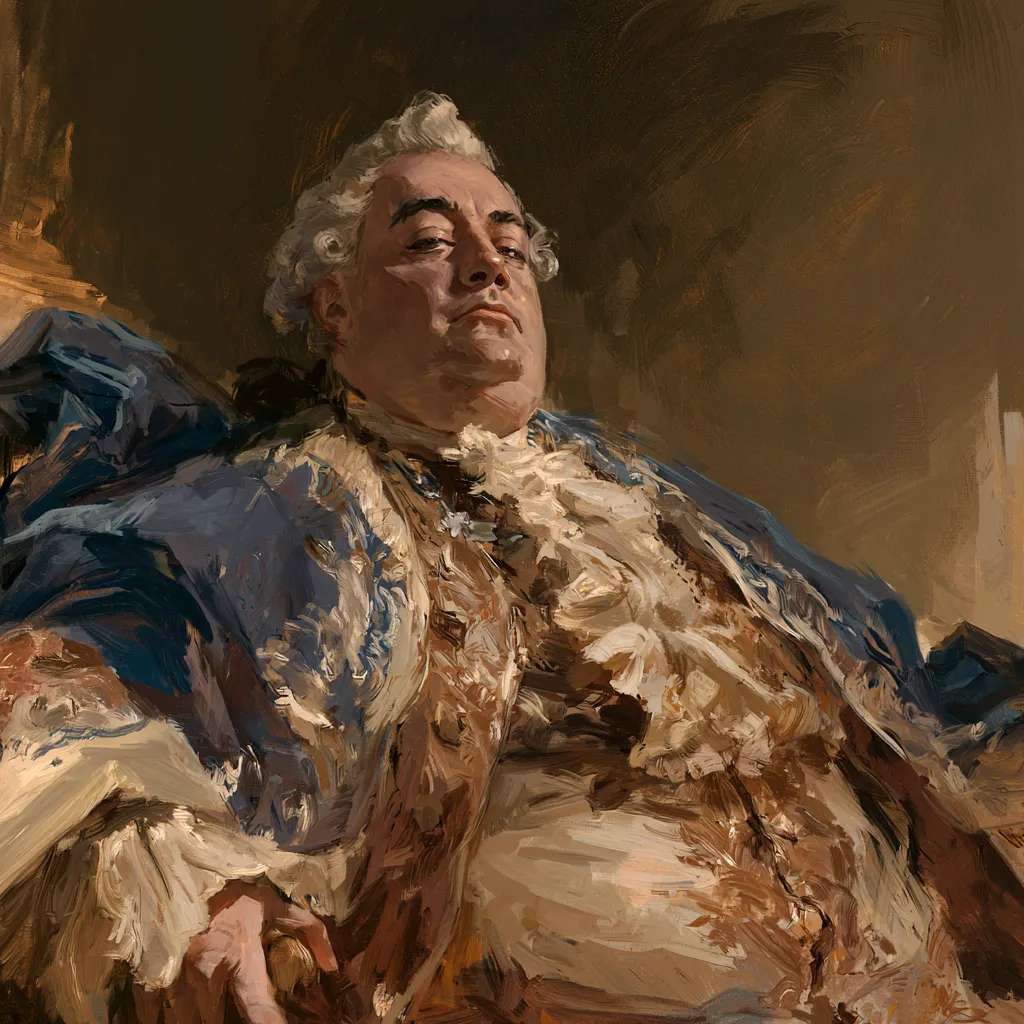
Who was Louis XVI?
Louis XVI (23 August 1754 - 21 January 1793) was the last king of France before the monarchy's abolition during the French Revolution, reigning from 1774. His indecisive rule, resistance to reform, and mounting financial crises deepened public unrest, culminating in the storming of the Bastille and his failed flight to Varennes. Tried for treason, he was executed by guillotine in Paris, ending over a thousand years of French monarchy.
The last king of France before the monarchy was abolished during the French Revolution. His indecisive leadership and financial crises contributed to the unrest that toppled the French monarchy.
Don't stop at the facts — continue Louis XVI's story in free narrated chapters on Chunks.
Or get it straight away:
 Download on iOS
 Download on Android
Quick facts
- Born
- 23 August 1754
- Birthplace
- Palace of Versailles
- Died
- 21 January 1793
- Place of death
- place de la Concorde
- Nationality
- France
- Occupation
- Politician, ruler, art collector
Louis XVI: key facts
- Louis XVI was born Louis-Auguste de France on 23 August 1754 at the Palace of Versailles.
- He became Dauphin of France in 1765 after his father's death and ascended the throne on 10 May 1774 following the death of his grandfather Louis XV.
- In 1770 he married Archduchess Marie Antoinette of Austria, with whom he had four children.
- From 1776 he supported the American colonists against Britain, an intervention formalized by the 1778 Treaty of Alliance and concluded by the Treaty of Paris in 1783.
- Financial reforms and debt crises under ministers like Turgot and Necker fueled unrest that led to the convening of the Estates General in 1789.
- His failed flight to Varennes in June 1791 badly damaged his legitimacy amid the French Revolution.
- Tried by the National Convention for high treason, Louis XVI was executed by guillotine on 21 January 1793 at the Place de la Revolution.
A Neglected Second Son Turned Heir
Louis-Auguste de France was born at the Palace of Versailles on 23 August 1754, one of seven children of Louis, Dauphin of France, and Marie-Josèphe of Saxony. His parents favored his older brother, the Duke of Burgundy, who was considered bright and handsome, while Louis-Auguste was seen as shy, though strong and healthy. After his brother died at age nine in 1761, Louis-Auguste became the focus of his education, excelling in Latin, history, geography, and astronomy, and becoming fluent in Italian and English. He also developed a lasting interest in locksmithing, encouraged from a young age as a suitable pursuit for a child, and enjoyed hunting and rough play with his younger brothers, the future Count of Provence and Count of Artois.
When his father died of tuberculosis in December 1765, eleven-year-old Louis-Auguste became the new Dauphin. His mother died of the same disease little more than a year later. His education under his governor, the Duke of La Vauguyon, emphasized religion, morality, and humanities but left him poorly prepared to rule. His tutors instilled habits that would mark his later reign: one instructor taught him that timidity was a virtue in strong monarchs, while his confessor advised him never to let others read his intentions.
Marriage to Marie Antoinette
On 19 April 1770, fifteen-year-old Louis married fourteen-year-old Archduchess Maria Antonia of Austria, known in France as Marie Antoinette, daughter of Holy Roman Emperor Francis I and Empress Maria Theresa. The marriage was unpopular in France, where the Austrian alliance was blamed for the country's defeat in the Seven Years' War, and Marie Antoinette was viewed as an unwelcome foreigner. The young couple, virtual strangers who had met only two days before their wedding, struggled at first: Louis's shyness and inexperience meant the marriage was not consummated for years, reportedly not until 1777, a delay that fueled mocking pamphlets questioning the king's virility.
Historians have debated whether Louis suffered from a physical condition, though most now doubt claims that he underwent corrective surgery, since he continued hunting almost daily during the period such an operation would have required recovery. Marie Antoinette's brother, Emperor Joseph II, visited Versailles in 1777 and described the couple bluntly as sexual novices, but after his advice the situation improved, and Marie Antoinette became pregnant in March 1778. The couple went on to have four children, two of whom survived past early childhood, and Louis also took in several adopted children, including orphans and a freed Senegalese boy given to the queen as a gift.
Ruling an Indebted Kingdom
Louis XVI became king at nineteen upon his grandfather Louis XV's death in 1774, inheriting a government deep in debt and a public resentful of despotic rule. Eager to be loved by his subjects, he reinstated the parlements and leaned heavily on experienced advisors such as Jean-Frédéric Phélypeaux, Count of Maurepas. One notable achievement was the 1787 Edict of Versailles, which restored civil and legal status to Protestants and Jews in France, effectively undoing a century-old policy of religious persecution, though full freedom of religion would not arrive until the 1789 Declaration of the Rights of Man.
Financial reform proved his undoing. Ministers including Turgot, Malesherbes, and Necker each attempted fixes, from deregulating grain markets, which raised bread prices and triggered unrest in 1775, to concealing France's debts behind misleading published accounts. Necker's successor Calonne proposed sweeping reforms in 1787, but the Assembly of Notables rejected them once the scale of the debt became clear. Louis then tried to force the Parlement of Paris to register new taxes through royal decree, exiling and arresting magistrates who resisted, but public opinion and an empty treasury undermined every attempt, and by 1788 he had no choice but to summon the Estates General, a body that had not met since 1614.
Backing the American Cause
Seeking revenge against Britain for France's losses in the Seven Years' War, Louis's foreign minister Vergennes saw an opportunity in the American Revolution. Louis secretly authorized supplies and arms to the rebels starting in 1776, then signed a formal Treaty of Alliance in 1778, bringing France into open war with Britain. French naval and land forces, including troops under Rochambeau and a fleet under de Grasse, proved decisive at the Siege of Yorktown in 1781, forcing a British surrender that led to American independence, recognized in the 1783 Treaty of Paris.
The war was ruinously expensive, costing over a billion livres financed through loans rather than new taxes, deepening the financial crisis that would later help bring down the monarchy. France gained little territory from the peace beyond Tobago and Senegal, falling short of Louis's hopes of reclaiming Canada or India from Britain. Louis also pursued ambitions in Asia, allying with Indian and Vietnamese rulers against British interests, and sponsored global exploration, including a scientific expedition led by La Pérouse in 1785 whose fate remained unknown even as Louis awaited his own execution.
Revolution, Flight, and the Guillotine
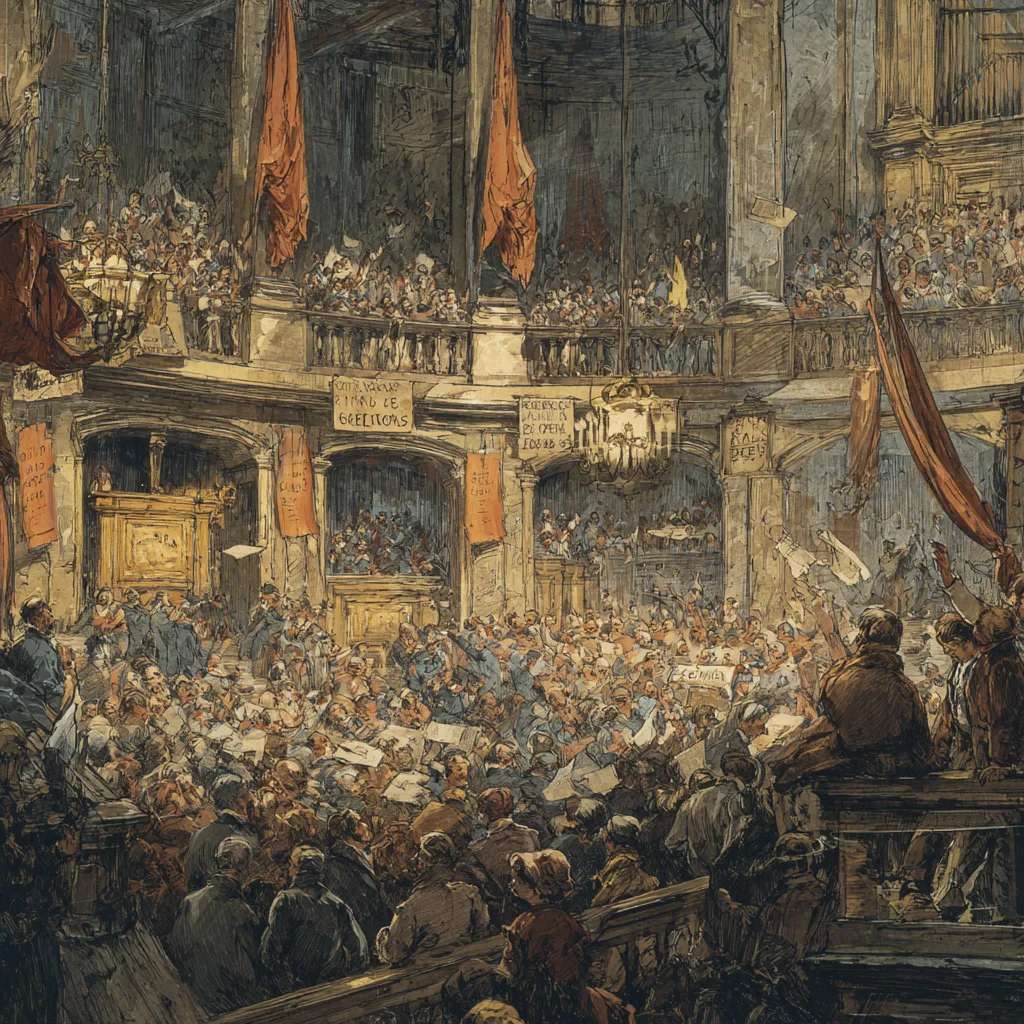
The Estates General convened in 1789 amid rigid, alienating protocols that favored the clergy and nobility over the commoners of the Third Estate, helping ignite the Revolution. Within weeks the Third Estate declared itself the National Assembly, leading to the Tennis Court Oath, the storming of the Bastille in July 1789, and a march on Versailles that October that forced the royal family to relocate to the Tuileries Palace in Paris, effectively as prisoners of the new order.
In June 1791, Louis and his family attempted to flee secretly to the royalist stronghold of Montmédy, hoping for Austrian support, but they were recognized and arrested at Varennes and returned to Paris under suspicion of treason. The episode shattered public trust in the king. War with Austria and Prussia followed in 1792, and the Brunswick Manifesto, threatening reprisals against France on the king's behalf, only deepened suspicions of royal collusion with foreign enemies, triggering the storming of the Tuileries on 10 August 1792.
Arrested and stripped of his titles, Louis was tried before the National Convention as the citizen Louis Capet on charges of high treason. Discovery of a hidden safe containing incriminating correspondence sealed his fate. On 15 January 1793 he was found guilty by near-unanimous vote, and the following day a narrow majority condemned him to death. On 21 January 1793, at age 38, he was executed by guillotine at the Place de la Révolution, having pardoned those responsible for his death and declared his innocence before the crowd. His remains were buried without ceremony, later reinterred at the Basilica of St Denis in 1815 by his brother Louis XVIII.
Louis XVI: timeline
- 1754Born at the Palace of Versailles, second surviving son of the Dauphin Louis and Marie-Josèphe of Saxony.
- 1765Became Dauphin of France at age eleven after his father died of tuberculosis.
- 1770Married the fourteen-year-old Archduchess Marie Antoinette of Austria in a politically arranged union.
- 1774Became King of France and Navarre upon the death of his grandfather Louis XV, inheriting a heavily indebted government.
- 1778Signed a formal Treaty of Alliance with the American rebels and entered France into war against Great Britain.
- 1783Saw the American war end with the Treaty of Paris, gaining little for France despite enormous war debts.
- 1787Signed the Edict of Versailles, granting Protestants and Jews civil and legal status and ending official religious persecution.
- 1789Convened the Estates General amid financial crisis, setting off events including the Tennis Court Oath and the storming of the Bastille.
- 1791Attempted to flee Paris with his family to Montmédy but was recognized and arrested at Varennes.
- 1792Was arrested and imprisoned in the Temple after the storming of the Tuileries during the Insurrection of 10 August.
- 1792Saw the monarchy abolished as the National Convention proclaimed the French First Republic, stripping him of his titles.
- 1793Was executed by guillotine at the Place de la Révolution after being convicted of high treason by the National Convention.
Listen: stories featuring Louis XVI
Narrated chapters from the Chunks Microlearning app. Read a preview here, or listen to the full story in the app.
Frequently asked questions about Louis XVI
Who was Louis XVI?
Louis XVI was the King of France whose reign ended with the French Revolution. He was executed by guillotine in 1793 after being tried for treason.
What contributed to Louis XVI's downfall?
Financial crises, food shortages, and widespread inequality under Louis XVI's rule fueled public anger. His inability to address these issues effectively accelerated the revolution.
How did Louis XVI's reign end?
Louis XVI was arrested, tried, and executed by guillotine in January 1793. His execution marked a decisive turning point in the French Revolution.
Continue Louis XVI's story
You've read the summary — hear the full story as narrated 5-minute chapters on Chunks, alongside 200+ figures and events from history, philosophy and science. Free to start on iOS and Android.