
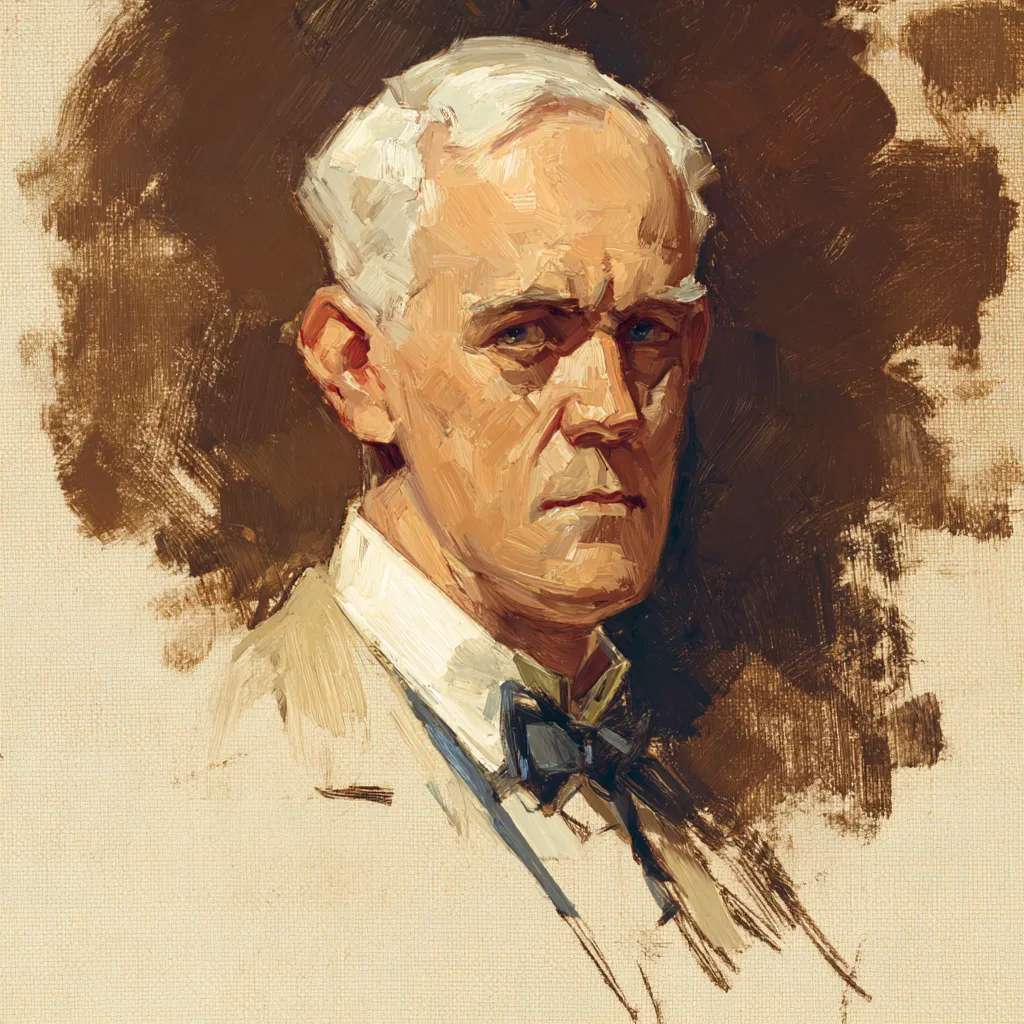
Who was Alexander Fleming?
Alexander Fleming (6 August 1881 – 11 March 1955) was a Scottish physician and microbiologist who discovered penicillin in 1928 after noticing that a mold contaminating one of his bacterial cultures had destroyed the surrounding bacteria. He shared the 1945 Nobel Prize in Physiology or Medicine with Howard Florey and Ernst Chain, whose work transformed his laboratory finding into a life-saving drug.
Scottish microbiologist who accidentally discovered penicillin in 1928 when he noticed that a mold had contaminated one of his bacterial cultures and killed the bacteria. This serendipitous discovery led to the development of antibiotics, saving millions of lives.
Don't stop at the facts — continue Alexander Fleming's story in free narrated chapters on Chunks.
 Download on iOS
 Download on Android
Quick facts
- Born
- 6 August 1881
- Birthplace
- Lochfield
- Died
- 11 March 1955
- Place of death
- London
- Nationality
- United Kingdom
- Occupation
- Bacteriologist, pharmacologist, physician
Alexander Fleming: key facts
- Alexander Fleming was born on 6 August 1881 at Lochfield farm near Darvel, Ayrshire, Scotland, and died on 11 March 1955 in London of a heart attack; his ashes are buried in St Paul's Cathedral.
- On 3 September 1928, Fleming returned from a family holiday to find one of his staphylococci culture plates contaminated with a Penicillium mould that had destroyed the surrounding bacterial colonies, leading to his discovery of penicillin.
- Fleming shared the 1945 Nobel Prize in Physiology or Medicine with Howard Florey and Ernst Chain for the discovery of penicillin and its curative effect in various infectious diseases.
- Before discovering penicillin, Fleming identified the enzyme lysozyme in 1922 from his own nasal discharge, making it the first antimicrobial protein discovered as part of human innate immunity.
- Fleming was knighted in 1944 and was named one of Time magazine's 100 Most Important People of the 20th century in 1999.
- Fleming trained at St Mary's Hospital Medical School in Paddington, qualifying in 1906 with an MBBS with distinction, and was elected Professor of Bacteriology at the University of London in 1928.
- Fleming warned publicly as early as 1945 that using too little penicillin, or for too short a period, could educate bacteria to resist the drug, anticipating the modern problem of antibiotic resistance.
A Farm Boy from Ayrshire Who Remade Medicine
Alexander Fleming was born on 6 August 1881 at Lochfield farm near Darvel, in Ayrshire, Scotland, the third of four children of farmer Hugh Fleming and Grace Stirling Morton. His father was 59 at the time of his second marriage and died when Alexander was seven, leaving Grace to raise the children. Fleming attended Loudoun Moor School and Darvel School, then earned a scholarship to Kilmarnock Academy before relocating to London to study at the Royal Polytechnic Institution.
After four years working in a shipping office, the twenty-year-old Fleming inherited money from an uncle and was encouraged by his elder brother Tom, already a physician, to pursue medicine. He enrolled at St Mary's Hospital Medical School in Paddington in 1901 and qualified with an MBBS degree with distinction in 1906. His path into research came through an unlikely route: the captain of the rifle club at the medical school wanted to keep Fleming on the team and suggested he join the research department, where Fleming became assistant bacteriologist to Sir Almroth Wright, a pioneer in vaccine therapy. By 1908, Fleming had earned a BSc in bacteriology with a gold medal.
World War I and the Failure of Antiseptics
When World War I broke out, Fleming, Leonard Colebrook, and Sir Almroth Wright effectively relocated the Inoculation Department of St Mary's to a British military hospital at Boulogne-sur-Mer. Fleming had been a private in the London Scottish Regiment since 1900 and was commissioned a lieutenant in 1914, later promoted to captain. Working in battlefield hospitals on the Western Front, he witnessed soldiers dying not from their wounds alone but from the sepsis that followed. The antiseptics being applied to infected wounds were, he observed, making things worse rather than better.
In a 1917 article in The Lancet, Fleming explained the problem through an experiment he was able to design partly because of his own glassblowing skills. Deep wounds created conditions where anaerobic bacteria were sheltered from any antiseptic applied to the surface. Worse, the antiseptics destroyed beneficial agents the body itself was producing to fight infection, while leaving unreachable bacteria untouched. Despite Wright's support for these findings, most army physicians continued applying antiseptics throughout the war. The experience sharpened Fleming's conviction that the body's own defences, and any substances that worked alongside them, mattered far more than the chemical agents then in use.
Lysozyme: The First Discovery That Nobody Noticed
In late 1921, while tending bacterial culture plates at St Mary's, Fleming found that nasal mucus he had added to a contaminated plate inhibited bacterial growth, producing a clear ring around the mucus indicating that bacteria had been killed. He extended the investigation using tears collected from colleagues and co-workers, and tested sputum, blood, egg white, and other substances, finding the same bactericidal agent across all of them. He named the substance lysozyme and reported his discovery to the Medical Research Club in December 1921 and to the Royal Society the following year. On both occasions the audience responded with near-total silence.
Fleming published his findings in the Proceedings of the Royal Society B in May 1922 under the title 'On a remarkable bacteriolytic element found in tissues and secretions.' He also identified the bacterium present in the nasal mucus, naming it Micrococcus lysodeikticus, a species later reassigned as Micrococcus luteus in 1972. Although egg whites yielded larger amounts of lysozyme, the enzyme proved effective only against small counts of harmless bacteria, limiting its direct therapeutic use. The broader significance of lysozyme as part of the body's innate immune defences was not recognised until near the end of the twentieth century. The patient described in the original publication as suffering from acute coryza was, as Fleming's research notebook confirms, Fleming himself.
The Contaminated Plate: How Penicillin Was Found
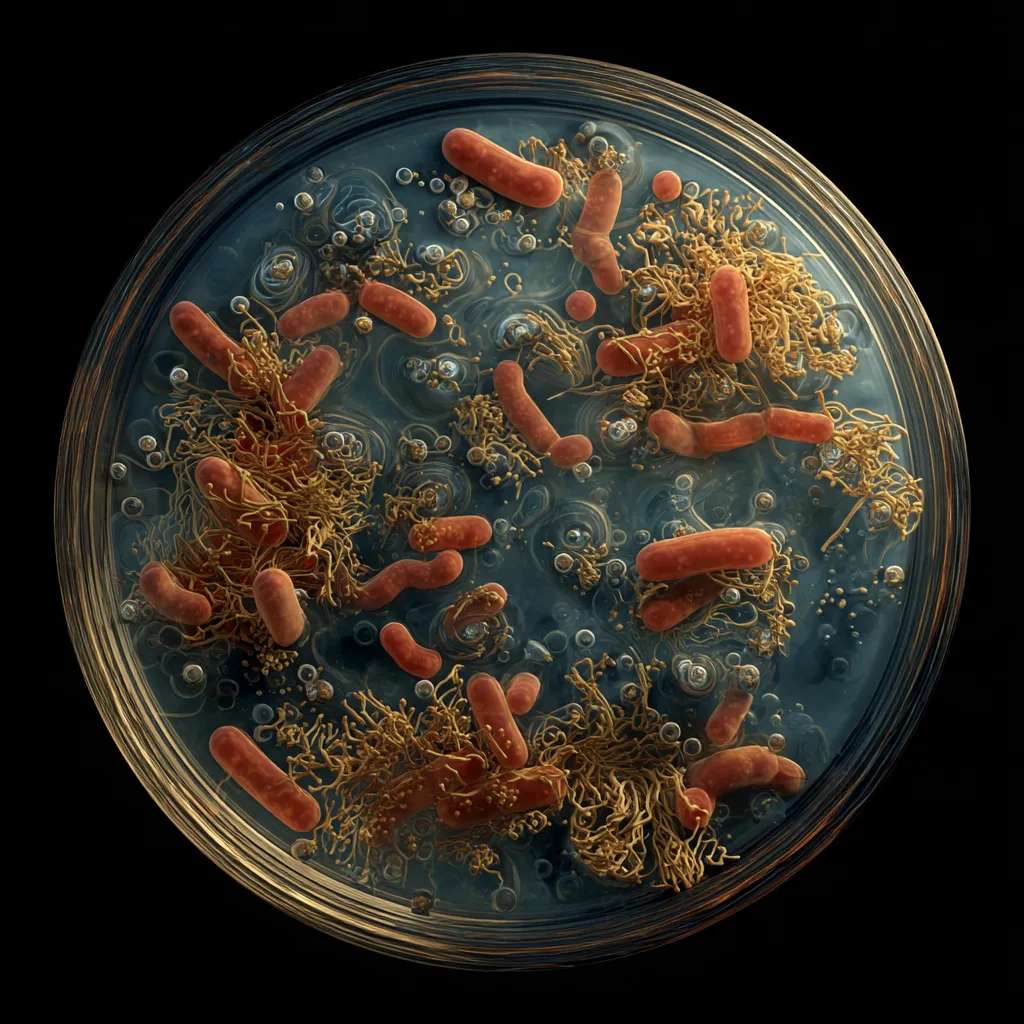
On 3 September 1928, Fleming returned to his laboratory at St Mary's after a family holiday in Suffolk. Before leaving he had inoculated staphylococci on culture plates and left them on a bench. One plate had become contaminated with a fungus, and the colonies of staphylococci immediately surrounding it had been destroyed. Colonies farther away remained intact. Fleming remarked, 'That's funny,' and showed the plate to his former assistant Merlin Pryce, who noted the similarity to the lysozyme discovery. Fleming identified the mould as belonging to the genus Penicillium, and on 7 March 1929 gave the name penicillin to the antibacterial substance it produced. The mould was eventually classified as Penicillium rubens.
Fleming grew the mould in pure culture and tested the broth against a wide range of organisms. He found it effective against staphylococci and many other Gram-positive pathogens responsible for diseases including scarlet fever, pneumonia, meningitis, and diphtheria. It also affected Neisseria gonorrhoeae despite that bacterium being Gram-negative. He presented his findings to the Medical Research Club on 13 February 1929 and published them in the British Journal of Experimental Pathology, but neither audience nor readership showed significant interest. Producing penicillin in large amounts and isolating its active compound proved chemically difficult, and even with assistance from biochemists at the London School of Hygiene and Tropical Medicine, purification remained out of reach. As a result, penicillin attracted little attention through most of the 1930s.
It was the Oxford team of Howard Florey and Ernst Chain, working at the Sir William Dunn School of Pathology, who finally purified penicillin into a stable form in 1940 and developed methods for mass production by 1945. Fleming himself kept, grew, and distributed the original mould for twelve years and continued seeking chemists with the skill to isolate it. When Chain learned that Fleming was travelling to Oxford to see the work, he reportedly said, 'Good God! I thought he was dead.' Fleming was modest about his role, calling his fame the 'Fleming Myth' and crediting Florey and Chain with transforming a laboratory curiosity into a practical drug. Sir Henry Harris later summarised the chain of dependency: without Fleming, no Chain; without Chain, no Florey; without Florey, no Heatley; without Heatley, no penicillin.
Nobel Prize, Antibiotic Resistance, and a Warning Issued Too Early
Fleming shared the 1945 Nobel Prize in Physiology or Medicine with Howard Florey and Ernst Chain for the discovery of penicillin and its curative effect in infectious diseases. He had been knighted the previous year, in 1944, for his scientific achievements. In 1999 Time magazine named him one of the 100 Most Important People of the 20th century, and in 2002 the BBC included him in its poll of the 100 Greatest Britons.
Even before the drug reached widespread clinical use, Fleming had identified the risk of antibiotic resistance. He observed that bacteria developed resistance when penicillin was used in doses too small or for periods too short to eliminate them entirely. On 26 June 1945 he stated publicly that a person who underused penicillin and thereby bred resistant organisms was morally responsible for the deaths those organisms subsequently caused. In his Nobel Lecture he warned that if penicillin could be bought freely in shops, the ignorant user might underdose and make microbes resistant. Experiments as early as 1942 had already demonstrated that Staphylococcus aureus could develop resistance under prolonged low-level exposure, and around the same time the first clinical case of penicillin resistance was reported.
Fleming married Sarah Marion McElroy on 24 December 1915; their son Robert became a general medical practitioner. After Sarah's death in 1949, Fleming married Amalia Koutsouri-Vourekas, a Greek colleague at St Mary's, in 1953. He died of a heart attack at his London home on 11 March 1955, and his ashes are buried in St Paul's Cathedral. The laboratory where he discovered penicillin survives as the Alexander Fleming Laboratory Museum at St Mary's Hospital in Paddington.
Alexander Fleming: timeline
- 1881Born at Lochfield farm near Darvel, Ayrshire, Scotland, the third of four children of farmer Hugh Fleming and Grace Stirling Morton.
- 1901Enrolled at St Mary's Hospital Medical School in Paddington after inheriting money from his uncle John Fleming, following his elder brother Tom into medicine.
- 1906Qualified with an MBBS degree with distinction from St Mary's Hospital Medical School and later became a lecturer there.
- 1922Discovered the enzyme lysozyme after observing that nasal mucus inhibited bacterial growth on his culture plates, and identified the associated bacterium Micrococcus lysodeikticus.
- 1928Returned from a family holiday to find a mould contaminating a staphylococcal culture plate had destroyed the surrounding bacteria colonies, leading to his discovery of penicillin.
- 1929Published his discovery of penicillin in the British Journal of Experimental Pathology, naming the antibacterial substance on 7 March 1929, though the article received little attention.
- 1944Knighted for his scientific achievements.
- 1945Shared the Nobel Prize in Physiology or Medicine with Howard Florey and Ernst Chain for the discovery of penicillin and its curative effect in infectious diseases.
- 1955Died of a heart attack at his home in London; his ashes were buried in St Paul's Cathedral.
Listen: stories featuring Alexander Fleming
Narrated chapters from the Chunks Microlearning app. Read a preview here, or listen to the full story in the app.
Continue Alexander Fleming's story
You've read the summary — hear the full story as narrated 5-minute chapters on Chunks, alongside 200+ figures and events from history, philosophy and science. Free to start on iOS and Android.