
At the turn of the 20th century, infections are among humanity’s fiercest enemies. Even a simple cut or a routine surgery could prove fatal. Doctors have little more than crude antiseptics at their disposal; harsh chemicals like carbolic acid, or even mercury-based compounds, risking as much harm as healing. Diseases like pneumonia, tuberculosis, and syphilis claim millions of lives worldwide. Medical wards fill with patients suffering from sepsis, and the grim reality is that there is no way to kill the bacteria inside a living body without also harming the patient. The global scientific community is desperate for a solution, a medicine that can target and destroy harmful germs without poisoning human tissue. In this world, bleak and full of uncertainty for both doctors and patients, the stage is quietly set for a discovery that will change everything. Most have no inkling that salvation is waiting to emerge from an accident in an ordinary laboratory.
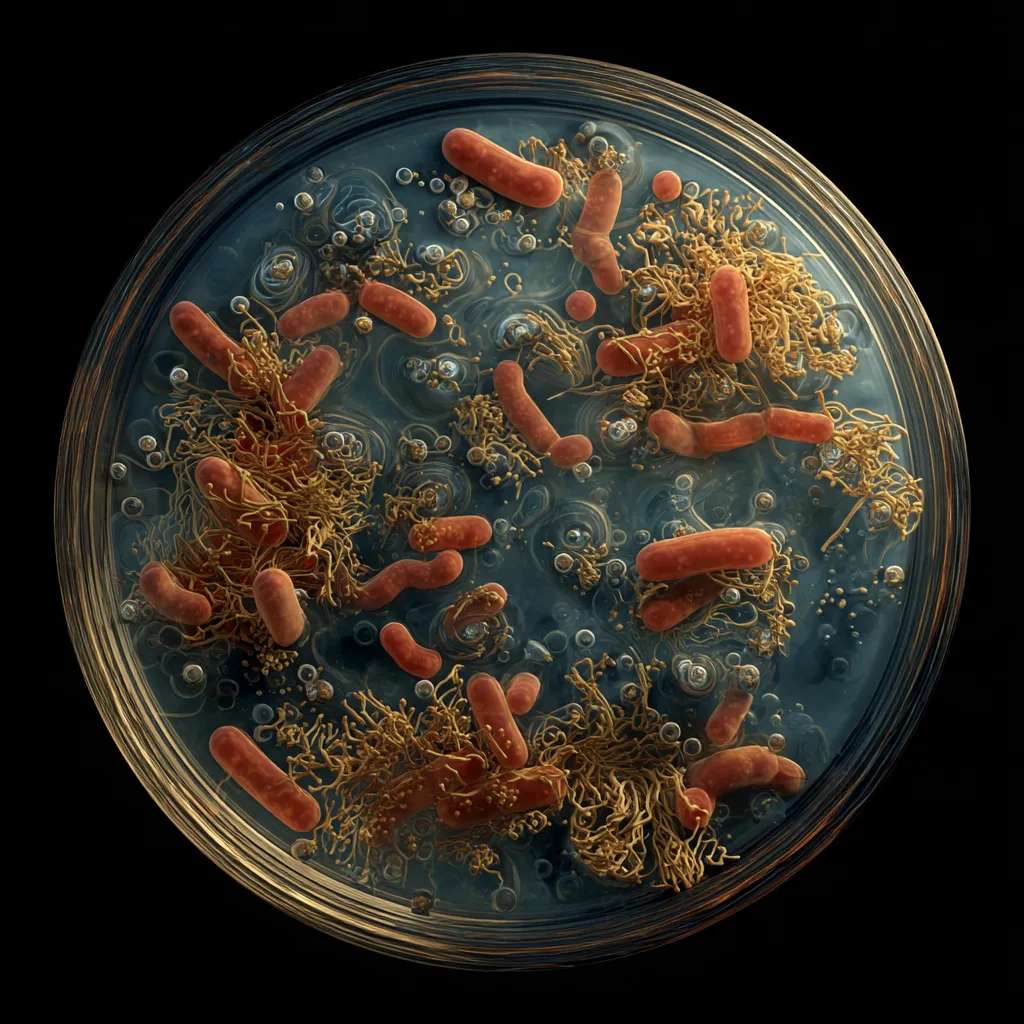
The Discovery of Penicillin
How one moldy Petri dish launched antibiotics and changed medicine forever.
A World Before Antibiotics
Frequently Asked Questions
How did Alexander Fleming accidentally discover penicillin in 1928?
Fleming discovered penicillin when he noticed that a mold had contaminated one of his bacterial culture plates and killed the surrounding bacteria. He had left a Petri dish containing Staphylococcus bacteria uncovered, and when he returned from vacation, he observed that a blue-green mold had grown on the plate and created a clear zone where no bacteria could survive.
Why did it take over a decade for penicillin to become a widely used medicine?
Fleming lacked the resources and expertise to purify penicillin into a stable, injectable form suitable for medical use. It wasn't until the late 1930s that Howard Florey and Ernst Boris Chain at Oxford University developed methods to mass-produce purified penicillin. Their work during World War II finally made penicillin available as a life-saving antibiotic for treating infections.
What impact did the discovery of penicillin have on modern medicine?
Penicillin revolutionized medicine by providing the first effective treatment against bacterial infections that had previously been fatal. It launched the antibiotic era, dramatically reducing deaths from pneumonia, sepsis, and wound infections. Fleming, Florey, and Chain shared the 1945 Nobel Prize in Physiology or Medicine for their contributions to developing this life-saving drug.
Learn more
To continue the story, download the Chunks Microlearning app
 Download on iOS
 Download on Android