
In 1403, the Yongle Emperor of China’s Ming Dynasty gave an extraordinary order: build a massive imperial fleet. To lead it, he chose his most trusted confidant, a Muslim eunuch named Zheng He. Born Ma He, he was captured as a ten-year-old boy during a Ming military campaign, eventually rising to become a key advisor to the future emperor. The mission of his great fleet was not conquest, but to project Chinese power and establish a vast tributary system. Foreign kings would be invited to recognize the Ming emperor’s superiority and offer tribute. In July 1405, the first of seven epic voyages departed from the port of Nanjing, sailing for a world that had never seen its like.
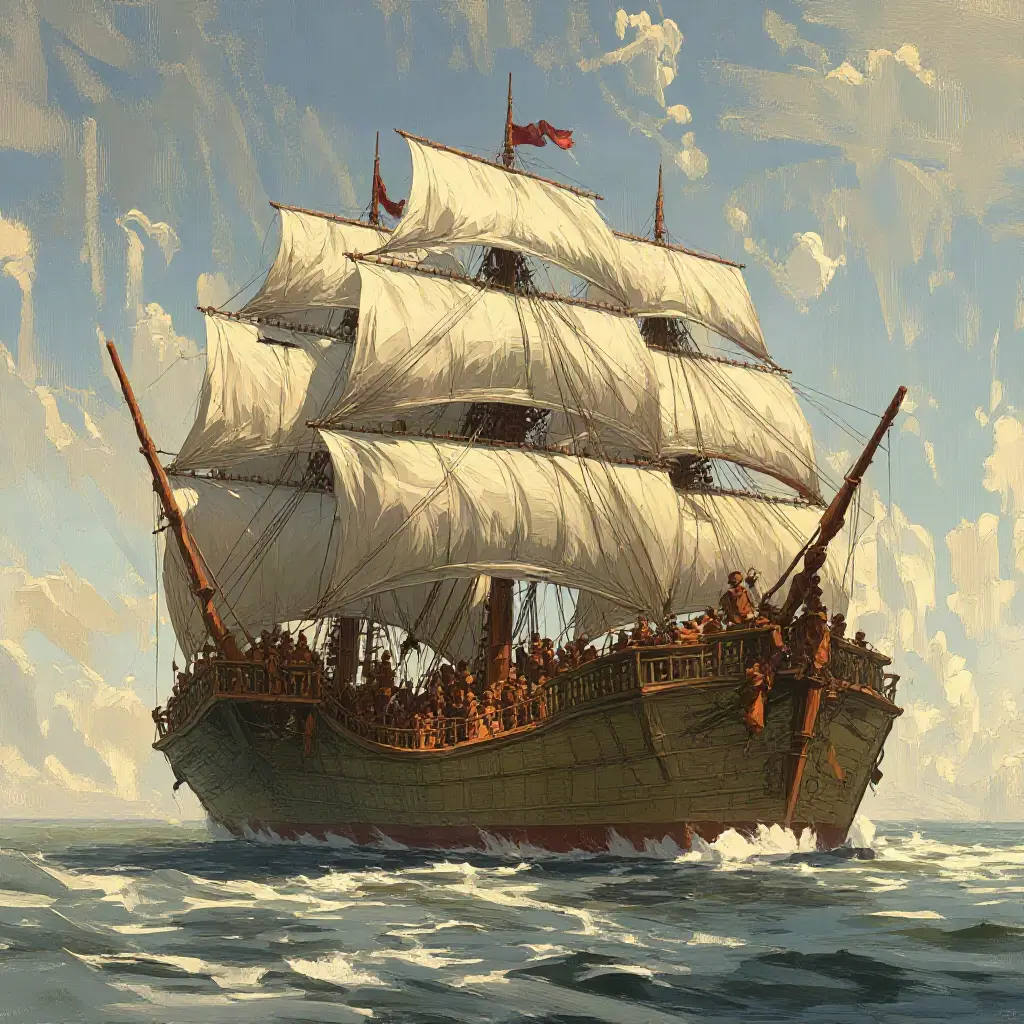
Zheng He's Treasure Fleets
Between 1405 and 1433, Admiral Zheng He's massive ships sailed to Africa, but China then let its fleet rot.
Chapter 1
An Emperor's Command
0:48
Frequently Asked Questions
Why did China build such a large fleet?
The Yongle Emperor commissioned the fleet to project Chinese prestige and establish a tributary system across the Indian Ocean. The primary goal was diplomacy and trade, not colonization or conquest. The voyages demonstrated the wealth and power of Ming China to foreign kingdoms.
How big were Zheng He's 'Treasure Ships'?
The official 'History of Ming' records them as being about 137 metres (450 feet) long, which would make them the largest wooden ships ever built. However, some modern engineers dispute these dimensions, arguing a wooden hull of that size would be structurally unstable in open seas without iron bracing.
Why did China stop the voyages?
After the death of Admiral Zheng He and his patron emperor, court politics shifted. Confucian officials, who saw the expeditions as a wasteful vanity project, gained influence and redirected funds toward defending the northern border against the Mongols. By 1500, building large ships was made a capital offense.
Learn more
To continue the story, download the Chunks Microlearning app
Or get it straight away:
 Download on iOS
 Download on Android