
After 75 years of French colonial rule, Vietnam's fate was decided in Switzerland. On July 21, 1954, the Geneva Accords formally partitioned the nation into two zones. A military demarcation line was drawn at the 17th parallel. In the North, the communist Viet Minh, led by Ho Chi Minh, held control. In the South, the anti-communist State of Vietnam held control below the demarcation line. This division was meant to be temporary, with nationwide elections planned for 1956 to reunify the country. But the United States and the new South Vietnamese government refused to sign the final declaration. Fearing a certain communist victory at the polls, they prevented the election from ever taking place. The temporary line began to harden into a permanent, hostile border.
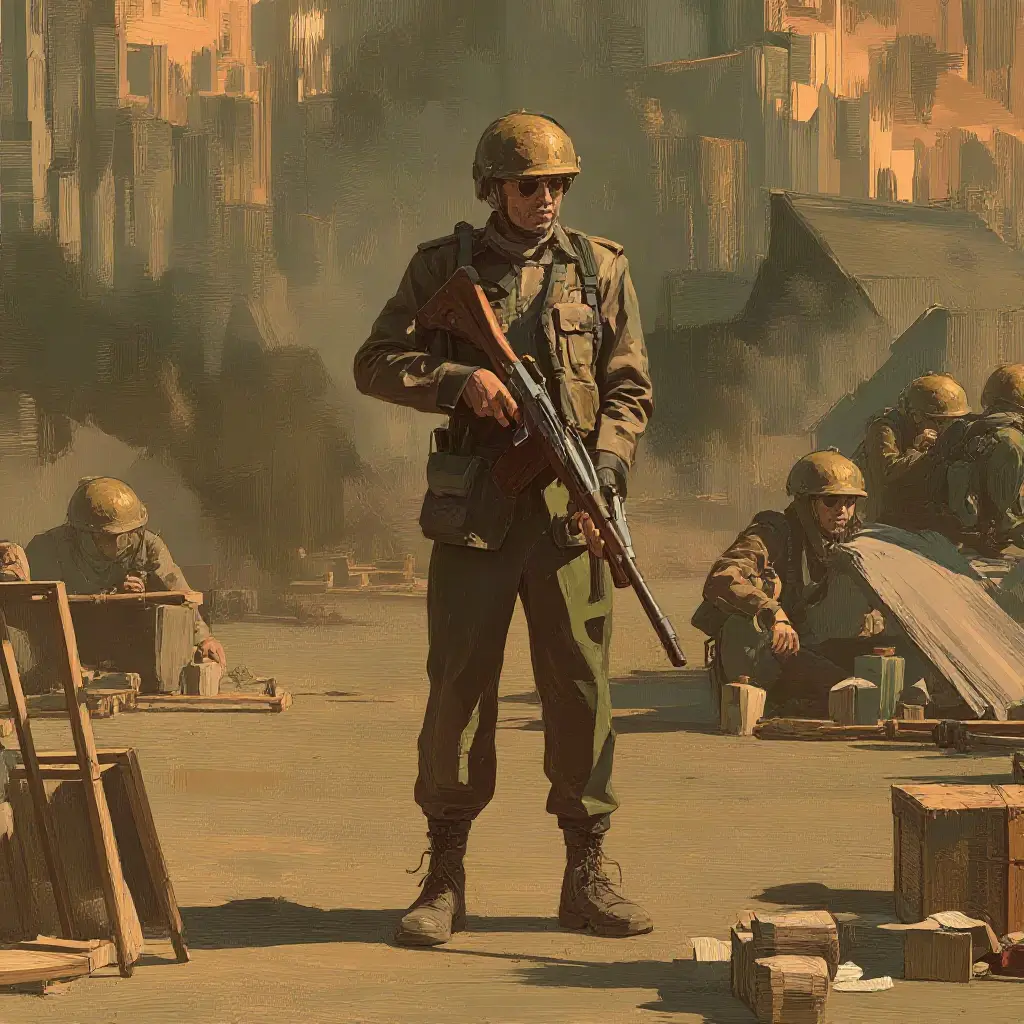
The Vietnam War
The Vietnam War began after a 1954 partition, escalated with US involvement, and ended with the fall of Saigon in 1975.
A Nation Divided
Part of
Frequently Asked Questions
Why did the U.S. get involved in Vietnam?
Initial U.S. involvement stemmed from the Cold War fear of communism. After the 1954 Geneva Accords partitioned Vietnam, the U.S. supported the anti-communist South to prevent a unified, communist Vietnam. Direct military involvement escalated dramatically after the 1964 Gulf of Tonkin incident.
What was the Tet Offensive?
The Tet Offensive was a massive surprise attack launched by North Vietnam and the Viet Cong in January 1968. Though a military failure for the North, it was a political disaster for the U.S. It shattered the public's belief that the war was being won and dramatically increased anti-war sentiment.
How did the Vietnam War end?
The war ended on April 30, 1975, when North Vietnamese forces captured Saigon, the capital of South Vietnam. This occurred two years after American combat troops withdrew following the 1973 Paris Peace Accords, leading to the reunification of Vietnam under communist rule.
Learn more
To continue the story, download the Chunks Microlearning app
Or get it straight away:
 Download on iOS
 Download on Android