
In 1831, Italy was not a country, but a patchwork of states often ruled by foreign powers. The powerful Austrian Chancellor Klemens von Metternich would later famously dismiss it as a 'mere geographical expression' in 1847. But from exile in Marseilles, an activist named Giuseppe Mazzini resolved to change that reality. He founded a movement called 'Young Italy,' with the slogan 'Union, Strength, and Liberty.' He believed only a popular uprising could forge a single nation. Membership was restricted to those under 40, who swore an oath to create a 'one, free, independent, republican nation.' The movement’s radical idea of a united Italy spread quickly, reaching 60,000 members by 1833.
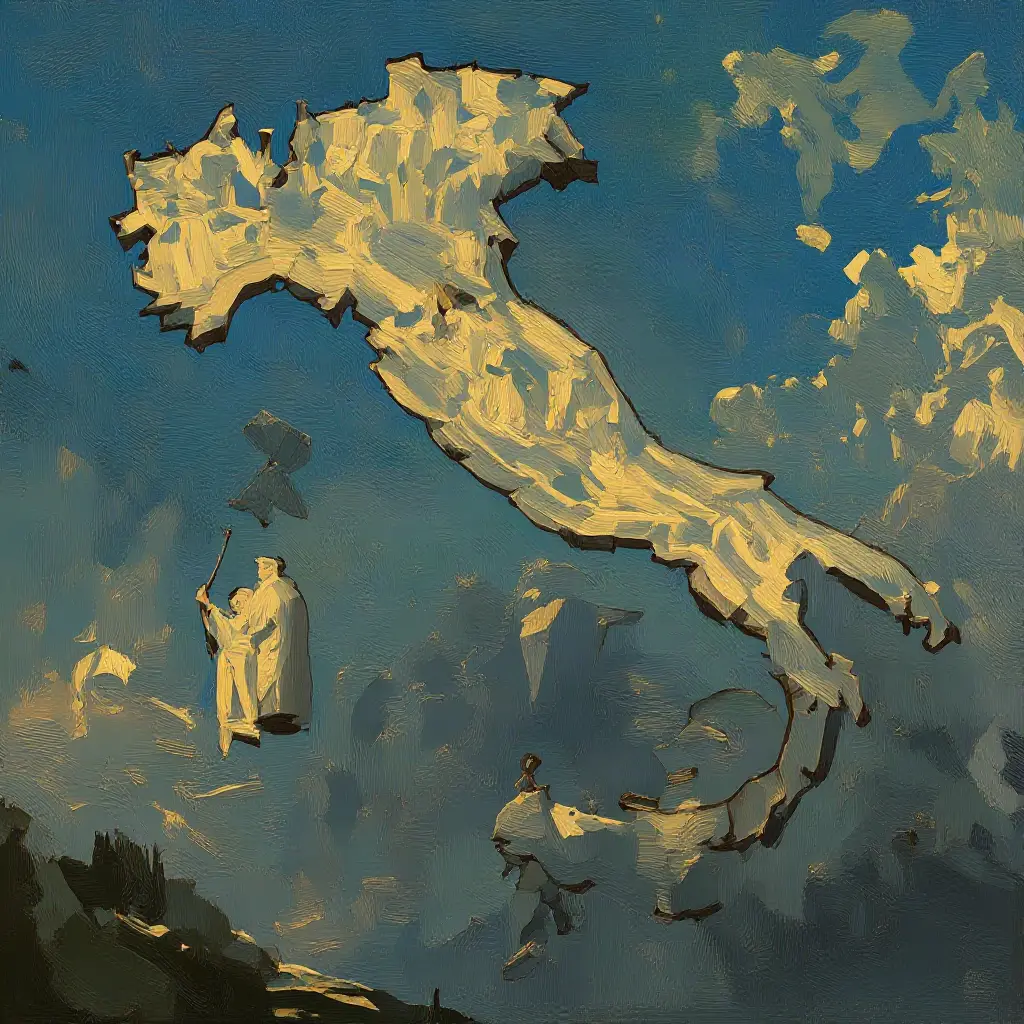
The Unification of Italy
The story of the Risorgimento, the decades-long struggle to transform Italy from a "mere geographical expression" into a united state.
Chapter 1
The Dream of a Nation
0:44
Part of
Frequently Asked Questions
What was 'Young Italy'?
Young Italy was a political movement founded by Giuseppe Mazzini in 1831. Its goal was to create a united Italian republic through a popular uprising. Members had to be under 40 and swore an oath to create 'one, free, independent, republican nation'.
Who were the main figures behind Italian unification?
The three key leaders were Giuseppe Mazzini, the ideological soul of the movement; Count Camillo di Cavour, the pragmatic Prime Minister of Piedmont-Sardinia who used diplomacy and war; and Giuseppe Garibaldi, the charismatic general whose military campaigns conquered southern Italy.
Why was the Battle of Solferino so significant?
The Battle of Solferino in 1859 was a decisive victory for French and Piedmontese forces against Austria, resulting in the acquisition of Lombardy. The immense casualties also directly inspired the creation of the International Red Cross to care for wounded soldiers.
To continue the story, download the Chunks Microlearning app
Or get it straight away:
 Download on iOS
 Download on Android