
After the Great Flood, the whole world had one language. A united human race migrated from the east, settling in a fertile plain in the land of Shinar. There, they made a decision that would change their destiny. Instead of spreading out across the world, they would build a city. More than that, they would build a tower with its top in the heavens. Their stated goals were simple: make a name for themselves and prevent their people from being scattered across the face of the earth. It was a bold plan, a symbol of their unity and a move towards a new, permanent urban existence. But could this unprecedented cooperation last?
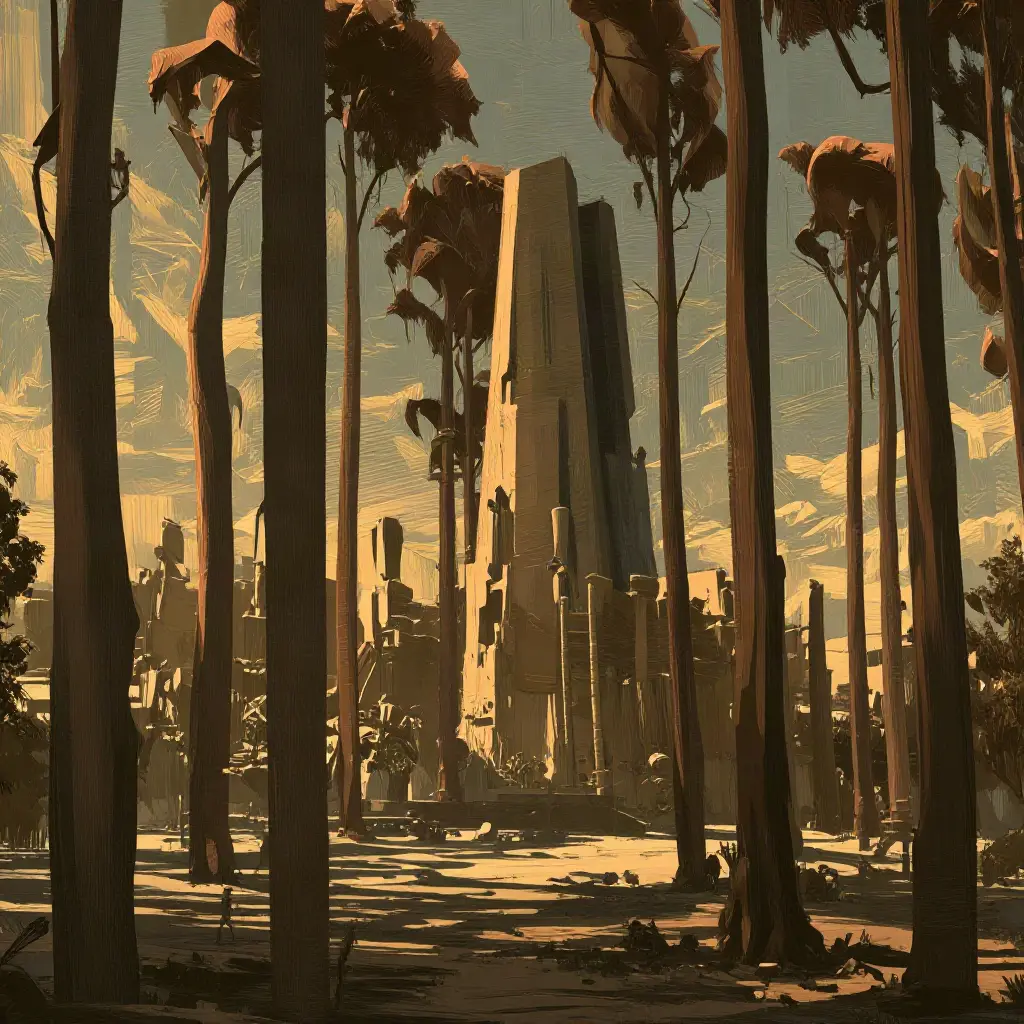
The Tower of Babel
In Genesis, a united humanity tried to build a tower to heaven, but God confused their language, scattering them across the Earth.
Chapter 1
One People, One Voice
0:45
Frequently Asked Questions
Was the Tower of Babel a real building?
The story is a myth, but many scholars believe it was inspired by a real structure. Archaeologists identify it with the Etemenanki, a 91-meter-tall ziggurat in ancient Babylon dedicated to the god Marduk.
Why did God stop the tower from being built?
According to the Book of Genesis, the issue was not the tower's height. God intervened because a unified humanity with a single language would find nothing impossible, which could lead to unchecked ambition and rebellion.
What does the name 'Babel' mean?
In the biblical story, the name comes from the Hebrew word 'balal,' meaning 'to confuse,' because God confused the people's languages there. However, the actual Babylonian name for the city, 'Bab-ili,' meant 'Gate of God.'
Learn more
To continue the story, download the Chunks Microlearning app
Or get it straight away:
 Download on iOS
 Download on Android