
For the Maya and Aztec civilizations, cacao beans were more than food; they were money. The bitter, frothed drink made from them, called cacahuatl, was sacred. But the beans themselves were the currency for everyday life. Market documents from 1545 show that a single fully ripe avocado cost one bean, while a small rabbit was worth 30. To buy a turkey hen, you would need 100 cacao beans. This system was so established that counterfeiters would go to great lengths to profit from it. They would carefully hollow out individual cacao husks and refill them with clay or mud, trying to pass off the fakes as real money in the marketplace. The value of cacao was clear: a professional porter's standard load was 24,000 beans.
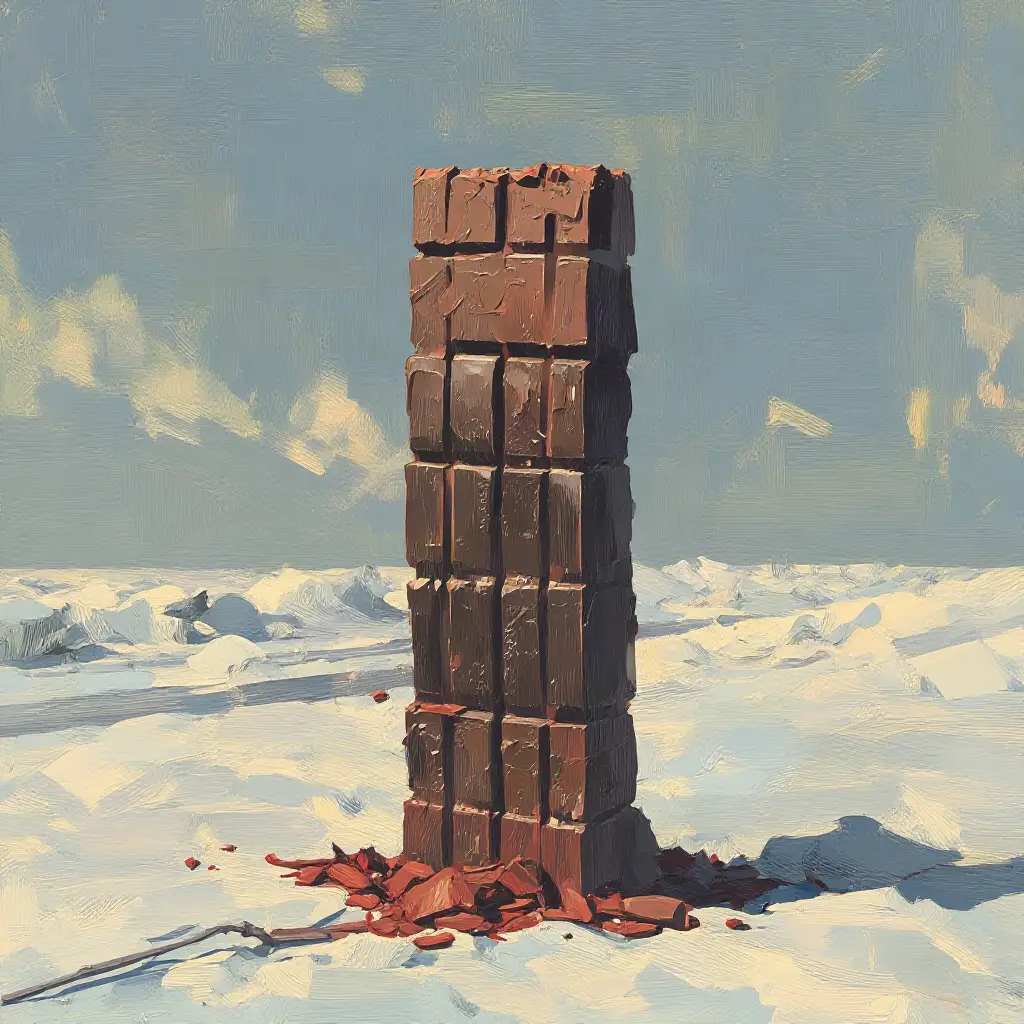
The Story of Chocolate
How a bitter Aztec drink, made from beans that doubled as money, became the sweet, solid chocolate bar over 350 years of European tinkering.
Chapter 1
Beans for a Turkey
0:50
Part of
Frequently Asked Questions
What did the original chocolate drink taste like?
In the Aztec and Maya civilizations, the bitter chocolate beverage, which the Aztecs called cacahuatl and the Maya called kakaw, was often flavored with chili peppers, cornmeal, and flowers. It was frothed by pouring it between vessels from a height and was not sweetened with sugar.
Who invented the first solid chocolate bar for eating?
The first edible chocolate bar was created by the British firm J.S. Fry & Sons in 1847. Joseph Fry discovered that mixing cocoa powder and sugar with melted cocoa butter, instead of water, produced a paste that could be molded into a solid bar.
How was milk chocolate invented?
Swiss chocolatier Daniel Peter invented milk chocolate in 1875. After years of failure, he used condensed milk provided by his neighbor Henri Nestlé, which had enough water removed to blend smoothly with the cocoa butter without causing the chocolate to separate or rot.
Learn more
To continue the story, download the Chunks Microlearning app
Or get it straight away:
 Download on iOS
 Download on Android