
Salem Village, January 1692. Nine-year-old Betty Parris and her eleven-year-old cousin Abigail Williams lived in the home of the village minister, Samuel Parris. That winter the girls began screaming, contorting their bodies, and uttering words no one could understand. They threw objects across the room and made sounds like barking dogs. Dr. William Griggs, the local physician, examined them and found nothing wrong with their bodies. He concluded the girls were bewitched. Not long before the fits started, Betty and Abigail had been experimenting with a folk fortune-telling trick, dropping egg white into a glass of water to read shapes in it, a device called a venus glass. Reverend John Hale later wrote that the girls saw the shape of a coffin form in the glass. Word of the affliction spread through the household and then the village. Soon Ann Putnam Jr. and Elizabeth Hubbard, a teenage orphan living in Dr. Griggs's own household, began fitting the same way. By March, Mercy Lewis and Mary Walcott had joined them too, and the circle of afflicted girls had grown to six and more, each mirroring the same screaming and contorting in front of neighbors who had no explanation for it. Betty's parents eventually judged the ordeal too much for her. She was sent away from Salem, and unlike her cousin Abigail, she took no further part in the examinations, the courtroom testimony, or the executions that followed.
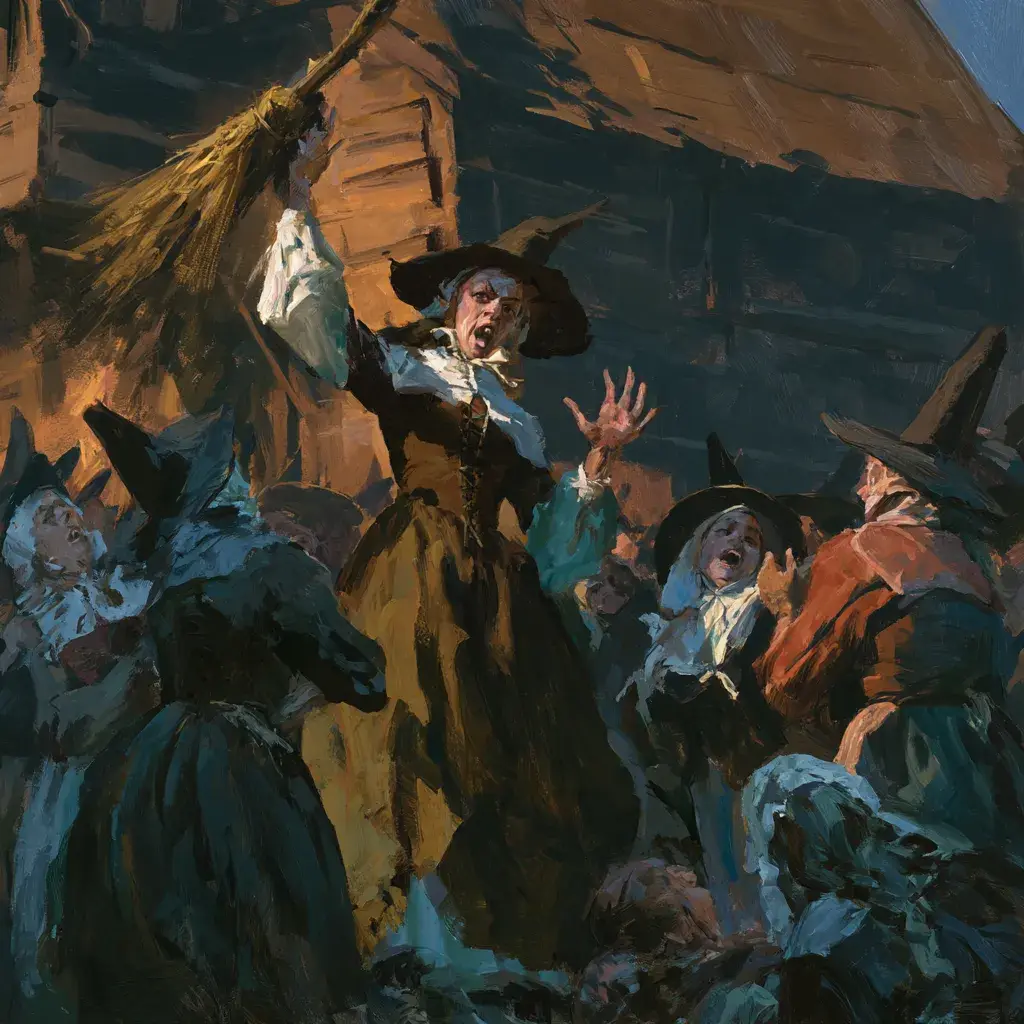
The Salem Witch Trials
19 hanged, 1 pressed to death, over 200 accused in a Massachusetts panic lasting about a year and a half
Fits in the Parson's House
Frequently Asked Questions
What started the Salem witch trials?
In January 1692, nine-year-old Betty Parris and eleven-year-old Abigail Williams began having violent fits in the Salem Village minister's house. A doctor diagnosed bewitchment, and other girls soon showed the same symptoms, launching the crisis.
How many people were executed during the Salem witch trials?
Nineteen people were hanged on Gallows Hill between June and September 1692. One man, Giles Corey, was pressed to death with stones for refusing to enter a plea, and at least five accused people died in jail.
How did the Salem witch trials end?
Governor William Phips dissolved the Court of Oyer and Terminer in October 1692 and barred spectral evidence in its replacement court. By May 1693 he had pardoned everyone still held on witchcraft charges.
Learn more
To continue the story, download the Chunks Microlearning app
Or get it straight away:
 Download on iOS
 Download on Android