
In March 1917, Russia’s capital, Petrograd, was freezing. Temperatures dropped to minus 35 degrees Celsius, and bread rations were cut. People waited overnight in line for food, their patience wearing thin. On International Women's Day, protests over shortages exploded. Soon, over 200,000 workers were on general strike. When Tsar Nicholas II ordered his soldiers to fire on the crowds, they refused. Instead, the Petrograd garrison joined the uprising. The situation became uncontrollable. On March 15, aboard a train near Pskov, Nicholas II signed his abdication papers. After 304 years, the Romanov dynasty had collapsed. A new Provisional Government was formed, but a power vacuum had opened at the heart of Russia.
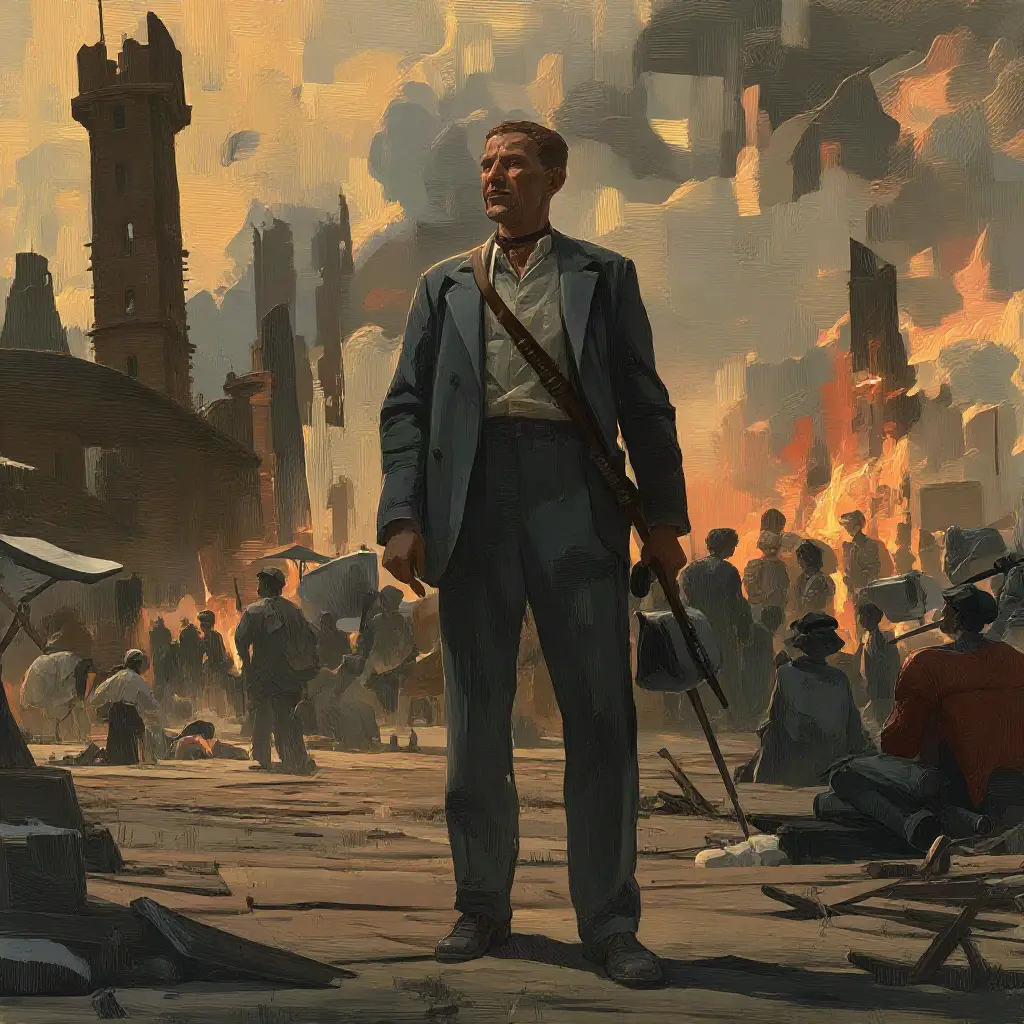
The Russian Revolution
In 1917, Russia saw two revolutions, with Lenin's Bolsheviks seizing power from a government that had only just replaced the Tsar.
Chapter 1
The End of the Romanovs
0:45
Part of
Frequently Asked Questions
Why did the Tsar abdicate in 1917?
Tsar Nicholas II abdicated due to the February Revolution. Severe food shortages in Petrograd led to mass protests and strikes, and the situation became uncontrollable when the city's military garrison refused to fire on the crowds and joined the uprising.
What was Lenin's slogan 'Peace, Land, Bread' about?
This slogan summarized the Bolsheviks' core promises. 'Peace' meant withdrawing Russia from World War I. 'Land' referred to redistributing land from the nobility to the peasants. 'Bread' addressed the critical food shortages in the cities.
What was the Treaty of Brest-Litovsk?
It was a peace treaty signed in March 1918 between the new Bolshevik government and the Central Powers, ending Russia's participation in World War I. To secure peace, Russia surrendered massive territories, including Ukraine and Finland, losing a third of its population and most of its coal mines.
Learn more
To continue the story, download the Chunks Microlearning app
Or get it straight away:
 Download on iOS
 Download on Android