
In 44 BC, an 18-year-old named Gaius Octavius was studying in Apollonia when a messenger brought world-shattering news. His great-uncle, Julius Caesar, had been assassinated in Rome. More startling, Caesar’s will named the teenager as his adopted son and primary heir. Against the fearful advice of his mother, Atia, he chose to accept. He then set out for Rome, taking the name Gaius Julius Caesar to leverage the immense political weight of his late father's legacy, pointedly omitting the name Octavianus. He arrived with no army and little political standing, a young man armed only with a legendary name and his closest friend, Marcus Agrippa. How could this unknown teenager possibly hope to survive in the deadly world of Roman politics?
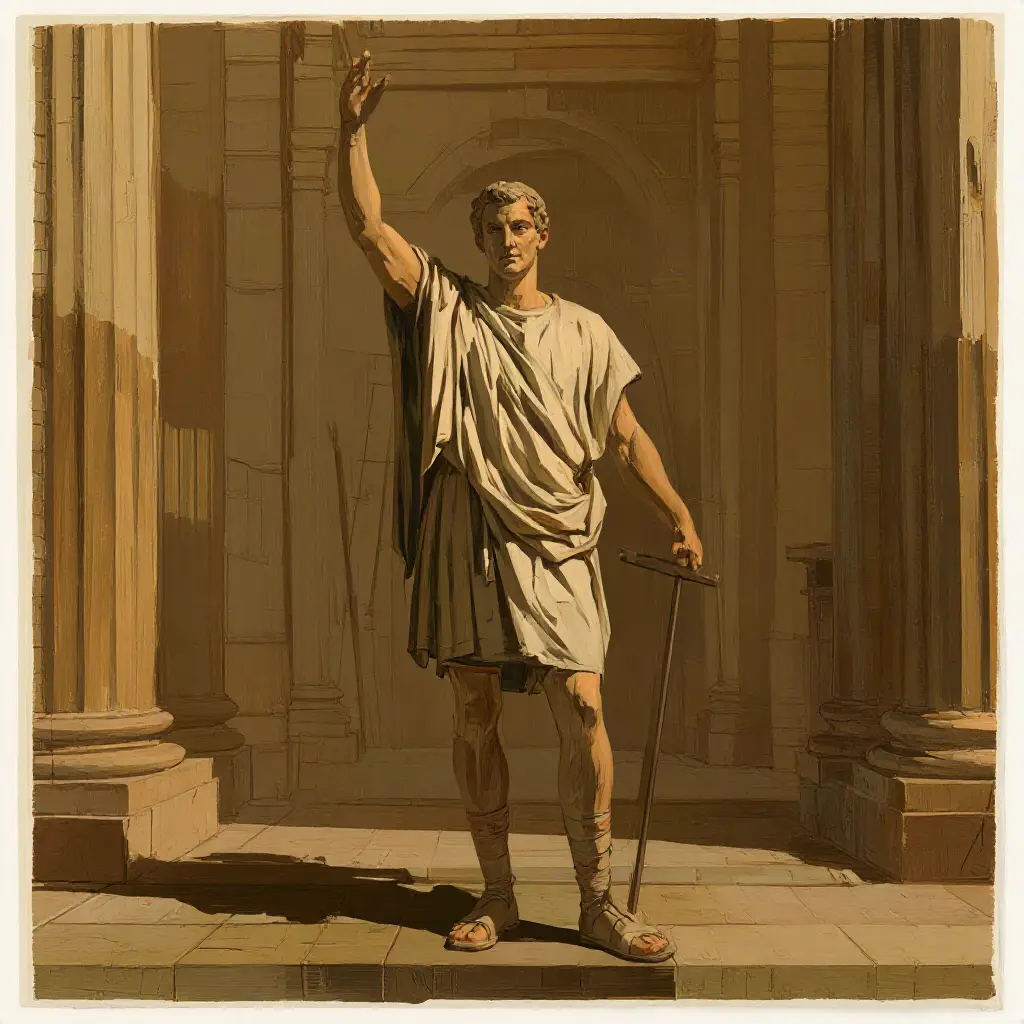
The Rise of Augustus
How a sickly teenager outmaneuvered his rivals, ended a century of civil war, and became Rome's first emperor.
Chapter 1
The Heir
0:49
Frequently Asked Questions
Who was Augustus before he became emperor?
Before he became Augustus, he was known as Gaius Octavius, and later Octavian. He was the grand-nephew of Julius Caesar, who adopted him as his son and heir in his will. He was only 18 years old when he entered Roman politics.
What was the Second Triumvirate?
The Second Triumvirate was a legal political alliance formed in 43 BC between Octavian, Mark Antony, and Marcus Lepidus. The Lex Titia granted them absolute power to rule the Roman state for five years, allowing them to create laws and execute enemies without trial.
How did the Battle of Actium end the Roman Republic?
The Battle of Actium in 31 BC was the decisive victory in the final war of the Roman Republic. Octavian's defeat of the combined forces of Mark Antony and Cleopatra left him as the sole remaining power in Rome. This enabled him to consolidate control and, in 27 BC, establish the new political order known as the Roman Empire.
Learn more
To continue the story, download the Chunks Microlearning app
Or get it straight away:
 Download on iOS
 Download on Android