
In the beginning, there was nothing but a silent sky and a dark, shimmering sea. The gods Tepew and Q'ukumatz stood in the water, their forms adorned with feathers of turquoise and blue. Together, they were the Maker and Modeler. By simply speaking the word 'Earth', they brought forth the land. They commanded the mountains to rise from the sea like lobsters. They filled the forests and canyons with animals, but their new creations could only squawk and roar. The gods grew frustrated. These creatures could not keep the days or honor their makers. They realized they needed to create a sophisticated being, one who could provide nourishment through prayer. But what would they be made of?
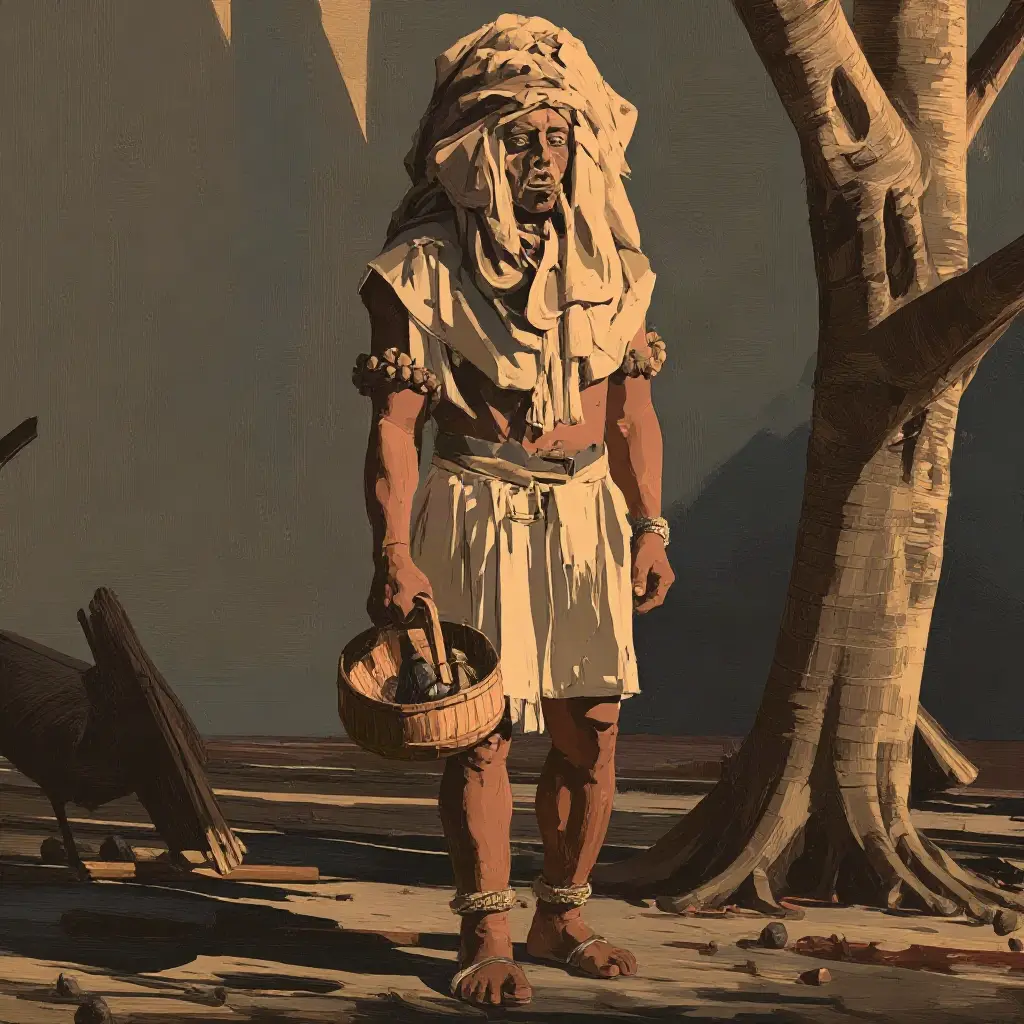
The Popol Vuh
The K'iche' Maya creation story of gods, heroes, and the first people made from maize, a text that survived the Spanish conquest.
Chapter 1
The First Makers
0:47
Frequently Asked Questions
Why did the gods have so much trouble creating humans?
The gods' first creations failed because they lacked the qualities needed to honor their makers. The mud people were formless and dissolved in water, while the wooden people were mindless and soulless. The humans made from maize were the first to possess the ability to think, pray, and speak with understanding.
Who were the Hero Twins?
The Hero Twins, Hunahpu and Xbalanque, are central figures in the Popol Vuh. They are famed for their cleverness and bravery, descending into the underworld of Xibalba to defeat the Lords of Death in a sacred ball game and a series of deadly trials.
How does the Popol Vuh exist today?
The original hieroglyphic book was lost, but K'iche' scribes secretly wrote the stories down using the Latin alphabet after the Spanish invasion. A Dominican friar, Francisco Ximénez, discovered this manuscript around 1701 and created a dual-language copy, which is the version that survives.
Learn more
To continue the story, download the Chunks Microlearning app
Or get it straight away:
 Download on iOS
 Download on Android