
In 1381, England was a powder keg. Decades of economic strain after the Black Death, which killed nearly a third of the population, had left laborers in high demand. Yet, the Statute of Labourers capped their wages at pre-plague levels. The final straw was a new Poll Tax, demanding one shilling from every adult. On May 30, 1381, when royal commissioner John Bampton summoned representatives from Fobbing and nearby villages to the town of Brentwood to collect unpaid taxes, he was met with defiance. Led by Thomas Baker, the villagers refused to pay another penny and chased Bampton's men out of the town. This act of open rebellion spread rapidly through the region.
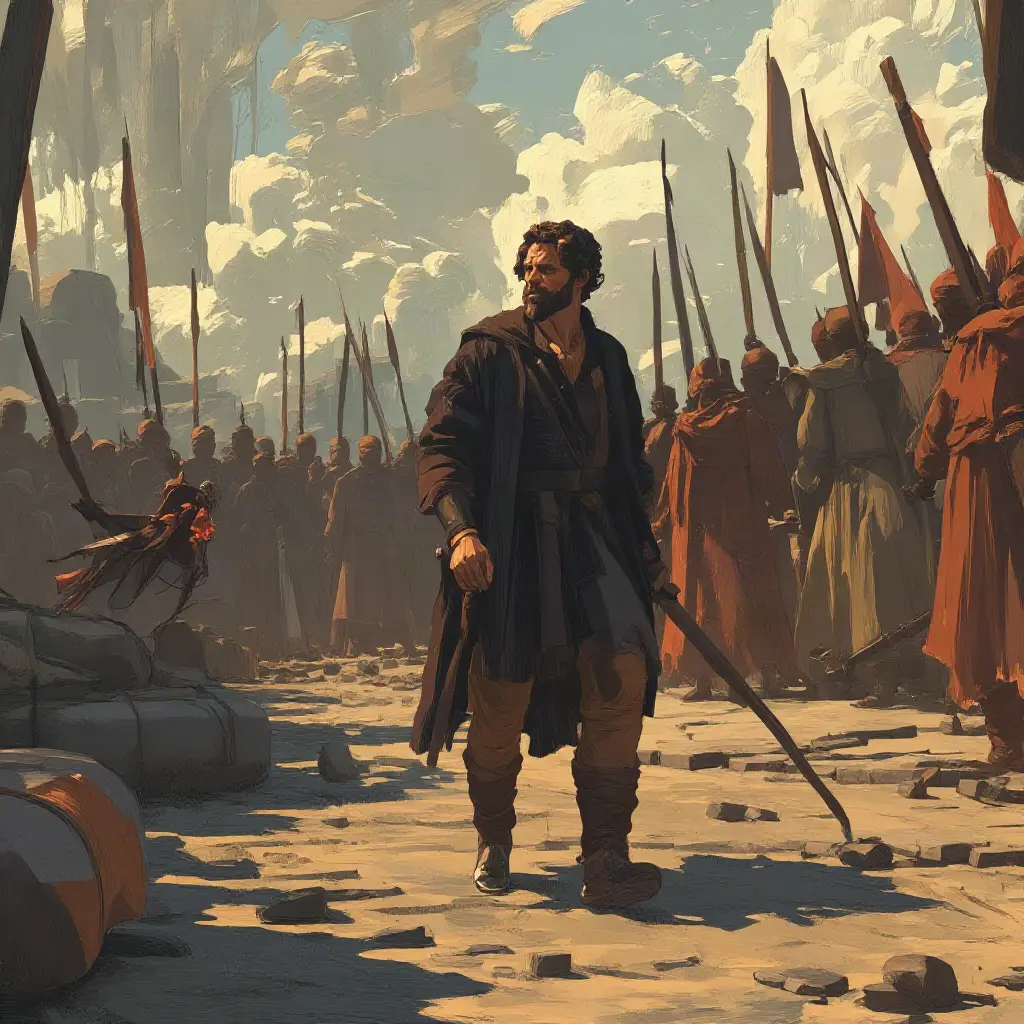
The Peasants' Revolt
In 1381, England's peasants rose up against a harsh poll tax, marching on London to confront their young king, Richard II.
Chapter 1
The Spark in Fobbing
0:46
Part of
Frequently Asked Questions
What caused the Peasants' Revolt?
The revolt was driven by economic hardship after the Black Death, laws capping wages, and a new, heavy Poll Tax of one shilling per adult, levied in 1381 to fund war with France. This tax was equal to about three days' wages for a common laborer.
Was the Peasants' Revolt successful?
No, the revolt ultimately failed. The King's promises to abolish serfdom were revoked, the leaders were executed, and the movement was brutally suppressed. However, the hated Poll Tax was abandoned for centuries.
Who was Wat Tyler?
Wat Tyler was an ex-soldier from Kent who was elected as a key leader of the rebels in June 1381. He led the march on London and presented the rebels' demands to the king, but was killed during a final confrontation at Smithfield.
Learn more
To continue the story, download the Chunks Microlearning app
Or get it straight away:
 Download on iOS
 Download on Android