
Ramadan is the ninth month of the Islamic calendar, a sacred time for nearly two billion Muslims. For an entire month, they observe a strict fast from dawn until sunset. This practice, known as Sawm, is one of the Five Pillars of Islam, a foundational act of worship. But its purpose goes beyond mere abstinence. The fast is meant to foster deep spiritual reflection, increase empathy for the poor, and strengthen community bonds through shared prayer and meals. The name Ramadan itself comes from the Arabic root ‘ar-ramad,’ meaning scorching heat or dryness. This reflects its origins in the pre-Islamic lunar calendar, when the month was kept in the intense heat of the summer season through the practice of intercalation.
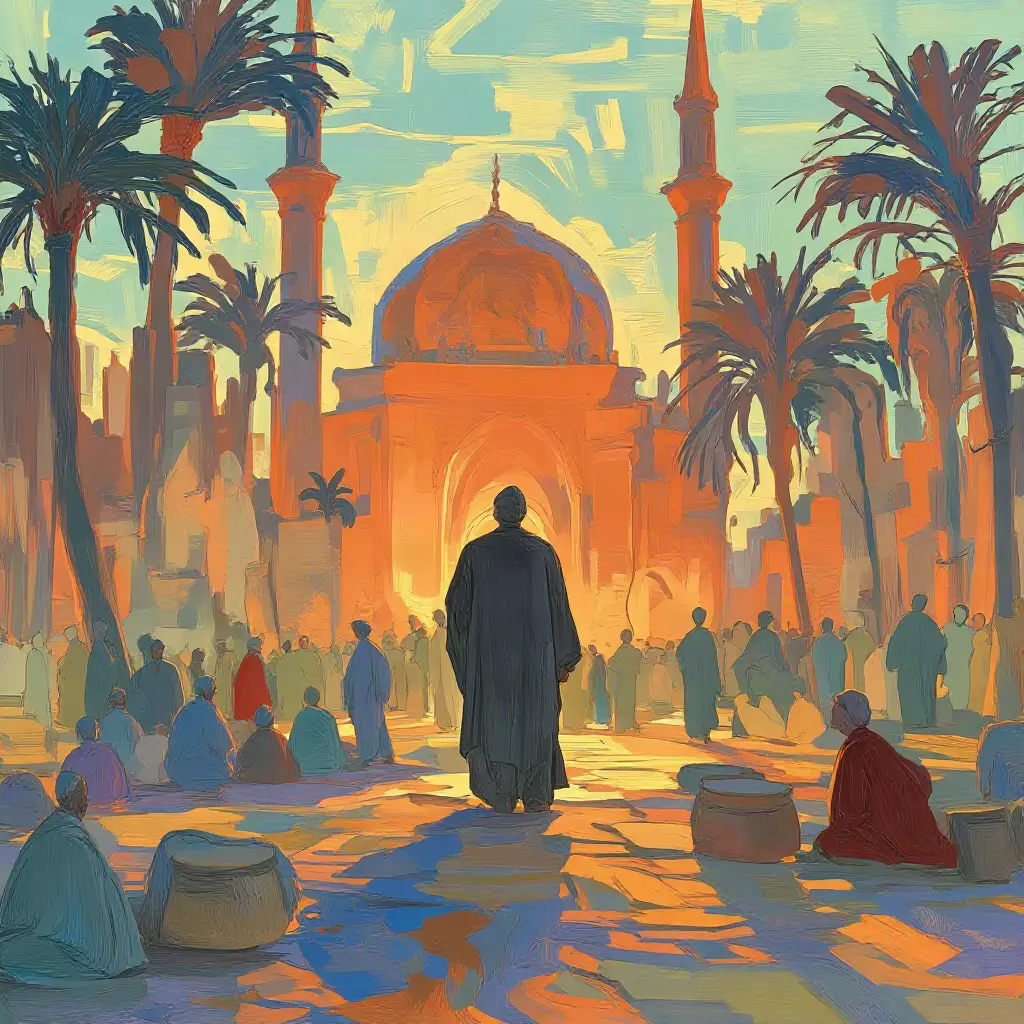
The Origins of Ramadan
The story of Ramadan, the Islamic holy month commemorating the first revelation of the Quran to the Prophet Muhammad in a cave outside Mecca.
Chapter 1
The Month of Heat
0:48
Part of
Frequently Asked Questions
Why is Ramadan called Ramadan?
The name comes from the Arabic root 'ar-ramad,' which signifies scorching heat or dryness. This refers to the time in the pre-Islamic calendar when the month always fell during the hot summer season.
Was fasting in Ramadan the first fast for Muslims?
No. Before the obligation to fast during Ramadan was revealed in 624 CE, early Muslims observed the fast of Ashura. This fast, on the 10th day of the month of Muharram, was a practice also shared by the Jewish community of Medina.
What is Laylat al-Qadr, the Night of Power?
Laylat al-Qadr is the night when Muslims believe the first verses of the Quran were revealed to the Prophet Muhammad. The Quran describes this single night as being more blessed than a thousand months. It is believed to occur on an odd-numbered night during the last ten days of Ramadan.
Learn more
To continue the story, download the Chunks Microlearning app
Or get it straight away:
 Download on iOS
 Download on Android