
In the spring of 568, King Alboin made a momentous choice. On Easter Monday, he led the entire Lombard people out of their lands in Pannonia, modern-day Hungary, and towards Italy. This was not a simple raid, but the migration of a whole nation—men, women, children, and livestock. This journey marked the final great movement of Germanic peoples into the crumbling Roman world. To secure his departure, Alboin had struck a harsh bargain with the nomadic Avars. He promised them the Lombard lands in exchange for their help in crushing his rivals, the Gepids. With their old home secured by allies and their enemies defeated, the Lombards looked south to a new destiny. Their target was Italy, a land weakened by decades of war.
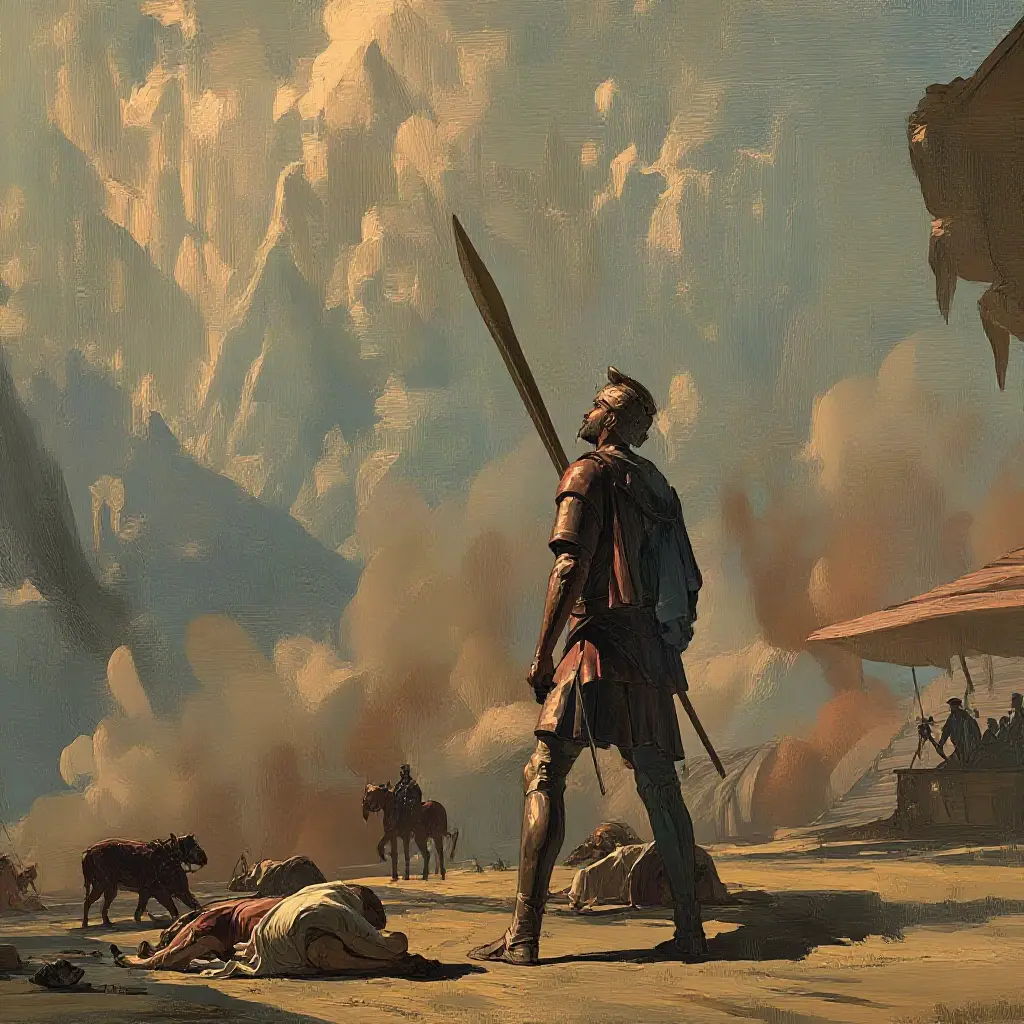
The Lombards Enter Italy
In 568, King Alboin led the Lombards into Italy in the last great Germanic migration, dividing the peninsula for centuries.
Chapter 1
The Last Migration
0:50
Part of
Frequently Asked Questions
Who were the Lombards?
The Lombards were a Germanic people who originated in Scandinavia and migrated south over centuries. By the 6th century, they had settled in Pannonia (modern Hungary). They were known as fierce warriors and were mostly Arian Christians or pagans when they invaded Italy.
Why did the Lombards invade Italy?
King Alboin led the invasion in 568 to find a new homeland for his people. He had just defeated their rivals, the Gepids, with help from the Avars, to whom he ceded the Lombard lands in Pannonia. Italy was an attractive target because it was fertile and militarily weakened after the long Gothic War.
What was the long-term impact of the Lombard invasion?
The Lombard invasion had a profound and lasting impact. It shattered the political unity of the Italian peninsula, creating a division between the Lombard-controlled north and Byzantine-held territories that lasted until the 19th century. Their rule also dismantled the remaining Roman administrative structures in the areas they conquered.
Learn more
To continue the story, download the Chunks Microlearning app
Or get it straight away:
 Download on iOS
 Download on Android