
Philadelphia, 1948. Inside the engineering building at Drexel Institute of Technology, a supermarket chain president stood in the dean's office making a specific plea: find some automatic way to capture product information at checkout, because delays at the register and constant manual restocking counts were eating into store profits. The dean turned him down flat. It was not his problem to solve. But sitting nearby, close enough to catch every word, was a Drexel graduate student named Bernard Silver, an electrical engineering major who had graduated the year before, in 1947. The idea would not leave him. Silver did not have an answer either, but he knew someone who might. He brought the problem to his friend Norman Joseph Woodland, a 1947 Drexel mechanical-engineering graduate who had spent the war years as a technical assistant on the Manhattan Project in Oak Ridge and who, as a Boy Scout years earlier, had learned Morse code. Woodland had the kind of mind that turned problems over sideways. The two started meeting informally, off any university clock, kicking around ways a machine might read a product's identity without a person keying in a single number. Their first idea involved light. Not visible light, ultraviolet, shone onto ink invisible to the naked eye. It seemed promising enough to try building.
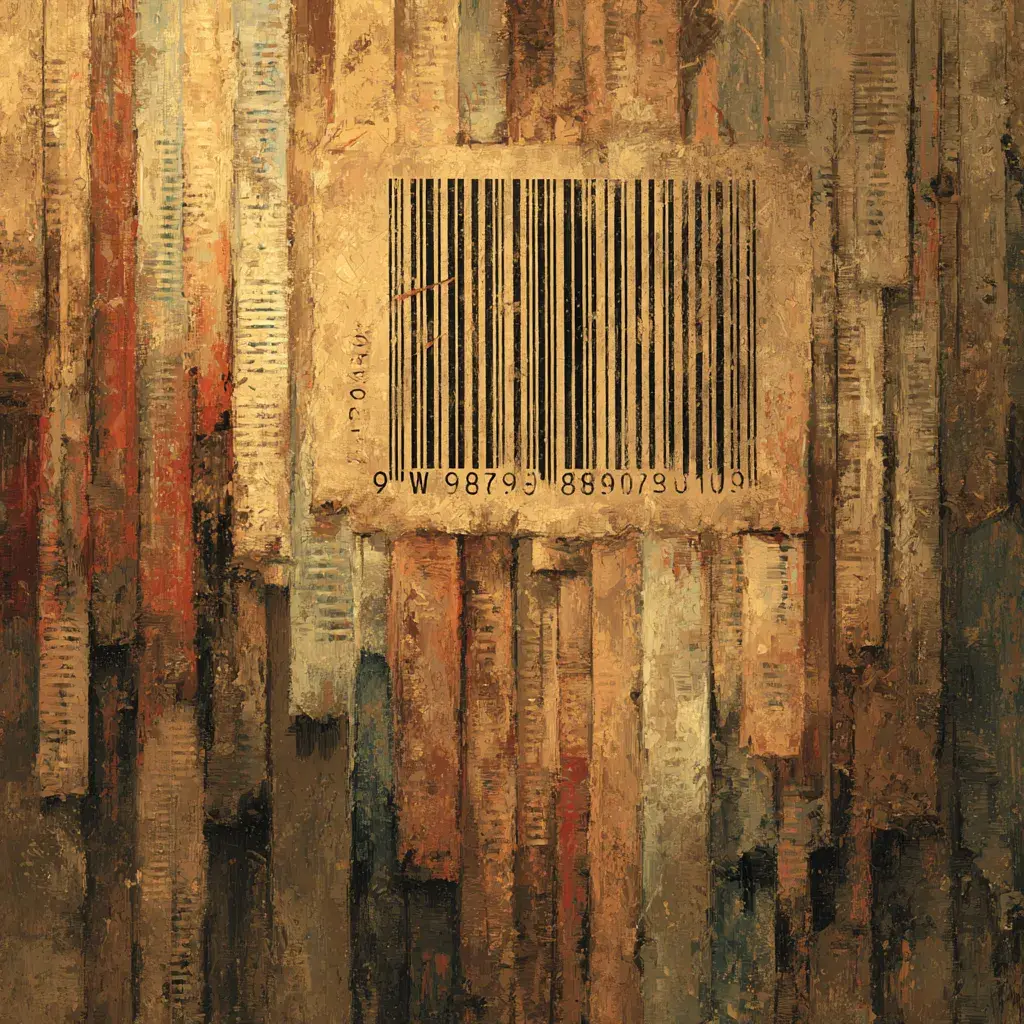
The Invention of the Barcode
In 1949 two Drexel grads sketched a bullseye code in Miami sand that set the barcode revolution in motion.
A Dean's Refusal
Frequently Asked Questions
Who actually invented the barcode?
Bernard Silver and Norman Joseph Woodland, two Drexel Institute of Technology graduates, filed a patent for a bullseye style code in 1949 after Silver overheard a supermarket executive asking for a checkout solution in 1948. Woodland conceived the circular pattern while sitting on a Miami Beach in the winter of 1948-49.
Why did the original circular barcode fail in stores?
RCA tested the circular bullseye code at a Kroger store in Cincinnati starting in 1972, but the concentric rings smeared badly when printed at high speed on adhesive labels. Even attempts with special pens could not solve it, so the industry switched to IBM engineer George Laurer's rectangular linear design in 1973.
What was the first product ever scanned at a checkout?
A 10-pack of Wrigley's Juicy Fruit gum priced at 67 cents was scanned by cashier Sharon Buchanan at a Marsh Supermarket in Troy, Ohio, at 8:01 a.m. on June 26, 1974. It was chosen deliberately because it was small and cheap, to prove the code could work on the least expensive items.
Learn more
To continue the story, download the Chunks Microlearning app
Or get it straight away:
 Download on iOS
 Download on Android