
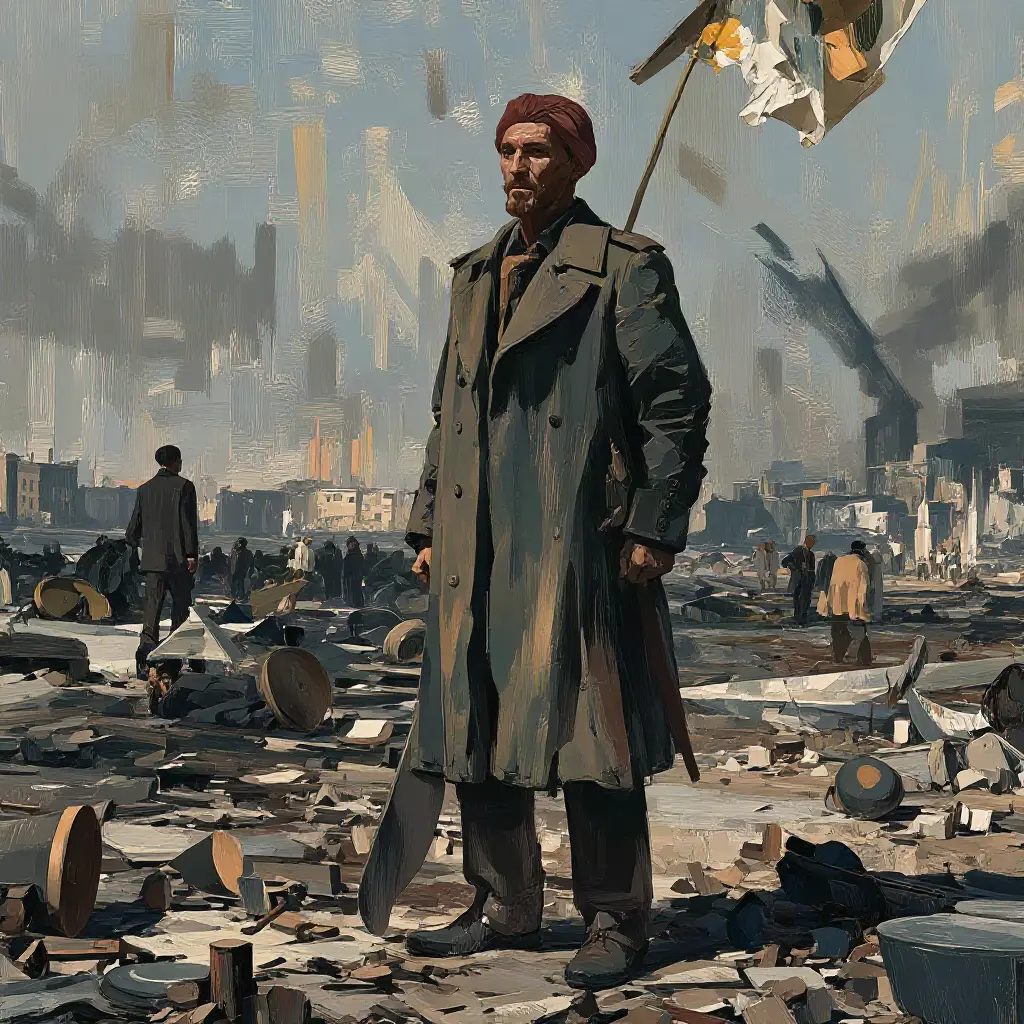
In late 1929, Joseph Stalin began a 'revolution from above' to seize control of Ukraine's food supply. At the time, over 80 percent of Ukrainians were traditional farmers. Stalin's policy forced them onto massive state-controlled collective farms. The goal was to extract a 'tribute' of grain to feed Soviet cities and pay for industrial machinery. To break any resistance, Stalin called for the 'liquidation of the kulaks as a class,' targeting successful or independent peasants for execution or deportation. This was the first step in a plan that would turn Ukraine’s fertile ‘black earth’ soil into a weapon against its own people. Over 2 million would eventually be deported.
The Holodomor: Terror-Famine in Ukraine
Stalin's 1930s policies caused a famine that killed 3.9 million people in Ukraine while the USSR exported their grain.
Chapter 1
The Revolution from Above
0:44
Frequently Asked Questions
What does the word Holodomor mean?
The word Holodomor means "death by hunger" in Ukrainian. It refers specifically to the man-made famine that occurred in Soviet Ukraine from 1932 to 1933, a result of policies enacted by Joseph Stalin's regime.
Was the Holodomor a natural disaster?
No, the Holodomor was not a natural disaster. It was a man-made famine created by Soviet policies of forced grain confiscation, collectivization of farms, and blockades that prevented people from finding food. While this was happening, the USSR exported millions of tons of grain.
Why is the Holodomor sometimes called a genocide?
Many nations and historians classify the Holodomor as a genocide because the policies appeared to deliberately target the Ukrainian people. The aim was to crush Ukrainian nationalism and resistance to Soviet rule by destroying the peasantry, which was seen as the foundation of Ukrainian identity.
Learn more
To continue the story, download the Chunks Microlearning app
Or get it straight away:
 Download on iOS
 Download on Android