
In 2012, a team of researchers made a discovery that pushed back the history of cheesemaking by millennia. They were analyzing ancient pottery from Kuyavia, Poland, dating to 5500 BCE. These weren't just any pots; they were sieves, riddled with small holes. A biogeochemist named Mélanie Salque led the analysis, which found milk-fat residues preserved deep inside the ceramic pores. This was the smoking gun. 7,500 years ago, Neolithic farmers of the Linear Pottery culture were already separating solid curds from liquid whey. Different pots from the same site held residues of meat or honey, showing this was specialized kitchenware. The evidence was clear: our ancestors weren't just drinking milk, they were transforming it. But why go to all that trouble?
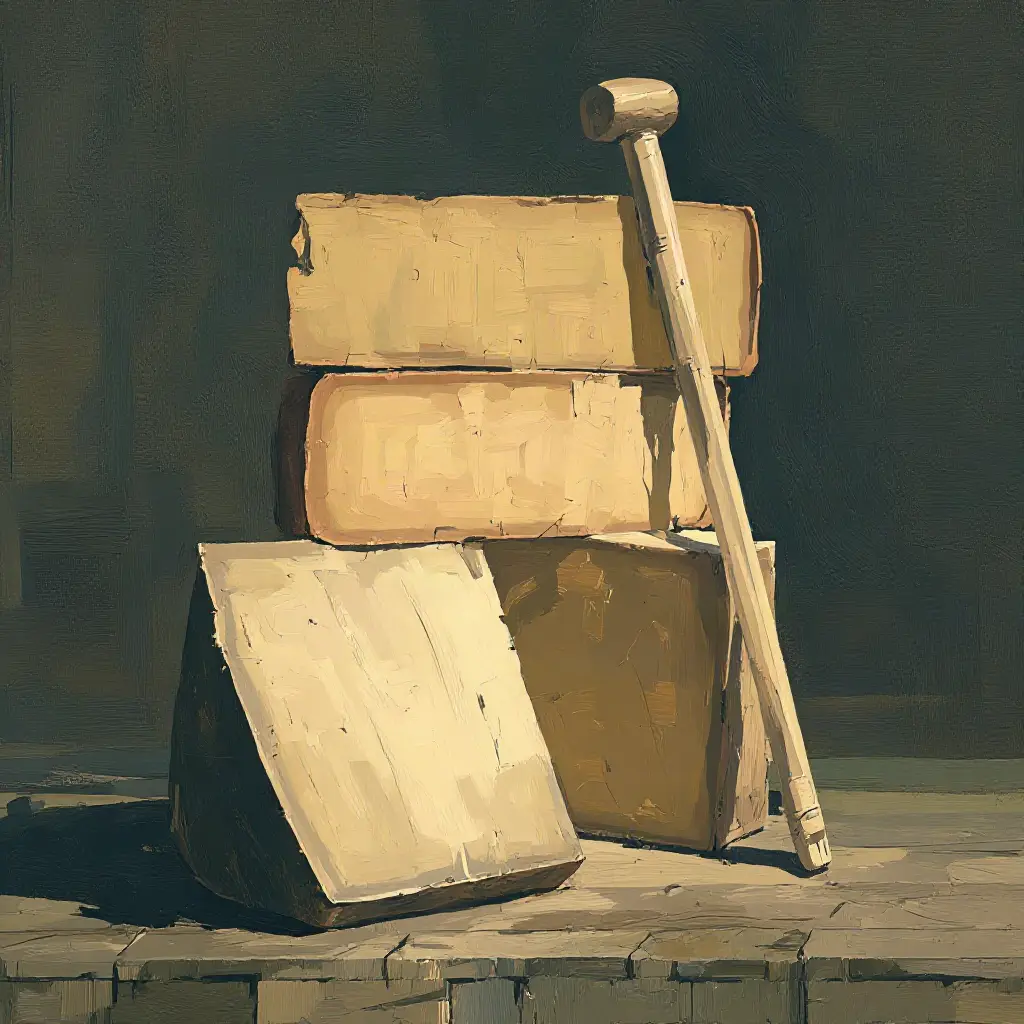
The History of Cheese
Cheese from Neolithic Polish sieves and Egyptian tombs to Roman rations, monastery cheeses and the first American cheese factory in 1851.
The First Sieves
Part of
Frequently Asked Questions
When did humans first start making cheese?
The earliest confirmed evidence dates back 7,500 years to 5500 BCE. Archaeologists in Poland discovered ceramic sieves from this period that contained milk-fat residues, proving Neolithic farmers were separating curds from whey.
Why was cheese so important for early humans?
Cheesemaking was a key survival tool because most adults at the time were lactose intolerant. The process removes most of the milk's lactose, creating a digestible, high-calorie food that could be stored for months. This provided a reliable source of fat and protein.
Who invented the first cheese factory?
While the first cheese factory was established in Switzerland in 1815, the first industrial factory in the United States was opened in 1851 by Jesse Williams. He created a cooperative model, pooling milk from neighboring farms to create a consistent, mass-produced product.
Learn more
To continue the story, download the Chunks Microlearning app
Or get it straight away:
 Download on iOS
 Download on Android