
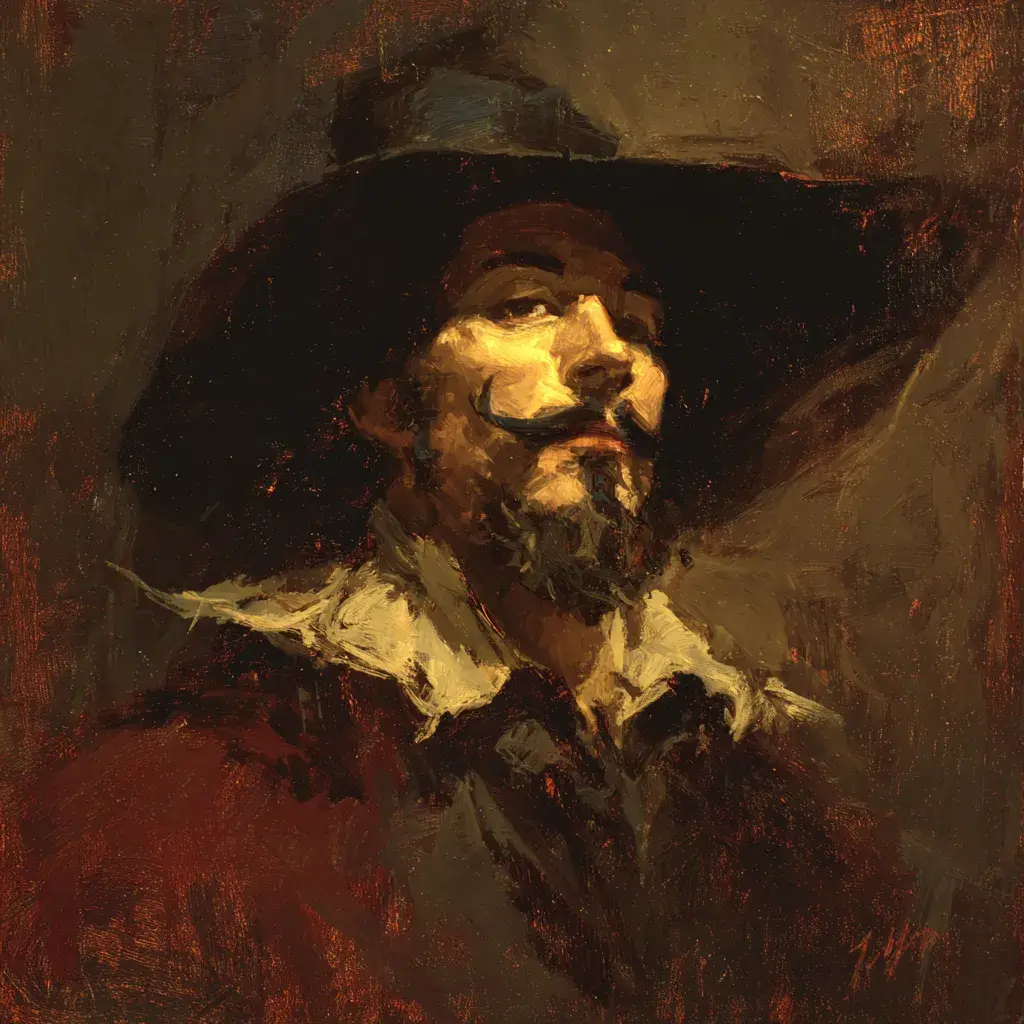
In May 1604, a small group of English Catholics gathered in a private room at the Duck and Drake inn in London. Their leader, Robert Catesby, was disillusioned. The new monarch, King James I, had not delivered the religious tolerance he had hinted at. Catesby proposed a desperate, shocking plan: to blow up the House of Lords, killing the King and much of England's ruling class. Among the men who swore an oath of secrecy that day was Guy Fawkes, a soldier with expertise in explosives, recruited specifically for the mission. They believed the ensuing chaos would allow a Catholic uprising to seize power. The Gunpowder Treason was officially set in motion.
The Gunpowder Plot
The 1605 plot by English Catholics to blow up the House of Lords and kill James I, how an anonymous letter exposed it, and how it became Bonfire Night.
Chapter 1
The Oath of Secrecy
0:45
People in this story
Part of
Frequently Asked Questions
What was the ultimate goal of the Gunpowder Plot?
The conspirators aimed to assassinate the Protestant King James I and his government by blowing up the House of Lords. They hoped this would trigger a Catholic uprising and allow them to install a new Catholic monarch on the English throne.
Why is Guy Fawkes the most famous conspirator if he wasn't the leader?
Guy Fawkes became the most famous plotter because he was the one caught in the cellar with the explosives. His name became synonymous with the conspiracy, even though Robert Catesby was the actual leader and mastermind of the plot.
How is the Gunpowder Plot remembered today?
The plot's failure is commemorated in the UK on November 5 as Bonfire Night. The tradition began with the Thanksgiving Act of 1606, which mandated a celebration of the king's survival, and evolved into a night of fireworks and bonfires where effigies of Guy Fawkes are often burned.
Learn more
To continue the story, download the Chunks Microlearning app
Or get it straight away:
 Download on iOS
 Download on Android