
Imagine a tree that has outlived the dinosaurs. This is the Ginkgo, a species so ancient and unique it's called a 'living fossil.' The term was first used by Charles Darwin to describe life forms that have survived for millions of years without changing. While its relatives vanished in mass extinctions, the modern Ginkgo biloba has remained almost identical for 170 million years. It is the only species left in its entire division of the plant kingdom, a solitary branch on the tree of life. Once widespread across the globe, from North America to Europe, its world shrank until it faced extinction. How did this lonely survivor manage to cling to life when all its relatives were gone?
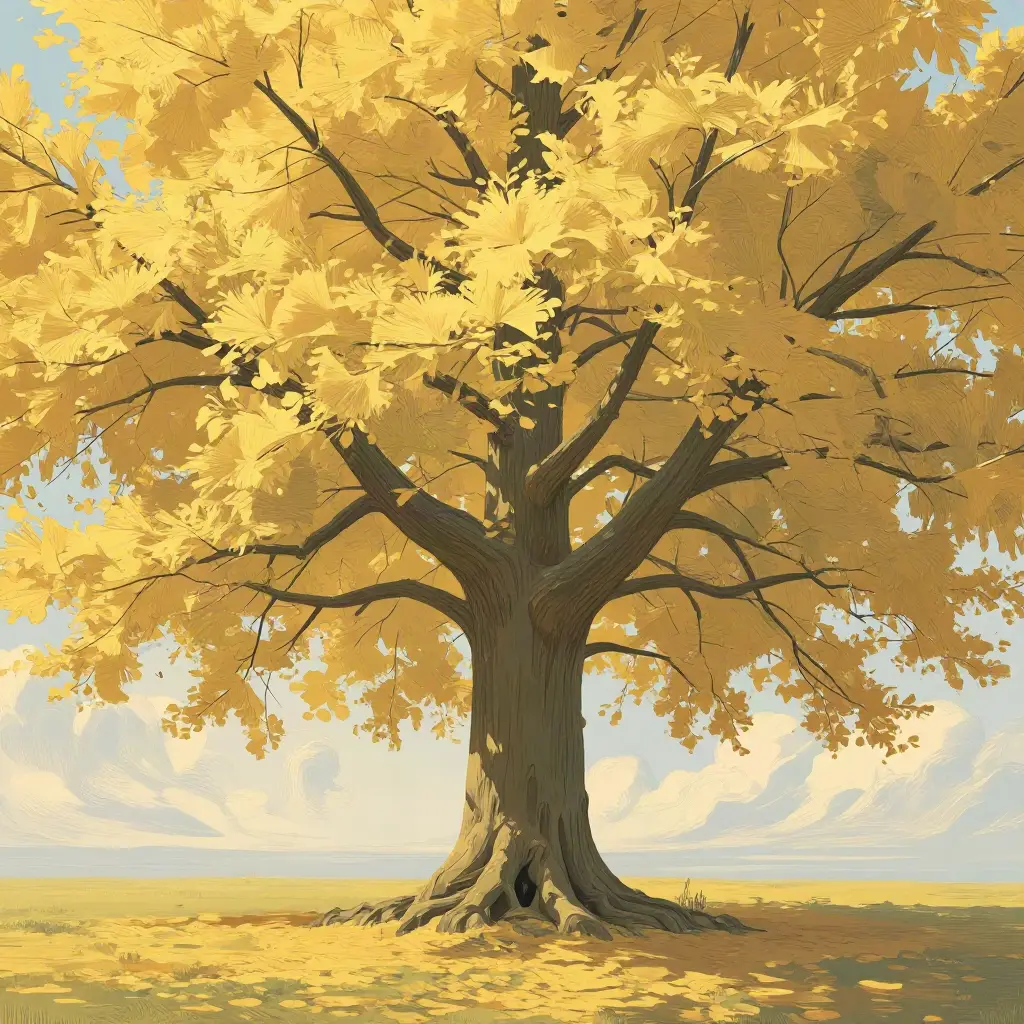
The Ginkgo Tree: A Living Fossil
The ginkgo, the last survivor of an ancient group of trees, which has stayed almost unchanged since the age of the dinosaurs.
Chapter 1
The Sole Survivor
0:48
Part of
Frequently Asked Questions
Why is the ginkgo called a 'living fossil'?
The term, used by Charles Darwin, refers to species that have survived for millions of years with little evolutionary change. The ginkgo is the last surviving member of an ancient plant order, and the modern species has been virtually unchanged for at least 170 million years.
Do all ginkgo trees smell bad?
No, only female ginkgo trees produce the foul-smelling seeds. The odor comes from butyric acid in the seed's fleshy outer coat. Because of this, city planners almost always plant male trees, which do not produce seeds or the associated smell.
Is the ginkgo tree endangered?
Yes, the ginkgo is officially listed as 'Endangered' by the IUCN. While it is widely planted in cities around the world, its natural, wild populations are extremely small and restricted to a few areas in China.
To continue the story, download the Chunks Microlearning app
Or get it straight away:
 Download on iOS
 Download on Android