
Around the year 95 AD, a man named John was living in exile on the Greek island of Patmos. There, as he recorded in the Book of Revelation, he received a stunning vision. The word 'apocalypse' means 'unveiling,' and John’s vision unveiled a heavenly throne room, where a figure called the Lamb held a scroll sealed with seven seals. As the Lamb opened the first seal, one of four 'living creatures' cried out with a voice like thunder, 'Come!' This was the trigger for the arrival of the first of four riders, figures who would come to symbolize the world’s final, terrible trials. The vision was just beginning, and the first horseman was about to appear.
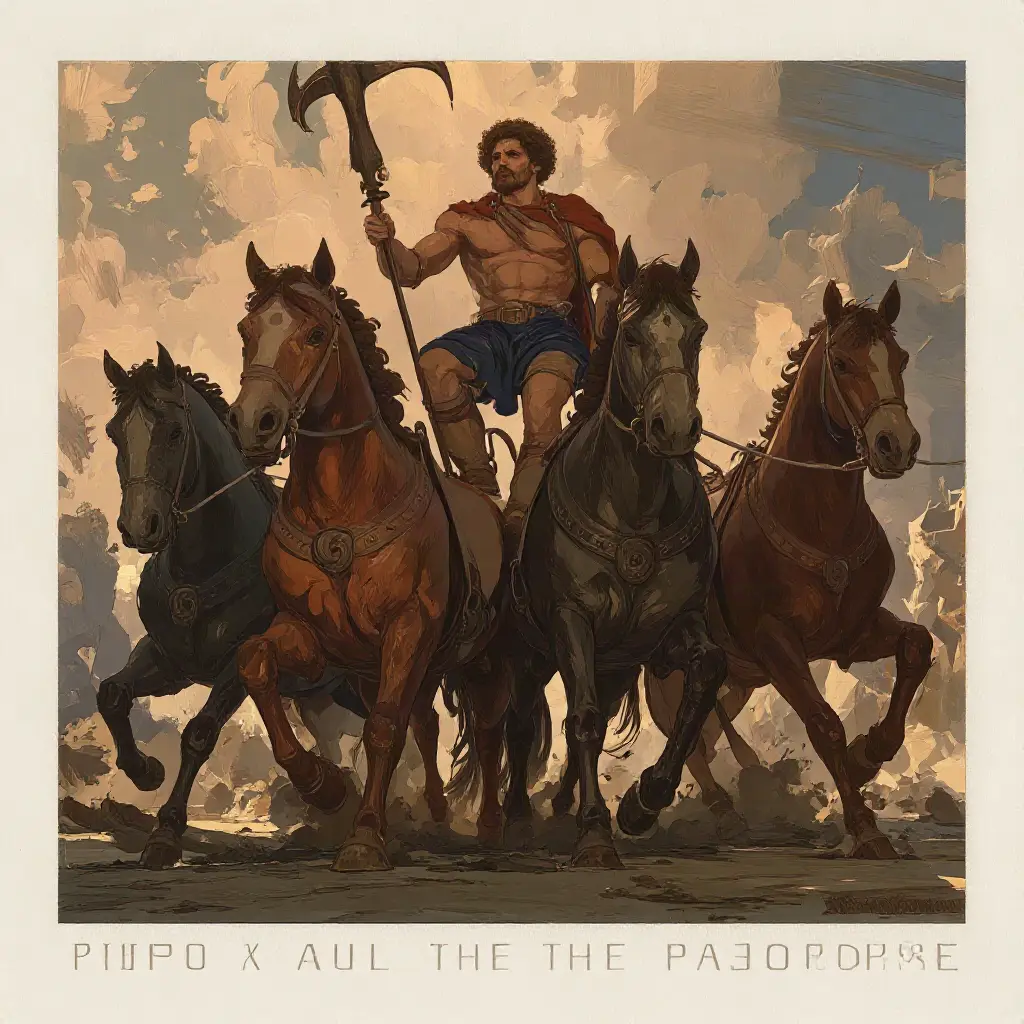
The Four Horsemen of the Apocalypse
The story of the four riders from the Book of Revelation who symbolize conquest, war, famine, and death, written around 95 AD.
Chapter 1
The Scroll with Seven Seals
0:47
Part of
Frequently Asked Questions
Who wrote about the Four Horsemen and when?
The vision of the Four Horsemen was recorded by a man named John of Patmos around 95 AD. He wrote about it in the Book of Revelation while in exile on the Greek island of Patmos during the reign of the Roman Emperor Domitian.
What does each of the Four Horsemen represent?
The first rider on a white horse represents Conquest. The second on a red horse symbolizes War. The third rider on a black horse signifies Famine and economic collapse. The fourth, named Death, rides a pale horse and brings plague and destruction.
Why is Albrecht Dürer's version of the horsemen so famous?
Albrecht Dürer's 1498 woodcut was revolutionary because it depicted the four horsemen as a single, charging, unified force for the first time. This dynamic and terrifying image, showing them trampling kings and commoners alike, became the definitive visual representation of the Apocalypse.
Learn more
To continue the story, download the Chunks Microlearning app
Or get it straight away:
 Download on iOS
 Download on Android