
For centuries, China had been fractured into warring states. This finally ended in 221 BC. King Zheng of the Qin state completed a decade of brutal military campaigns, conquering the last of his six rival kingdoms. At just 13 years old when he inherited his throne, he had now forged an empire. Rejecting the old title of 'King' as insufficient, he proclaimed himself 'Qin Shi Huang', which means 'First Sovereign Emperor', a title grander than any that had come before. From his new capital at Xianyang, he abolished the old feudal system, creating 36 commanderies ruled by officials he appointed himself. For the first time, China was unified under a single ruler.
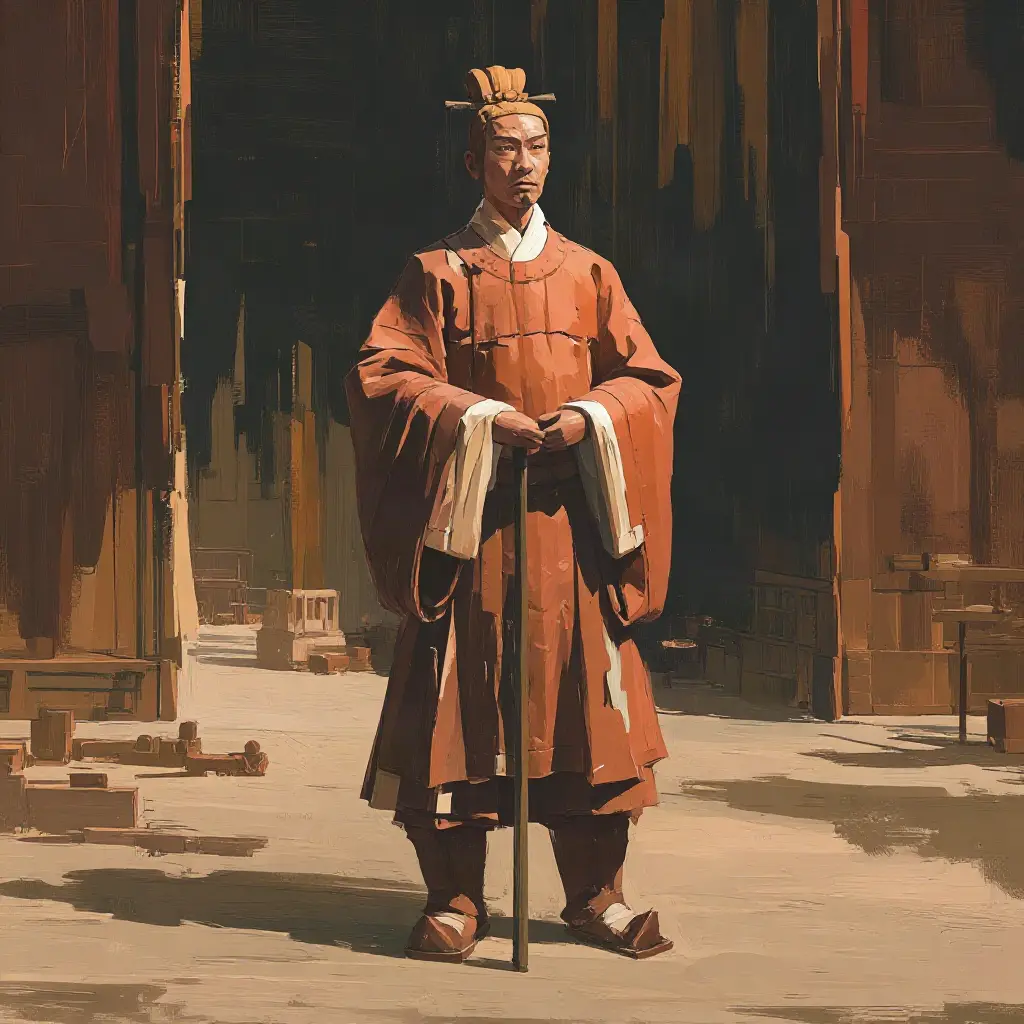
The First Emperor of China
In 221 BC, Qin Shi Huang unified China, standardized its writing and currency, and was buried with an army of over 8,000 terracotta soldiers.
Chapter 1
The First Sovereign Emperor
0:45
Frequently Asked Questions
How did the First Emperor unify China?
Qin Shi Huang, then King Zheng of Qin, unified China by conquering six rival kingdoms in a series of military campaigns that ended in 221 BC. He then abolished the old feudal system, replacing it with 36 commanderies ruled by officials he appointed from his capital, Xianyang.
Why is the Terracotta Army so significant?
The Terracotta Army is a collection of over 8,000 life-sized clay soldiers built to guard the emperor's tomb in the afterlife. Its discovery in 1974 was a major archaeological find, as its existence was not mentioned in any known historical records from the period.
Did Qin Shi Huang really bury scholars alive?
The story of the emperor burying 460 scholars alive comes from the 'Shiji', a history written over a century later by Sima Qian during the succeeding Han Dynasty. Because the source had a bias against the Qin, some modern historians question the details and suggest the victims may have been alchemists.
Learn more
To continue the story, download the Chunks Microlearning app
Or get it straight away:
 Download on iOS
 Download on Android