
Paris, September 1894. A cleaning contact inside the German embassy lifted a torn, unsigned memo from the wastebasket of military attache Maximilian von Schwartzkoppen. The paper listed French military secrets, specific enough to alarm the General Staff: a new 120mm cannon, an artillery firing manual, formation changes. Jean Sandherr, head of the Statistical Section, was certain the leak came from inside the General Staff itself. Suspicion settled on artillery captain Alfred Dreyfus, one of the few officers with the right access. Handwriting experts examining the bordereau against Dreyfus's own hand disagreed among themselves, but General Auguste Mercier, the Minister of War, pushed the case forward anyway, and anti-Jewish prejudice tipped it further. Dreyfus was arrested on 15 October 1894. His court-martial ran four days, from 19 to 22 December, entirely behind closed doors. Secret documents, later shown to be forged, were handed to the judges but never shown to Dreyfus's own defense lawyer, Edgar Demange, who was barred from the military dossier altogether. On 22 December the judges convicted him of treason. The sentence was perpetual deportation to a fortified enclosure, and he was stripped of his rank on the spot. Dreyfus had no idea what evidence had actually convicted him. Neither did his lawyer.
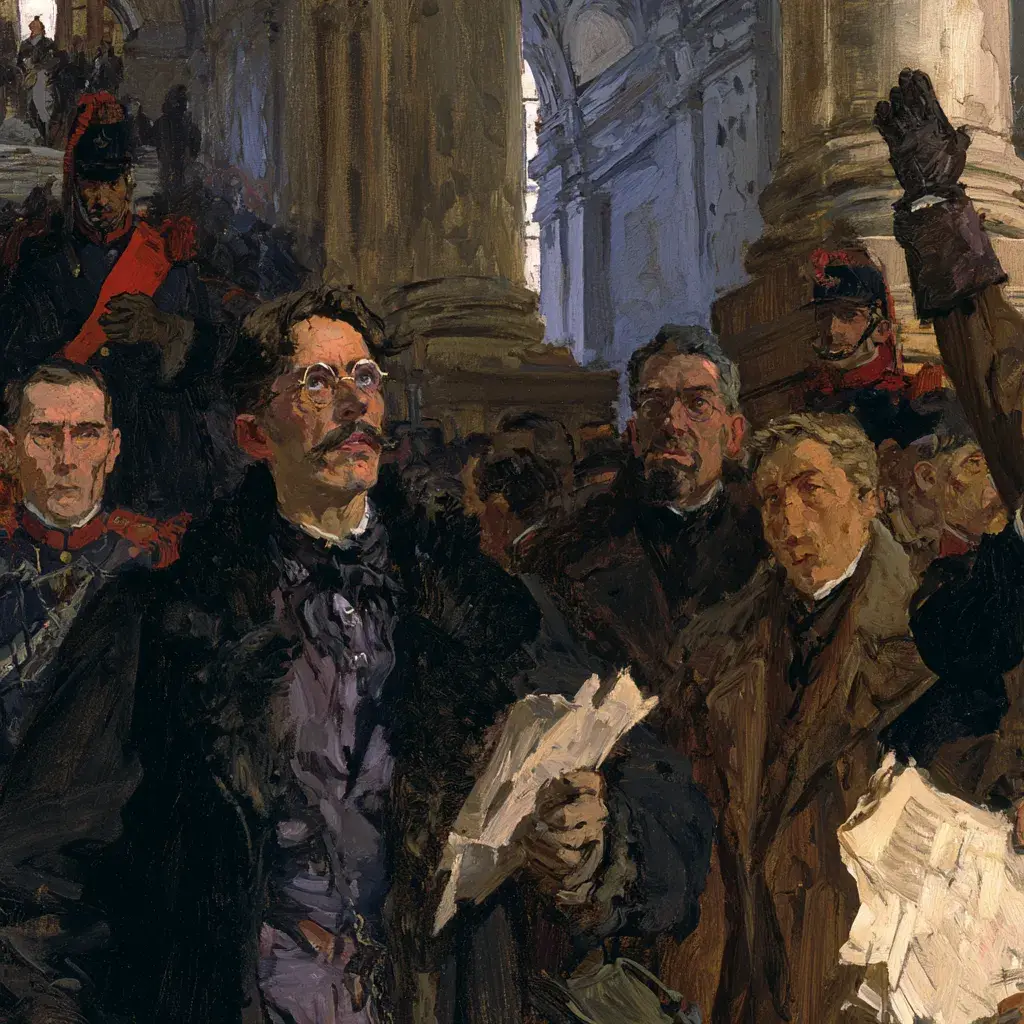
The Dreyfus Affair
A torn memo in a wastebasket sent an innocent French officer to Devil's Island for four years.
The Bordereau
Frequently Asked Questions
What was the bordereau that started the Dreyfus Affair?
It was a torn, unsigned memo listing French military secrets, including details on a new 120mm cannon, found in the German military attache's wastebasket in September 1894. French intelligence wrongly attributed it to Captain Alfred Dreyfus based on disputed handwriting and prejudice.
Who actually wrote the bordereau?
Major Ferdinand Walsin-Esterhazy was the real author. Lieutenant-Colonel Georges Picquart identified him in March 1896 by matching his handwriting to the document, but Picquart's superiors suppressed the finding and sent him to Tunisia.
How did the Dreyfus Affair end?
The Court of Cassation fully annulled Dreyfus's conviction on 12 July 1906, and he was reinstated in the army with a promotion to major the next day. On 21 July 1906 he was invested as a Knight of the Legion of Honor at the same courtyard where he had been degraded in 1895.
Learn more
To continue the story, download the Chunks Microlearning app
Or get it straight away:
 Download on iOS
 Download on Android