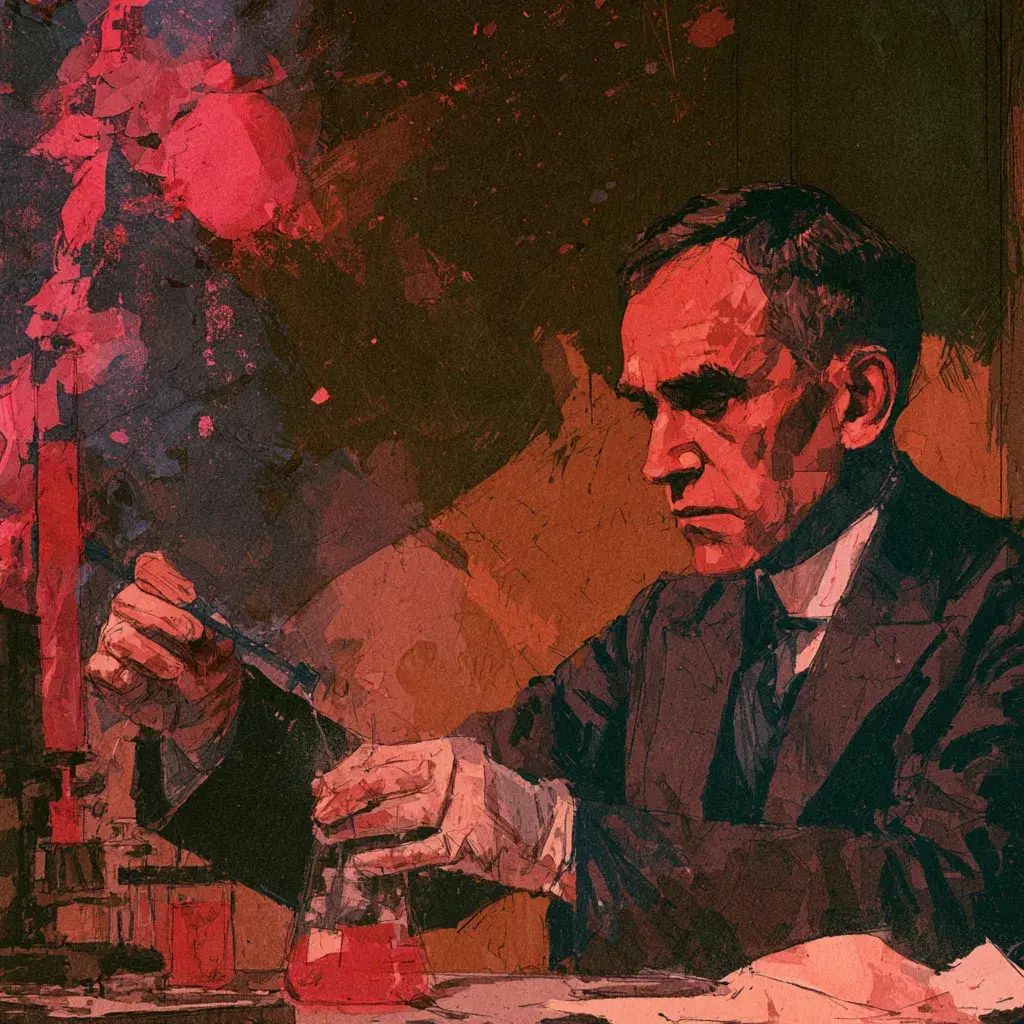
In the years before 1922, a diagnosis of type 1 diabetes in a child was a death sentence measured in months. The only recognized treatment, developed by physician Frederick M. Allen and promoted with Dr. Elliott Joslin from 1915 to 1922, was a starvation diet that cut carbohydrates to as little as 8 percent of a patient's calories. Some children were held to roughly 400 calories a day, a fraction of what a growing body needed. The diet did not cure anything. It only bought time, sometimes months, at most a couple of years, while the child wasted away in front of their parents. Hunger under the regimen became so extreme that one boy, kept on the diet, reportedly ate birdseed meant for his pet canary and fell into a coma from which he did not wake. Some patients literally starved to death following doctors' orders exactly as prescribed. And still, by 1922, this was the standard of care across American and Canadian hospitals, the best that medicine had to offer a dying child. Physicians like Allen and Joslin were not negligent. They were watching young patients die of a disease with no known mechanism and no known remedy, and slow starvation was the only lever they had found that pushed death back even slightly. That was the entire state of the art the night a young, unproven surgeon in London, Ontario sat down to prepare a lecture on carbohydrate metabolism and could not sleep.
The Discovery of Insulin
A 14-year-old boy near death got the first insulin shot in Toronto on Jan 11, 1922.
The Starvation Years
Frequently Asked Questions
What was the only treatment for type 1 diabetes before insulin?
Doctors Frederick Allen and Elliott Joslin promoted a severe starvation diet limiting carbohydrates to as little as 8 percent of calories. It did not cure diabetes, only prolonged life by months to at most a couple of years, and some patients starved to death under it.
Who actually purified the pancreatic extract enough to be safely injected into humans?
Biochemist James Collip, brought in from the University of Alberta in December 1921, devised an alcohol-based purification method by January 1922. His refined extract, not Banting and Best's original crude version, produced Leonard Thompson's dramatic recovery.
Why did Banting split his Nobel Prize money with Charles Best?
When the 1923 Nobel Prize in Physiology or Medicine went only to Banting and John Macleod, Banting was furious that his lab assistant Best had been excluded and immediately shared his half of the prize with him. Macleod, in turn, split his half with Collip.
Learn more
To continue the story, download the Chunks Microlearning app
Or get it straight away:
 Download on iOS
 Download on Android