
Sometime between late 1946 and February 1947, a teenage Ta'amireh Bedouin shepherd named Muhammad edh-Dhib was searching the cliffs above the Dead Sea near Qumran for a goat that had wandered off. With him were two companions, Jum'a Muhammed and Khalil Musa. Edh-Dhib noticed a small opening in the rock and, more out of curiosity than hope of finding the animal, threw a stone inside. Instead of a bleat or a scuffle, he heard the unmistakable sound of pottery shattering. He later said he heard that same sound every time he threw a rock in after it. Unsettled, he fled the spot and did not go back alone. Only later, with a friend, did he work up the nerve to crawl into the opening himself. Inside sat about ten tall, handleless clay jars lined against the cave wall, most of them empty, their lids still fitted in place on the ones left intact. One jar held something unexpected: bundles of ancient parchment, wrapped in linen cloth, tucked inside the clay like it had been waiting. Some later accounts suggest the three were not purely tending goats that day at all, since the terrain was poor grazing ground and better suited to treasure hunters than shepherds. Whatever brought them to that cliff face, edh-Dhib walked out of Cave 1 carrying leather scrolls that no one in the world yet knew were two thousand years old.
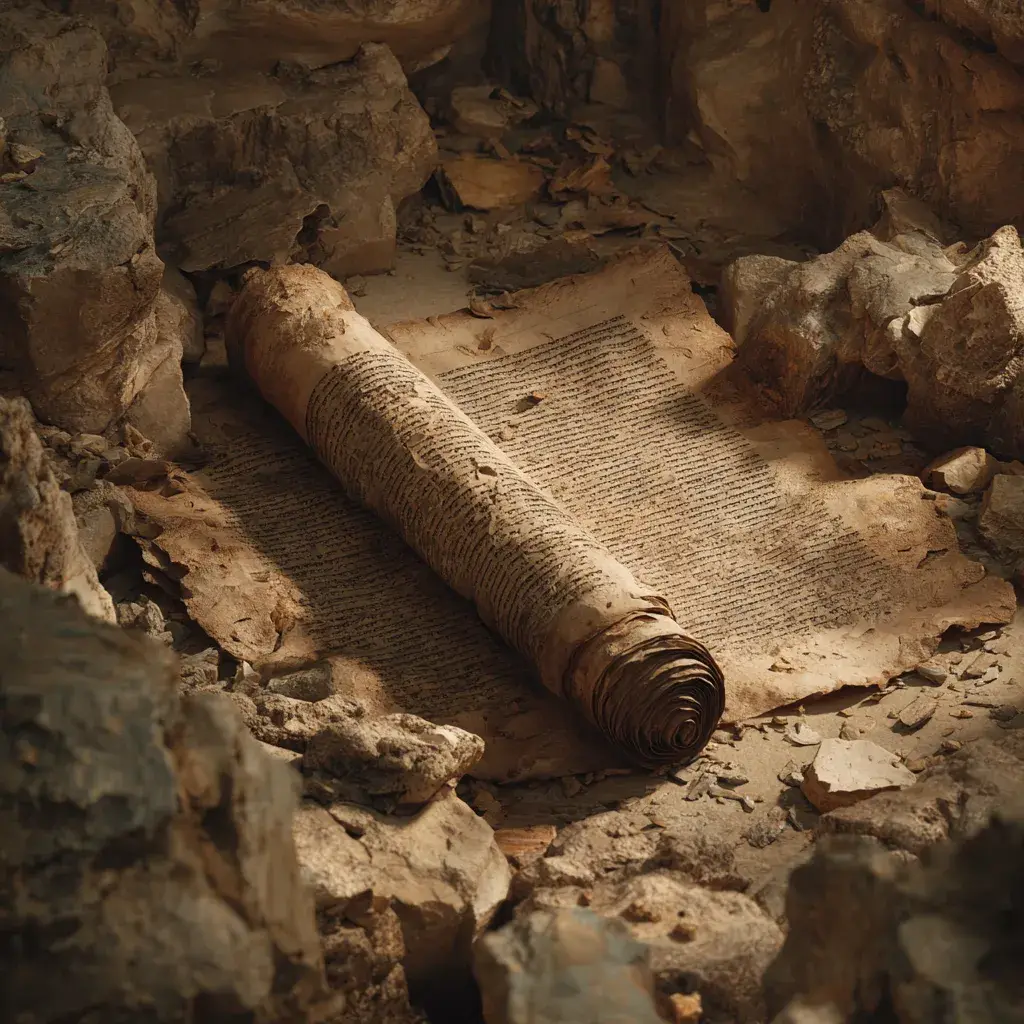
The Dead Sea Scrolls Discovery
A goat hunt in late 1946 or early 1947 led a shepherd to jars holding ancient biblical scrolls.
The Sound of Breaking Pottery
Frequently Asked Questions
Who first found the Dead Sea Scrolls?
A teenage Ta'amireh Bedouin shepherd named Muhammad edh-Dhib found them while searching for a stray goat near Qumran, sometime between late 1946 and February 1947. He threw a stone into a cave opening and heard pottery shatter instead of hearing an animal.
How did scholars confirm the scrolls were genuinely ancient?
In 1995 physicists radiocarbon-dated eighteen scroll samples and two linen fragments, and the results matched earlier handwriting-based dating of roughly the mid-third century BCE to 68 CE. This closed decades of doubt raised by critics like Solomon Zeitlin.
Why do Jordan and the Palestinian Authority dispute Israel's ownership of the scrolls?
They argue Israel seized the scrolls illegally from an East Jerusalem museum during the 1967 Six-Day War and that the scrolls originated on Palestinian land. Israeli and legal scholars counter that neither party discovered, excavated, or purchased the scrolls themselves.
Learn more
To continue the story, download the Chunks Microlearning app
Or get it straight away:
 Download on iOS
 Download on Android