
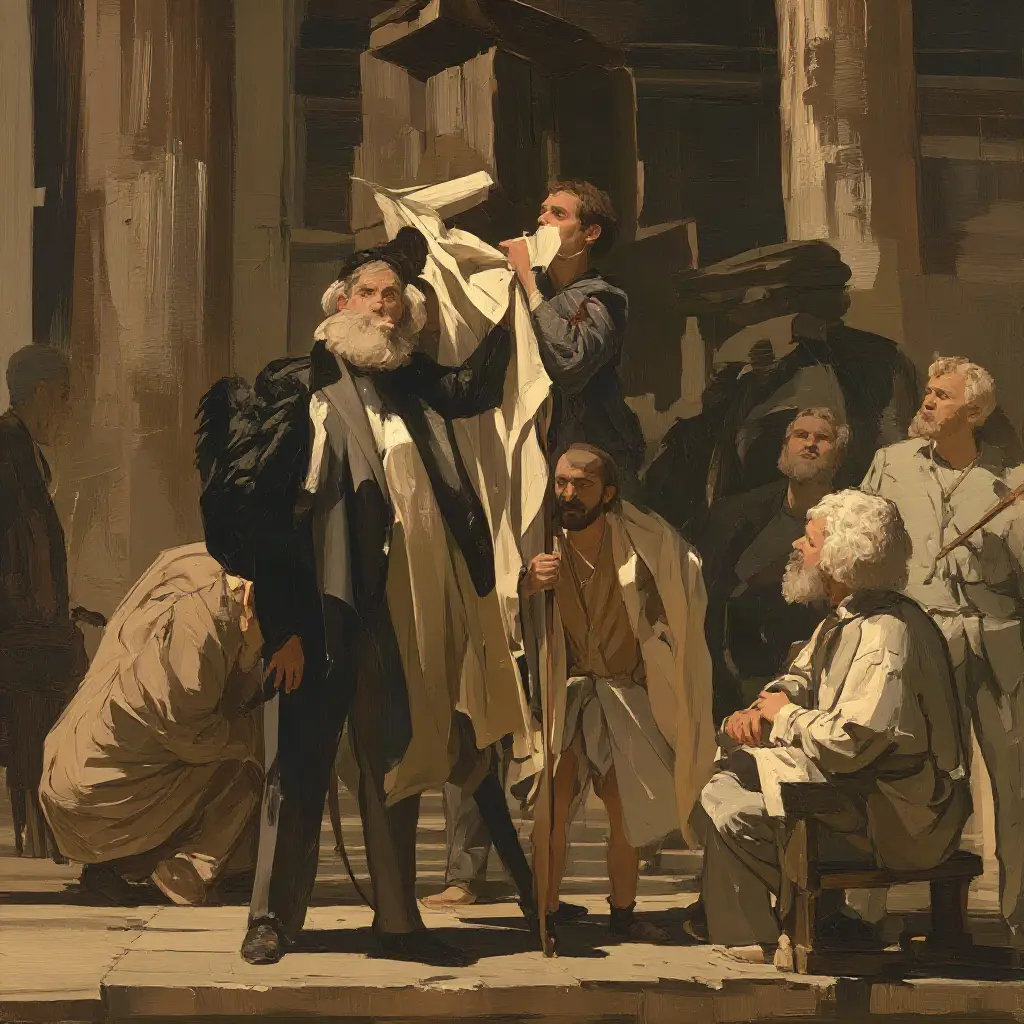
In 1705, a boy named Carlo Broschi was born in Andria, Italy. To preserve his remarkable singing voice, he underwent castration as a child, a procedure often disguised by fabricating accidents like a fall from a horse. This created a 'castrato': a singer with the vocal range of a woman but the physical power and lung capacity of a grown man. In an era when women were often barred from the stage, the castrato voice was highly prized. Training under the master teacher Nicola Porpora in Naples, Carlo followed a punishing daily regimen of vocal exercises and composition. He soon adopted the stage name Farinelli, in honor of his early patrons, the Farina brothers, and prepared to take the world of Baroque opera by storm.
The Castrato Who Sang for Kings
The story of Farinelli, the 18th-century castrato singer whose voice was so powerful it was used to treat a king's depression.
Chapter 1
The Forging of a Voice
0:50
Part of
Frequently Asked Questions
What was a castrato?
A castrato was a male singer castrated before puberty to preserve his high, soprano-like voice. The procedure prevented the voice from breaking, resulting in a performer with the vocal range of a woman but the powerful lung capacity of an adult man. This unique voice type was highly prized in 18th-century Baroque opera.
Did Farinelli really sing the same songs to the king every night?
Legend states that Farinelli sang the same four songs to King Philip V of Spain every night for ten years. However, historians suggest it is more likely he performed from a changing selection of eight or nine different arias to soothe the king's depression. Two of the songs he famously performed were 'Pallido il sole' and 'Per questo dolce amplesso'.
What happened to Farinelli after he left Spain?
After being dismissed from the Spanish court in 1759, Farinelli retired to Italy. Though stripped of his political influence, he was granted his full salary for life. He spent his final 23 years in retirement, primarily at a luxurious villa he had built in Bologna, where he received famous visitors and managed a vast collection of art and instruments until his death in 1782.
Learn more
To continue the story, download the Chunks Microlearning app
Or get it straight away:
 Download on iOS
 Download on Android