
In the 5th or 6th century BCE, a prince named Siddhartha Gautama was born to the Shakya clan in Lumbini, in what is now Nepal. His father, King Suddhodana, received a prophecy: his son would become either a world-conquering monarch or a great religious teacher. To ensure he chose the throne, the king decided to shield Siddhartha from all human misery. For 29 years, the prince lived in unimaginable luxury, confined to three magnificent palaces. He trained in royal skills and married Princess Yasodhara at age 16. During these years, he never witnessed sickness, old age, or death. His entire world was one of youth, health, and pleasure, but this perfect world was built on a foundation he was about to discover was fragile.
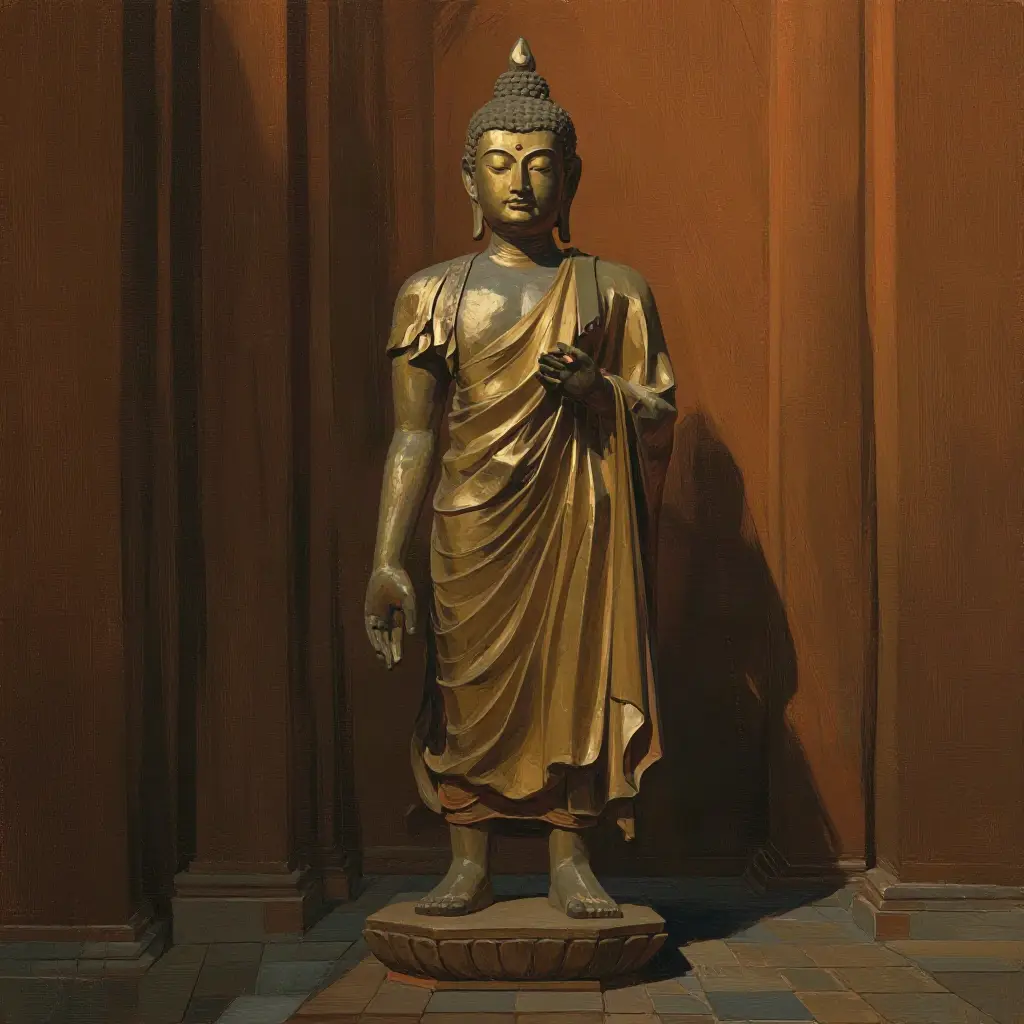
The Buddha
The life of Siddhartha Gautama, the sheltered prince who confronted suffering and became the Buddha, and his core teachings on how to end it.
Chapter 1
The Sheltered Prince
0:50
Frequently Asked Questions
Why is the Buddha's path called the 'Middle Way'?
Siddhartha Gautama first tried a life of extreme luxury, then a life of extreme self-denial, starving himself for six years. He found neither led to wisdom. The 'Middle Way' is his teaching of moderation, a path between the two extremes of indulgence and harsh asceticism.
What are the Four Noble Truths?
The Four Noble Truths are the foundation of Buddhist teaching. They state that life inherently involves suffering, that this suffering is caused by our craving and attachment, that it is possible for suffering to end, and that there is a specific path to achieve that end.
How were the Buddha's teachings preserved after his death?
For over 400 years, the Buddha's teachings were not written down. They were preserved orally by specialized monks called 'bhanakas' who memorized and chanted specific sections. Fearing the tradition would be lost, monks in Sri Lanka finally wrote the teachings on palm leaves, creating the Pali Canon.
Learn more
To continue the story, download the Chunks Microlearning app
Or get it straight away:
 Download on iOS
 Download on Android