
In January 1915, the Ottoman Empire suffered a catastrophic defeat against Russia at the Battle of Sarikamish. The loss was devastating, with nearly 90,000 soldiers perishing, many from the freezing cold. Enver Pasha, the Ottoman Minister of War, deflected blame for the disaster from his poor planning onto the empire's Armenian minority, accusing them of treachery. This accusation came despite the loyal service of many Armenians in the Ottoman army. Following the defeat, Armenian soldiers were systematically disarmed and forced into labor battalions. These units, called 'amele taburları', were often marched to remote areas where the soldiers were executed by their own comrades. This marked a deliberate shift in policy by the ruling 'Three Pashas' from surveillance to the systematic persecution that would become a genocide.
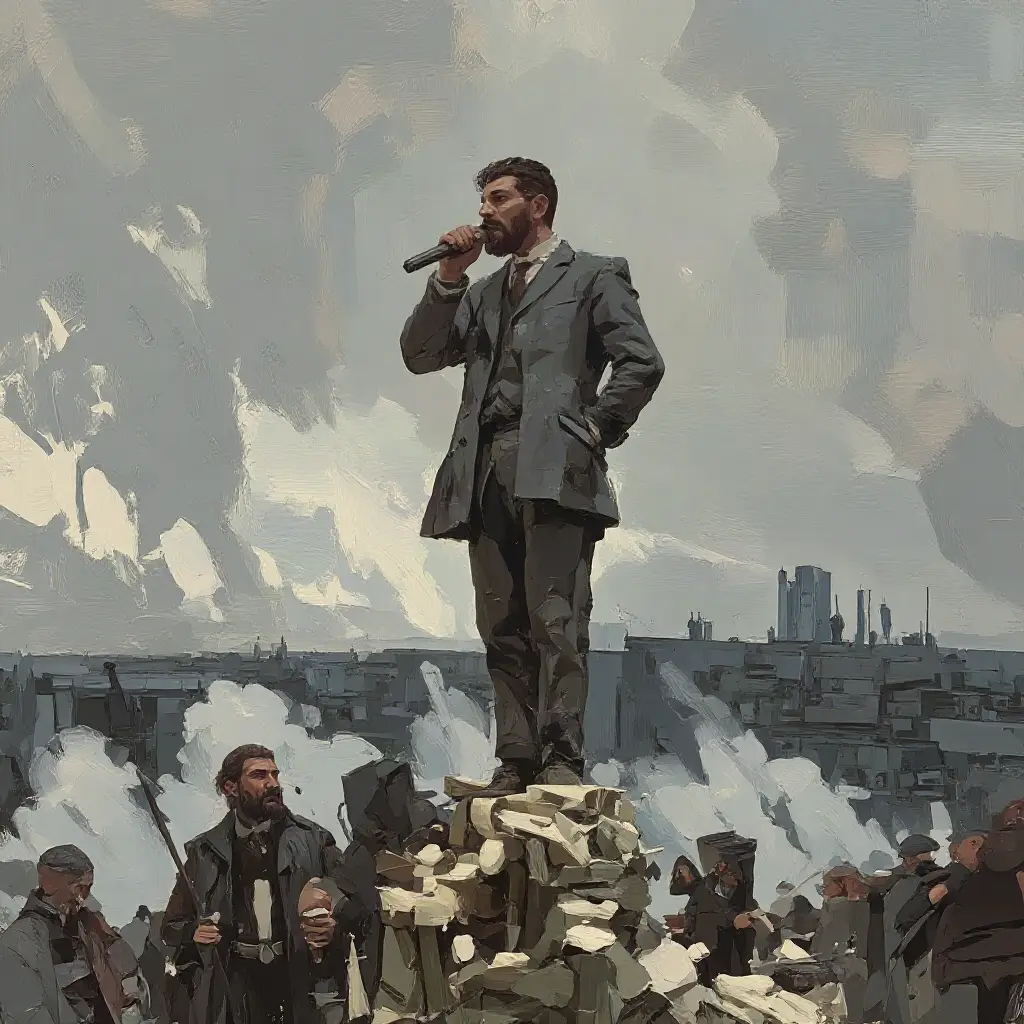
The Armenian Genocide
The Ottoman government's systematic killing of up to 1.5 million Armenians during WWI, starting in early 1915.
The Spark
Frequently Asked Questions
What was the Armenian Genocide?
The Armenian Genocide was the Ottoman government's systematic extermination of its Armenian minority population during World War I. Between 800,000 and 1.5 million Armenians were killed through massacres, forced marches into the Syrian desert, starvation, and disease.
Why is April 24, 1915 considered the start of the genocide?
April 24, 1915, is commemorated as the start date because on that day, Ottoman authorities arrested and deported hundreds of Armenian intellectuals and community leaders from Constantinople. This act decapitated the Armenian leadership, leaving the population vulnerable to the subsequent deportations and massacres.
Who were the 'Three Pashas'?
The 'Three Pashas' were the primary leaders of the Ottoman government who orchestrated the genocide. They were Minister of War Enver Pasha, Minister of the Interior Talaat Pasha, and Minister of the Navy Djemal Pasha. They were sentenced to death in absentia by a Turkish court in 1919 but had already fled the country.
To continue the story, download the Chunks Microlearning app
Or get it straight away:
 Download on iOS
 Download on Android