
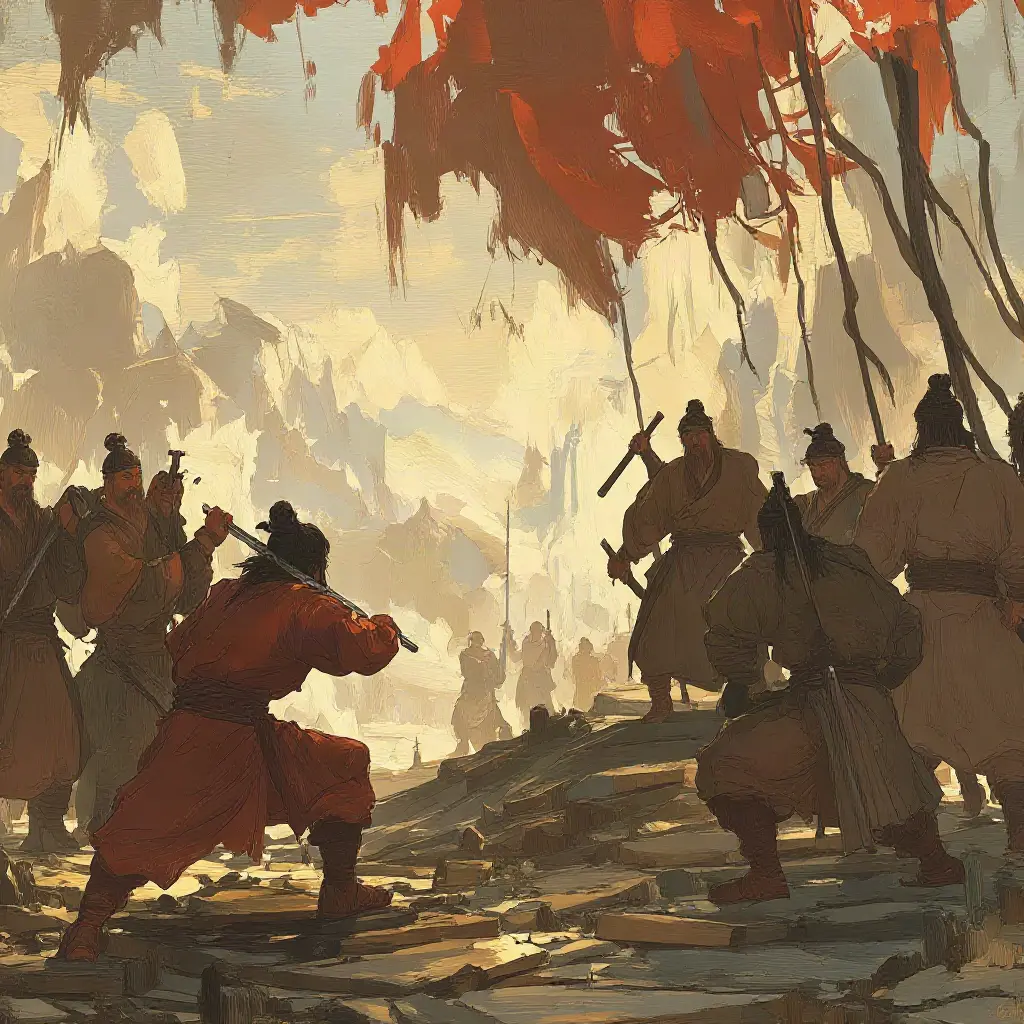
Around 512 BC, a strategist named Sun Wu, later known as Sun Tzu, sought to enter the service of King Helü of Wu. To test him, the king presented 180 palace concubines to be trained as soldiers. During drills, the women only giggled. Sun Tzu argued that if commands are clear but not obeyed, the fault lies with the officers. He then ordered the execution of the king’s two favorite concubines, who were serving as company leaders. The king tried to intervene, but Sun Tzu insisted a general on campaign is not bound by every royal order. According to the historian Sima Qian, who recorded the event centuries later, the beheadings proceeded. Afterwards, the remaining women performed their maneuvers in perfect, disciplined silence. Sun Tzu had proven his point.
Sun Tzu and The Art of War
Discover the real ideas in The Art of War, from winning without fighting to the 1972 discovery that proved its ancient origins.
The King's Concubines
Frequently Asked Questions
Was Sun Tzu a real person?
Historians debate this. A strategist named Sun Wu, known as Sun Tzu, traditionally served a king around 512 BC. However, the text of The Art of War was likely written centuries later during the Warring States period, possibly by a group of scholars using his name.
What is the most important idea in The Art of War?
The highest skill is to win without fighting. Sun Tzu argues that the best strategy is to defeat an enemy's plans and alliances before battle is necessary. Actual combat, especially attacking fortified cities, is seen as a costly failure of proper strategy.
How do we know how old The Art of War is?
In 1972, archaeologists found a version of the text written on bamboo slips inside a Chinese tomb from the Han Dynasty. The tomb was dated to between 140 BC and 118 BC, providing the earliest known physical copy and confirming the text's ancient origins.
Learn more
To continue the story, download the Chunks Microlearning app
Or get it straight away:
 Download on iOS
 Download on Android